
What's inside
- Quick answer: which laser should you buy?
- Plastic compatibility: what engraves cleanly and what does not
- Why PVC and vinyl are a hard stop
- Fume extraction: match the system to the machine
- CO₂ versus diode: a practical head-to-head
- Choose by your workshop situation
- Acrylic engraving setup that produces repeatable results
- Ownership costs and common failures
- Final recommendation
As an Amazon Associate I earn from qualifying purchases. This post may contain affiliate links at no extra cost to you.
The best laser for engraving plastic is usually a 40–60 W CO₂ machine with enclosed fume extraction: it produces clean, bright results on acrylic and Delrin, while PVC, vinyl, and several other plastics should never enter the machine at all.
As an Amazon Associate we earn from qualifying purchases at no extra cost to you.

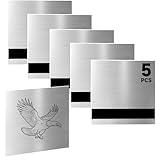


Quick answer: which laser should you buy?
For most workshops, a 40–60 W CO₂ laser is the most useful laser engraver for plastic. Its 10.6 µm wavelength cuts and engraves cast acrylic efficiently, marks many opaque plastics, and handles small production runs without the limitations of a low-power diode.
- Best for acrylic signs and panels: an enclosed 40–60 W CO₂ laser with air assist and a 20–30 in working bed.
- Best for occasional hobby work: a 30–40 W CO₂ machine, provided it has a proper exhaust port and you can vent outdoors.
- Best for thin, dark plastic tags: a blue-diode laser may work, but only after confirming the manufacturer’s material-safety data.
- Best for frequent commercial production: a 60–100 W CO₂ machine with an interlocked enclosure, filtration, water cooling, and ducted extraction.
- Best for transparent plastics with minimal trial and error: CO₂, especially for cast acrylic.
Examples of established enclosed CO₂ product families include the Glowforge Pro, xTool P2/P2S, OMTech Polar-series machines, Epilog Fusion Edge, and Trotec Speedy systems. Specifications and included ventilation equipment vary by model, so treat the categories below as buying criteria rather than a substitute for the manual.
Plastic compatibility: what engraves cleanly and what does not
| Plastic | Laser suitability | Typical result | Fume and safety requirement |
|---|---|---|---|
| Cast acrylic (PMMA) | Excellent with CO₂ | Frosted, white, or polished engraving; clean cuts | Strong outdoor exhaust or properly rated filtration |
| Extruded acrylic | Good with CO₂ | Clean engraving, but edges may be less glass-like | Same as cast acrylic |
| Delrin/acetal (POM) | Usable for shallow engraving only | Dark, crisp marks at conservative settings | Effective extraction; formaldehyde-containing fumes are possible |
| Laser-markable ABS | Only if specifically certified | Variable contrast and melting | Read the SDS; do not assume ordinary ABS is safe |
| PVC and vinyl | Never laser | Potentially disastrous material damage | Chlorine-containing corrosive fumes, including hydrogen chloride |
| Polycarbonate | Poor choice | Melting, browning, and weak contrast | Use only with documented approval and industrial controls |
| Unknown or laminated plastic | Do not guess | Unpredictable | Identify every layer and check its SDS first |
Acrylic laser engraving is the easiest place to start. Cast acrylic generally gives a whiter, more opaque engraving surface, while extruded acrylic often cuts faster but can produce a slightly different edge finish. For a laser engraved acrylic sign, remove protective film only when the manufacturer’s instructions allow it; paper masking can reduce smoke deposits, but some adhesive-backed films char or leave residue.
Delrin is the trade name commonly associated with acetal. It can be engraved, but it is less forgiving than acrylic. Use shallow passes, strong extraction, and a small test rectangle. Do not confuse Delrin with every black engineering plastic: color is not proof of chemical composition.
Why PVC and vinyl are a hard stop
PVC, vinyl records, vinyl flooring, faux leather, and many flexible sign materials contain chlorine. A laser can create corrosive hydrogen chloride and other hazardous decomposition products. These fumes can irritate the respiratory system, damage the machine’s metal components, and contaminate ducting and filters. The phrase “chlorine gas” is often used loosely, but the practical rule is the same: do not laser PVC or vinyl, even with a powerful extractor.
Extraction does not make an incompatible material safe. A filter can become saturated, a hose can leak, and household air purifiers are not a substitute for source capture. If the label only says “vinyl,” “PVC,” or “chlorinated,” choose another manufacturing method.
Fume extraction: match the system to the machine
For acrylic hobby work, use a sealed enclosure connected to an outdoor duct with a high-flow inline fan. A useful starting range is approximately 200–400 cubic feet per minute (CFM) for a compact desktop enclosure, with the actual requirement determined by the machine, duct length, bends, and leakage. Larger 60–100 W systems commonly need roughly 400–800 CFM of effective airflow, but the manufacturer’s specification takes priority.
- Short, straight duct: preserves more airflow than a long run with several elbows.
- Smooth, rigid ducting: usually performs better than a collapsed flexible hose.
- Outdoor termination: place it away from windows, doors, HVAC intakes, and neighboring work areas.
- Filtered extraction: use a purpose-built laser filter rated for particulate matter and gaseous contaminants when outdoor venting is impossible.
- Air assist: reduces flare-ups and smoke at the cut, but it does not remove the need for exhaust.
A basic sizing calculation explains why the advertised fan rating can mislead. If a fan is rated at 400 CFM but duct resistance, a filter, and two sharp bends reduce real airflow by 35%, the effective flow is only about 260 CFM: 400 × 0.65. Select the fan and ductwork as a system, not by the free-air number printed on the box.
CO₂ versus diode: a practical head-to-head
| Feature | 40–60 W CO₂ | 10–20 W blue diode |
|---|---|---|
| Typical wavelength | 10.6 µm | About 450 nm |
| Clear acrylic | Engraves and cuts well | Usually passes through or marks poorly |
| Typical work area | Approximately 300 × 200 to 700 × 400 mm | Approximately 400 × 400 to 850 × 400 mm |
| Cutting acrylic | Practical at suitable thicknesses | Limited and highly dependent on color |
| Warm-up and maintenance | Water cooling, mirrors, lens, and alignment on many models | Usually simpler; lens and airflow path still need cleaning |
| Typical general market price | About $2,000–$8,000 for hobby/prosumer systems | About $500–$3,000 for enclosed systems |
The diode’s lower purchase price can be attractive, but it is not automatically the better acrylic machine. Blue light is absorbed well by dark materials and often passes through clear acrylic. If your goal is clear-sheet signage, choose CO₂. If your work is mostly dark, opaque tags and you already have a safe enclosure, a diode can be economical.
Choose by your workshop situation
| Your situation | Recommended choice | Reason |
|---|---|---|
| Under $1,500, occasional projects | Enclosed diode or used, documented CO₂ system | Lower entry cost, but accept slower acrylic work and more testing |
| Weekly acrylic signs, limited floor space | Enclosed 40–60 W CO₂ | Good balance of speed, bed size, and repeatability |
| Daily production | 60–100 W CO₂ with dedicated extraction | Higher throughput and less strain on the tube |
| First-time operator | Fully enclosed machine with lid interlock and exhaust monitoring | Reduces exposure to beam and smoke hazards |
| No outdoor vent route | Manufacturer-approved multi-stage filtration system | More controlled than improvising a household purifier |
Acrylic engraving setup that produces repeatable results
- Identify the sheet. Confirm cast or extruded PMMA and check for coatings, adhesives, or printed layers.
- Mask and clean. Use compatible paper masking and remove dust with a non-abrasive cleaner. Avoid solvents that craze acrylic.
- Focus precisely. Acrylic engraving is sensitive to focus height; a small error widens the mark and reduces edge definition.
- Run a test grid. Vary power and speed in small increments rather than copying an internet setting. Tube age, lens condition, airflow, and sheet color all matter.
- Use air assist and exhaust. Air assist helps prevent flame and deposits; extraction carries fumes away from the work zone.
- Inspect the underside and edges. Remove residue before judging contrast. A light polish may improve cut edges, but never polish away critical dimensions.
Ownership costs and common failures
On a CO₂ machine, the parts that usually demand attention are the exhaust path, lens, mirrors, water-cooling loop, bed, and eventually the laser tube. Smoke residue on optics reduces power at the workpiece and can create hot spots. Check the lens frequently at first, clean it only with the approved method, and replace damaged optics rather than continuing to run them.
Cooling is equally important. A water-cooled tube should have a reliable temperature-controlled loop; running it too hot shortens tube life. Keep a maintenance log for lens cleaning, coolant changes, filter replacement, and extraction checks. A machine that engraves beautifully for a month can become inconsistent if the exhaust filter loads up or the focal lens develops residue.
The most expensive mistake is testing an unknown plastic inside the machine. Obtain the manufacturer’s material data or safety data sheet, identify all coatings and adhesives, and reject anything containing PVC, vinyl, or an uncertain chlorine-based formulation. For acrylic engraving, a modest CO₂ laser with competent ventilation is safer and more productive than a higher-powered machine paired with improvised extraction.
Final recommendation
Choose an enclosed 40–60 W CO₂ laser with a working area suited to your largest sheet, air assist, interlocks, and a real exhaust plan. Use it for cast or extruded acrylic, test Delrin cautiously, and reserve other engineering plastics for cases with documented laser compatibility. Never attempt to engrave PVC or vinyl: no setting, fan, or filter turns those materials into safe laser stock.