
What's inside
As an Amazon Associate I earn from qualifying purchases. This post may contain affiliate links at no extra cost to you.
The best portable stone engraving machine for most buyers is a compact CNC engraver with a rigid frame and diamond tooling; choose a handheld rotary tool instead for lettering large or irregular stones, and choose a pneumatic system only when speed and deep carving matter more than low noise and simple setup.
As an Amazon Associate we earn from qualifying purchases at no extra cost to you.

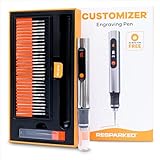


Portable stone engraving machines compared
Stone is much harder and more abrasive than wood, so portability involves a compromise. A light handheld tool follows uneven surfaces well but depends heavily on operator control. A compact CNC machine produces more consistent lettering, yet its work area and frame limit the size and shape of the stone. Pneumatic chisels remove material quickly, but they are noisy and require a compressor.
| Machine type | Typical weight | Working area or reach | Practical depth in stone | Power requirement | Uneven-surface security | Best use |
|---|---|---|---|---|---|---|
| Handheld rotary engraver | 0.5–1.5 kg | 150–300 mm cable or hand reach | 0.5–3 mm per pass | 100–175 W mains, or 12–20 V battery | Excellent for following contours; no automatic depth control | Names, touch-ups, irregular rocks and installed stone |
| Flex-shaft rotary system | 2.5–6 kg including motor | 250–1,000 mm handpiece reach | 1–5 mm per pass | 1/6–1/4 hp motor, mains powered | Very good; the handpiece is lighter than the motor | Long lettering and repeated hand-carved work |
| Compact CNC router | 8–20 kg | 300 × 180 to 400 × 400 mm | 0.2–1 mm per pass in stone | 100–300 W spindle or trim-router power | Fair unless the stone is levelled and clamped | Repeatable logos, plaques and small batches |
| Pneumatic stone chisel | 1–3 kg tool; compressor separate | Handheld | 2–10 mm depending on bit and stone | 90–200 L/min compressed air | Good on contours, but difficult to control for fine detail | Deep carving, roughing and hard stone |
The figures above are practical operating ranges rather than guaranteed ratings. Granite, dense quartzite and hard marble usually require shallower passes and more frequent diamond replacement than limestone or sandstone.
Head-to-head: which format gives the best result?
Handheld rotary tools: the most portable choice
A Dremel 4300 or a similar variable-speed rotary tool can handle small stone inscriptions when fitted with diamond points, burrs or small diamond wheels. These tools typically weigh less than 1 kg and can be carried to a fireplace, garden stone or installed countertop. Their main advantage is contact: your hand can keep the bit aligned while the surface rises and falls.
The limitation is depth consistency. A handheld tool tends to create wavy bottoms and wider corners unless you use a guide, stencil or several light passes. Battery models remove the cord but can lose speed under load. For a few short inscriptions, that is convenient; for a full day of work, a mains-powered tool or spare batteries are preferable.
Flex-shaft systems: better control over long lettering
A Foredom-style flex-shaft setup places the motor on the bench and leaves a lighter handpiece in your hand. This reduces wrist fatigue and makes it easier to keep a long line of lettering steady. It is a strong choice for carvers working on stones that cannot be brought to a machine.
Flex shafts are not automatically more powerful than rotary tools. The advantage is ergonomics and torque delivery, not CNC-like accuracy. The shaft should be kept in broad, gentle curves; tight bends generate heat and shorten its life. Foredom systems and compatible diamond accessories are widely available, but check the handpiece collet size before buying accessories.
Compact CNC machines: the consistency winner
A Genmitsu 3018-PROVer-class CNC machine is portable enough for a workshop bench and offers a working area of roughly 300 × 180 mm. With a rigid fixture, conservative feeds and diamond-coated tooling, this format can engrave slate, soapstone, marble and some granite. It is most useful when several pieces must carry the same logo or lettering.
Do not treat a small CNC router as a miniature stone mill. Many models are designed primarily for wood, plastic and soft metals. Their frames may flex under stone-cutting loads, and their standard collets may not accept the diamond tools you need. A CNC machine also cannot compensate for a stone that is tilted or hollow underneath. The result may be deep on one side and barely visible on the other.
For stone, use shallow passes—often 0.2 to 0.5 mm initially—and inspect the cut before increasing depth. A water-compatible setup can control dust, but electronics and slurry must be separated carefully. If the manufacturer does not permit wet operation, use appropriate dust extraction and never improvise liquid cooling around exposed electrical components.
Pneumatic chisels: fastest for deep, rough work
A pneumatic engraving tool is attractive for granite lettering, texture and rough removal because the impact mechanism does not rely on a small electric motor alone. However, the compressor can weigh more than the tool, and the combined system is rarely portable in the same sense as a rotary engraver.
Air consumption is the practical constraint. A tool requiring 150 L/min at working pressure can quickly overwhelm a small hobby compressor, causing pressure drops and inconsistent blows. Choose a compressor with reserve capacity rather than matching the tool’s advertised minimum. Pneumatic chisels also create more noise and flying debris than rotary systems.
Decision matrix by project and experience
| Your situation | Most suitable choice | Why | Acceptable compromise |
|---|---|---|---|
| First project, occasional use, budget under about $150 | Variable-speed handheld rotary tool with diamond bits | Lowest entry cost and simplest setup | Expect slower work and less uniform depth |
| Installed stone or irregular natural rock | Handheld rotary or flex-shaft | The operator can follow the surface instead of forcing it flat | Use a shallow layout and accept hand-finished character |
| Repeated plaques up to 300 × 180 mm | Compact CNC engraver | Digital lettering and repeatable positioning save setup time | Level each blank and use multiple light passes |
| Deep carving in granite or hard marble | Pneumatic chisel or heavy-duty flex-shaft | Better material removal than a small CNC spindle | Higher noise, dust and compressor cost |
| Several hours of lettering per week | Flex-shaft with a balanced handpiece | Less hand fatigue and better reach | Add a foot pedal and spare shafts |
Stone compatibility matters more than advertised power
- Soapstone and limestone: easiest for beginners; carbide may work, while diamond gives cleaner edges.
- Slate: engraves well, but thin layers can flake. Support the entire underside.
- Marble: suitable for rotary and CNC engraving; avoid hammering near fragile veins.
- Granite: demands diamond tooling, rigid support and slow passes. Small rotary tools are best for shallow detail.
- Quartzite: extremely abrasive and often unsuitable for inexpensive portable machines.
- Engineered quartz: dust can contain substantial crystalline silica. Follow the material supplier’s safety guidance and use professional-grade dust control.
A laser engraver is not a universal alternative. Lasers can mark some dark, coated or composite surfaces, but ordinary natural stone often gives weak or unpredictable contrast without a suitable coating. For a physical groove that remains visible after weathering, mechanical diamond engraving is usually the safer selection.
How to secure an uneven stone
- Find the stable face. Place the stone on a rigid board and identify rocking points. A machine cannot correct movement during a cut.
- Build a support bed. Use plaster, modelling compound or removable low-expansion foam around the sides. Keep the engraving face clear and let the support cure or settle.
- Level the engraving zone. For CNC work, shim the stone until the intended lettering area is within about 1 mm of level. Measure at all four corners.
- Clamp without crushing. Use padded clamps or a perimeter frame. Thin slate can crack when clamped directly.
- Make a test cut. Engrave a short line in an offcut or an inconspicuous area. This reveals chipping, colour change and the correct speed before the final design.
For a handheld tool, a removable stencil or shallow scribed outline is often more useful than a complicated guide. It prevents the bit from wandering while allowing your wrist to follow the stone’s contour.
Ownership costs and maintenance
Diamond bits are consumables. On soft stone, a small set may last through many short inscriptions; on granite, an inexpensive diamond point can lose its cutting ability after only a few hours of aggressive work. Budget roughly $20–$80 per year for occasional rotary use and considerably more for frequent CNC or production work, depending on stone hardness and bit quality.
Clean dust from vents, collets, rails and flex-shaft handpieces after every session. Abrasive grit inside a collet causes runout, which makes lettering wider and increases bit breakage. Check CNC belts and screws regularly, and re-square the frame after transporting it. Replace a flex shaft when it becomes noisy, hot or resistant to rotation rather than continuing until it snaps.
The most common mistake is using excessive pressure. Let diamond do the cutting, take shallow passes, and pause when the tool or stone becomes hot. Wear eye protection, hearing protection and suitable respiratory protection; stone dust can be hazardous, particularly when silica-bearing materials are cut. Wet methods can reduce airborne dust only when the machine and electrical system are designed for them.
Final recommendation
Buy a handheld variable-speed rotary engraver if portability, low cost and irregular stones are your priorities. Choose a flex-shaft when comfort and long hand-carved lettering matter. Select a compact CNC only if your stones fit its work area and you are willing to level, fixture and program each job. For deep granite carving, a pneumatic chisel is the capable option, but its compressor, noise and dust make it a specialist purchase rather than the best all-round portable stone engraving machine.