
What's inside
As an Amazon Associate I earn from qualifying purchases. This post may contain affiliate links at no extra cost to you.
The best desktop CNC router for most small workshops in 2026 is the Carbide 3D Nomad 3 if you need an enclosed, quiet machine that fits on a desk, or the Shapeoko 4 Standard if you want the largest cutting area per dollar and can tolerate open-frame dust. Below we rank every serious contender by the criteria that actually matter once the machine lands on your bench.
As an Amazon Associate we earn from qualifying purchases at no extra cost to you.


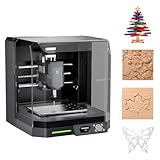
What “Desktop” Really Means for Your Shop
A desktop CNC router machine has to satisfy two constraints at once: it must physically fit a workbench (roughly under 30 inches wide) and it must be livable in a shared space — meaning noise and dust control aren’t optional. That second constraint eliminates a lot of nominally “small” machines. An open-frame 3018 engraver technically sits on a desk, but it will coat every surface in the room with MDF dust within an hour.
Before looking at models, weigh these factors in order of importance:
- Cutting area vs. footprint ratio. Some machines waste 30–40% of their footprint on gantry structure.
- Spindle type. Trim routers (Makita RT0701-style) are loud but cheap to power; 300–400W brushless spindles are quieter and better for fine detail.
- Enclosure. Built-in beats bolt-on acrylic boxes that cost $200+ aftermarket.
- Software ecosystem. Free, well-documented toolchains (Carbide Create, Easel) matter more than hardware specs for a first machine.
- Rigidity. If you plan to cut hardwood joinery, aluminum extrusion frames flex visibly past light depths of cut.
The Shortlist: How They Stack Up
| Machine | Cutting Area (in) | Footprint (in) | Spindle | Enclosure | Typical Price Range |
|---|---|---|---|---|---|
| Carbide 3D Nomad 3 | 8 × 8 × 3 | 20 × 18 × 25 | 130W brushless, 2,000–24,000 RPM | Fully enclosed, integrated | $2,800–$3,200 |
| Bantam Tools Desktop CNC Milling Machine | 5.5 × 8.8 × 3.5 | 21 × 17 × 20 | Brushless ER-11, 10,000–28,000 RPM | Fully enclosed | $4,000–$5,000 |
| Shapeoko 4 Standard | 17.5 × 17.5 × 4 | 28 × 24 × 19 | Carbide Compact Router (trim router) | Open frame | $1,700–$2,000 |
| SainSmart Genmitsu 4040-PRO | 15.7 × 15.7 × 3.1 | 26 × 24 × 15 | 300W spindle | Open frame | $600–$800 |
| FoxAlien Masuter Pro | 15.7 × 15.7 × 3.4 | 27 × 24 × 16 | 300W spindle | Open frame | $550–$750 |
Best for shared spaces and detail work: Nomad 3
The Nomad 3 is the only fully enclosed desktop CNC router at its price that also ships with genuinely beginner-friendly software (Carbide Create plus Carbide Motion). The integrated enclosure keeps noise near conversation level with the door closed — realistic for an apartment-adjacent garage or a studio. The 8×8 envelope handles small signs, coasters, inlays, PCB work, and wax models, but it will not cut a 12-inch sign in one pass without tiling toolpaths.
Best cutting area per dollar: Shapeoko 4 Standard
A 17.5-inch square envelope covers most sign work and small furniture joinery (box joints, dados, mortises with a fixture). The tradeoffs: the trim router spindle runs around 90+ dB under load, there’s no enclosure, and belt-drive axes need periodic tension checks. Budget a dust shoe and a shop vac hookup from day one — figure another $150–$250 on top of the machine price.
Best entry point under $1,000: Genmitsu 4040-PRO or Masuter Pro
These 4040-class machines are nearly identical in concept: 300W spindles, GRBL-based controllers, lead screws on all axes. They cut hardwoods and soft aluminum at conservative depths and are the right answer if you’re not sure CNC is for you yet. Expect to upgrade the spindle or add a router mount within a year if your work moves past signs and engraving.
Best for precision and metal: Bantam Tools
Bantam’s machine costs roughly double the Nomad but holds tighter tolerances, probes automatically, and is built for aluminum, brass, and small production parts. If your “small workshop” is actually a prototyping bench, the premium is justified; if you’re cutting wood signs, it isn’t.
Decision Matrix: Match the Machine to Your Situation
| Your situation | Pick | Why |
|---|---|---|
| Apartment or attached garage, noise-sensitive | Nomad 3 | Only enclosed option under ~$4K; quietest in class |
| Sign making, 12–18″ pieces, tight budget | Shapeoko 4 Standard | Largest work envelope per dollar |
| First CNC, want to learn CAM cheaply | Genmitsu 4040-PRO | GRBL ecosystem teaches fundamentals; low stakes |
| Joinery and hardwood parts daily | Shapeoko 4 + dust shoe + vacuum | Rigid enough for maple/oak at 0.1″ passes; sized for furniture components |
| Machining aluminum/brass for products | Bantam Tools | Tolerance and probing justify the price |
| Weekend hobbyist, occasional use | Masuter Pro | Capable enough; money saved buys bits and stock |
The Math on a Real Purchase
A desktop cnc router machine’s sticker price understates the real cost. A worked example for a Shapeoko 4 Standard sign-maker:
- Machine: ~$1,850
- Dust shoe + hose + separator: ~$180
- Starter bit set (¼”, ⅛” end mills, 60° and 90° V-bits): ~$120
- Bit replacement over year one (signs in MDF/cedar dull a ¼” end mill every ~15–20 hours of cut time): ~$100
- Year-one total: roughly $2,250
If you sell 40 signs a year at $60 each, that’s $2,400 revenue — the machine pays for itself in year one, which is why the Shapeoko dominates this use case. The same math on a Bantam puts payback out past two years unless you’re doing higher-value work.
Ownership Realities Listings Won’t Tell You
- What wears first: V-wheels and belts on open-frame machines (inspect at 200 hours), spindle brushes on trim routers (replace around 400–500 hours), and cheap collets — buy a precision ER collet set early.
- Dust is the real cost of ownership. MDF dust destroys lead screws and linear rails. Budget cleaning time: 10 minutes per session brushing chips, a full teardown vacuum monthly.
- Common mistake: running trim-router spindles at full RPM on hardwoods with too-slow feed rates — this burns bits and wood. Most desktop cuts in oak want 2–3 flutes, 16,000–20,000 RPM, and feed rates matched to the machine’s rigidity, not the chip-load chart.
- Software lock-in is mild but real. Carbide machines work best inside Carbide’s ecosystem; GRBL machines accept anything (Fusion 360 free tier, VCarve, Estlcam) but expect a steeper learning curve.
- Workbench stiffness matters. A 25-lb machine on a hollow desk will chatter in hardwood. These machines want a solid top — a laminated workbench or ¾” plywood on a rigid frame.
Frequently Asked Questions
Can a desktop CNC router cut hardwood joinery?
Yes, with limits. Shapeoko 4 and 4040-class machines handle shallow passes in oak and maple fine — expect 0.05–0.12 inch depths per pass at conservative feeds. The constraint is rigidity, not spindle power, so slow down rather than push harder.
Do I need an enclosure for a CNC desktop router?
If the machine shares space with anything you care about, yes — or plan on a dedicated dust shoe plus vacuum, which solves dust but not noise. The Nomad 3’s integrated enclosure is the cleanest solution under $4,000.
Is a desktop cnc router fast enough for a side business?
For signs, cutting boards with inlays, and engraved products, absolutely — cycle times of 15–45 minutes per piece are typical and profitable at craft-market prices. For cabinet parts or high-volume flat work, you’ll outgrow the cutting area within a year and should start with a full-size machine.