
Our Top Picks


What's inside
As an Amazon Associate I earn from qualifying purchases. This post may contain affiliate links at no extra cost to you.
The first cutting board I ever sold went for $25. Walnut and maple, end grain, glued up on a Tuesday and finished on a Sunday. I felt great about it for about three days, until I sat down with a calculator and realized I had paid myself roughly $2.80 an hour for the privilege. That was the moment I got serious about figuring out how to price woodworking projects as a one-person shop, and it took me another two years and a few genuinely embarrassing quotes to land on a system I trust.
Here is the thing nobody tells you when you start selling out of a garage: the hard part is not the math. The math is fifth-grade arithmetic. The hard part is believing the number the math gives you, then saying it out loud to a person standing in your driveway without flinching or immediately offering a discount. I still have to fight that instinct. What follows is what I actually do now, not the textbook version.
As an Amazon Associate we earn from qualifying purchases at no extra cost to you.


The four-part formula I use for every quote
Every price I give is built from four numbers. I do not eyeball it anymore, because when I eyeballed it I was wrong low every single time. Not most of the time. Every time.
Materials, plus shop consumables, plus shop time at an hourly rate, plus a design and risk cushion. That is the whole thing. The cushion is the part I skipped for the first year and it is the part that separates a job that pays from a job that merely does not lose money.
| Cost component | How I calculate it | What I used to do wrong |
|---|---|---|
| Lumber and sheet goods | Board feet needed x current price, then add 25-35% for waste and defects | Bought exactly what the plan called for, then made a second trip |
| Consumables | Flat 8-10% of material cost for glue, sandpaper, finish, screws, blades | Pretended these were free |
| Shop time | Estimated hours x my shop rate, hours rounded up not down | Estimated hours from the best-case scenario |
| Design and revisions | Flat fee or first hour billed for anything custom | Gave away sketches and mockups for nothing |
| Risk cushion | 10-20% on anything I have not built before | Assumed I would nail it first try |
Notice the waste factor on lumber. If you are buying rough stock from a hardwood dealer, 25% is optimistic, especially if you care about grain matching on a visible panel. I once bought exactly enough cherry for a set of drawer fronts, found sapwood streaks in two boards after milling, and ate the cost of a second trip plus an hour of my Saturday. Now I buy generously and keep the offcuts. Shorts pile pays for itself in small projects.
Setting a shop rate you can actually defend
I charge $45 an hour for shop time. That number is not magic and yours should probably be different, but here is how I arrived at it and why I stopped apologizing for it.
I added up what the garage costs me in a year. Electricity for dust collection and a heater in January, blades and bits, sandpaper by the roll, insurance, the sinking fund I keep for replacing the bandsaw when it finally dies, and a small allowance for the fact that a shop is a depreciating asset. Then I divided by the hours I realistically sell, which is nowhere near 40 a week. I have a day job. I sell maybe eight to twelve billable hours a week, and that is a good week.
That is the calculation that changed my thinking. A production shop with a wide belt sander and a helper can spread overhead across hundreds of hours. I cannot. My overhead per billable hour is high because I have very few billable hours, and my rate has to reflect that or the shop slowly eats my paycheck. If your rate is $20 an hour because you feel like a hobbyist, you are not running a business, you are running a subsidized service for strangers.
The other half of the rate conversation is honesty about your own speed. I do not have a jointer. I flatten faces with a planer sled and a hand plane, which works fine and costs me twenty to thirty extra minutes on every wide glue-up. I bill that time. It is real work that produces a real flat surface, and the client is not paying for my equipment list, they are paying for a flat panel.
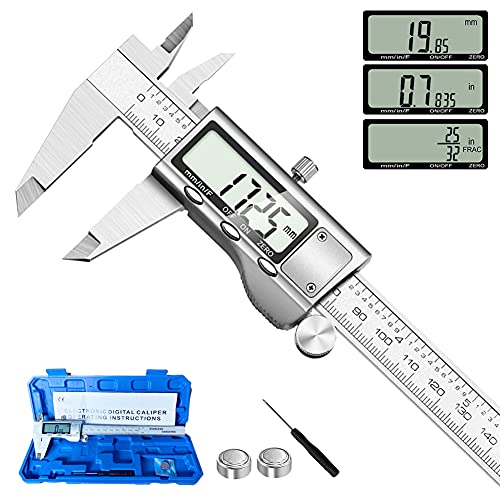
Digital caliper and a decent tape measure
Sounds unrelated to pricing, but the fastest way to blow an estimate is to measure a client’s alcove wrong and rebuild a carcass. I keep a caliper for stock thickness when I am figuring board feet and a stiff-blade tape for site measurements. Cheap insurance against an expensive redo.
How to price woodworking projects when the client wants a number today
People rarely ask for a quote at a convenient moment. They ask at a farmers market, or in a text message with three photos from Pinterest, and they want a number before you have had time to think. My rule now is simple: I never give a firm price on the spot for custom work. I give a range, and I say the range is a range for a reason.
For a dining table I might say “most of what I build in that size lands between the high hundreds and the low two thousands depending on species and base design.” That is honest, it filters out the people who wanted a $300 table, and it buys me an evening with a sketch pad and a lumber price list. Then I follow up with a written quote that itemizes materials, hours, and finish, because a broken-out number is much easier to defend than one big scary figure.
Three quotes I got badly wrong, in case they save you the same lesson. A built-in bookcase where I priced the boxes and forgot that scribing to a plaster wall in a 1920s house is its own skill and its own hours. A set of eight chairs where I quoted per chair based on how long the first one took, ignoring that chair one includes all the jig-making but chairs two through eight are where the fatigue lives. And a “simple” epoxy river table where I had never poured epoxy before and the learning curve cost me two weekends and a gallon of resin I would rather not talk about.
- ✔ Itemized quotes get accepted more often than lump sums
- ✔ A range on the spot filters tire-kickers without being rude
- ✔ Charging for design time makes clients decide faster
- ✔ Deposits fund your lumber purchase instead of your credit card
- ✘ You will lose some jobs on price, and that stings the first few times
- ✘ Tracking hours honestly is tedious and you have to actually do it
- ✘ Custom work means every quote is a fresh estimate, no shortcuts
- ✘ Friends and family pricing is a permanent awkward conversation
Tracking hours, deposits, and the paperwork side
You cannot price the next job accurately without data from the last one. I keep a note on my phone for every project: start date, hours logged in rough half-hour chunks, actual material spend with receipts, and one line at the end about what surprised me. After about ten projects that little log became the most valuable tool in my shop, more useful than any single machine I own, because it told me the truth about my own speed instead of the flattering story I tell myself.
On money, I take 50% up front on anything over a few hundred dollars, and that deposit is non-refundable once I buy lumber. I say that in writing, in plain language, before anyone pays. I also write down the finish, the species, the dimensions, and the delivery expectation, because “walnut-ish” and “sometime in spring” are how good relationships turn sour.
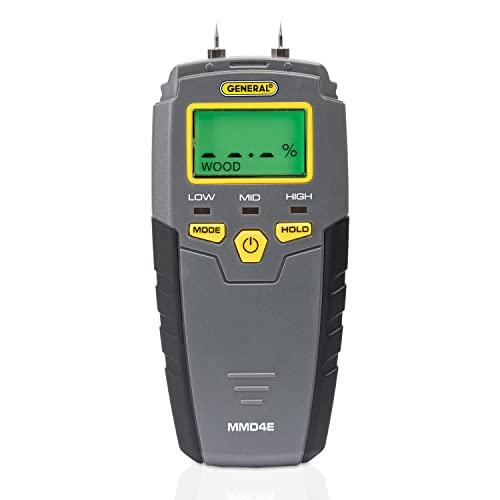
Moisture meter for incoming lumber
A pinless meter is the cheapest way to avoid the worst kind of unpaid work, which is rebuilding a cupped tabletop for free six months after delivery. If a board reads high, it sits in the garage another few weeks and I adjust my schedule instead of my reputation.
Pricing repeat items versus true one-offs
These are two different businesses and I price them differently. Cutting boards, coasters, small boxes, anything I batch: I price these on efficiency. If I glue up six boards at once, the setup time is shared, and I can sell at a number that looks reasonable to a market shopper while still clearing my rate. Batching is the only reason small items work at all in a garage shop.
True one-offs get the full formula plus the risk cushion, and I am not shy about it. A commission is a prototype, and the client is funding the prototype. If they want production pricing they should buy a production product, and I sometimes tell them that gently, because a mismatch in expectations is worse than a lost sale.
One more thing I got wrong for a long time: I treated finishing as an afterthought when it is often 20 to 30% of the labor on a piece. Sanding through the grits, raising grain, wiping on coats and waiting between them, buffing. It is slow, it is boring, and it is where the perceived quality lives. Bill for it.
Frequently asked questions
What hourly rate should a hobby woodworker charge? Work it out from your own numbers rather than copying mine. Add up annual shop costs, divide by the hours you actually sell, add what you want to earn per hour, and that is your floor. Most part-time garage shops in the US land somewhere in the $35 to $75 range depending on skill and region. If the number feels high, that usually means you have been undercharging, not that the number is wrong.
How do I handle friends and family who want a discount? I charge materials plus a reduced rate for close family and I say the number out loud before starting. For friends of friends, full price, no exceptions, because that is where the scope creep lives. The gift version of this is better anyway: if I want to give someone a piece, I give it as a gift with no money involved and no obligations on either side.
Should I show clients a price breakdown? Yes, in categories rather than line by line. Materials, shop hours, finish, delivery. It reframes the conversation from “that seems like a lot for a table” to “oh, the lumber alone is that much.” I do not disclose my exact supplier pricing or my hourly rate on the quote, just the totals per category, which keeps the focus on value delivered rather than on my markup.
The short version of everything above: track your real hours, respect your overhead even though your shop is a garage, add a cushion for anything new, and give the number without flinching. I still undercharge occasionally, usually when I want a project badly enough to talk myself into it. The difference now is that I know I am doing it, and I know exactly what it costs me.
Check prices on Amazon →