
What's inside
As an Amazon Associate I earn from qualifying purchases. This post may contain affiliate links at no extra cost to you.
Oliver 10045 Planer Review: The Short Buying Answer
The Oliver 10045 planer is worth considering if you need a heavy-duty, stationary planer and can verify that the machine’s actual width, cutterhead, electrical requirements, and condition suit your shop; it is a poor fit if you need a compact, portable, or easily serviced machine. The model name alone is not enough to establish a dependable specification sheet, so confirm the data on the machine’s plate and in its manual before comparing it with current alternatives or budgeting installation.
That verification matters especially on a used Oliver planer 10045: machines can differ by configuration, accessories, electrical setup, and prior repairs. Rather than assume a particular capacity or cutterhead comes standard, treat those as inspection items. If the seller cannot provide a clear nameplate photo, manual, or measurements, price the planer as an unknown-spec machine—not as a confirmed bargain.
As an Amazon Associate we earn from qualifying purchases at no extra cost to you.
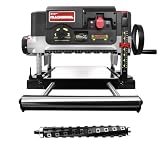


What to Verify Before Comparing Planers
For a useful comparison, record the planer’s maximum width and thickness, maximum cut depth at different board widths, cutterhead type, feed-speed options, motor phase and voltage, footprint, and shipping weight. Then check whether the machine’s fence, bed, rollers, chip hood, and safety equipment are complete. The figures below are a comparison framework, not claims about the 10045’s undocumented configuration.
| Buying criterion | Oliver 10045: confirm on your machine | Portable benchtop planer | Industrial 20-inch-class planer |
|---|---|---|---|
| Maximum board width | Measure or verify from manual; do not infer from model number | Typically 12–13 inches | Typically 20 inches |
| Typical machine weight | Check shipping or manual data for exact configuration | About 60–100 lb | Often several hundred pounds or more |
| Cutterhead options | Inspect head and identify replacement parts before purchase | Usually straight knives; some models use segmented carbide heads | Straight knives or segmented carbide, depending on model |
| Electrical fit | Read the nameplate for voltage, phase, and current | Commonly standard single-phase shop power; confirm model | May require a dedicated circuit or three-phase power |
| Installation burden | Plan around actual weight, footprint, and power needs | Low; bench and dust collection still matter | High; rigging, floor space, and electrical work can add cost |
Performance: Capacity Is Only Half the Decision
A planer’s advertised maximum width tells you what can pass through, not how efficiently it handles your regular work. If most of your stock is narrower than the machine’s capacity, a larger planer may still be worthwhile for stability and throughput—but only if its feed system, motor, and cutterhead are in sound condition. For wide panels or frequent production runs, inspect how consistently the rollers feed stock and whether the bed and tables are aligned.
Cutterhead design changes both finish and ownership cost. Straight knives can produce a good surface when sharp and properly set, but need careful alignment and periodic sharpening or replacement. A helical or segmented-carbide head can make localized insert changes easier and often handles figured grain with less tear-out, but replacement inserts and compatible tooling add expense. Do not assume the 10045 has either setup: identify the head in person, ask when it was last serviced, and confirm that knives or inserts remain available.
When comparing a used machine with a new planer, look for snipe, chatter, uneven thickness across the board, unusual bearing noise, and inconsistent feed. Test with straight, representative stock if possible, taking light passes first. A large machine with worn rollers or a damaged bed can perform worse than a smaller, well-maintained planer.
Build Quality, Service Access, and Wear
A cast-iron frame and substantial bed can help resist vibration, but weight alone does not prove a planer is accurate. Check for cracks, repairs, excessive rust on working surfaces, and signs that the machine was dropped or moved carelessly. Raise and lower the table through its travel; it should move without binding, and the locking mechanism should hold settings. Inspect belts, pulleys, chains, rollers, and guards for wear or missing parts.
Maintenance access is easy to overlook. Ask how the cutterhead is reached, whether the knife-setting procedure and adjustment tools are included, and how quickly the infeed and outfeed rollers can be inspected. Verify access to manuals and parts before purchase, particularly for an older or discontinued configuration. A planer that requires improvised parts or difficult disassembly for routine service can cost more in downtime than its purchase price suggests.
Common wear items include knives or inserts, feed rollers, belts, bearings, and table-adjustment components. Keep the bed clean and lightly protected against rust, remove packed chips from the cutterhead area with the machine disconnected, and avoid forcing deep cuts in wide or difficult grain. Dull knives, excessive cut depth, and poor dust extraction can cause rough finish, motor strain, and overheating.
Compare Total Installed Cost, Not Just the Asking Price
For the Oliver 10045, total cost can include the machine, transport, rigging, electrical work, dust collection, tooling, and repairs. Use this simple calculation before negotiating:
Installed cost = purchase price + transport/rigging + electrical changes + dust collection changes + initial service and tooling.
For example, a planer listed at $2,000 might need $450 in transport, $600 in electrical work, and $350 for knives and service. Its estimated installed cost is $3,400—not $2,000. These are illustrative figures, not a quote; local labor, distance, and machine condition can change the total substantially. Compare that result with a new or used alternative that already matches your power supply and dust system.
Which Planer Fits Your Situation?
| Your situation | Practical choice | Why |
|---|---|---|
| Small shop, occasional projects, limited budget | Portable 12–13-inch benchtop planer | Lower purchase and installation burden; accepts narrower stock |
| Frequent furniture work, adequate floor space and power | Consider the 10045 only after confirming capacity, condition, and service support | A stationary machine may suit regular use, but its specification and setup must be verified |
| Production work or repeated wide-stock planing | Compare verified industrial machines by capacity, feed rate, and cutterhead | Throughput and parts support matter more than a low initial price |
| No suitable circuit, uncertain delivery access, or no rigging plan | Choose a lighter machine compatible with the shop | Electrical and moving costs can erase the value of a heavy planer |
Buying Advice
Before committing to an Oliver 10045 planer, get the nameplate details, measure the machine and its openings, confirm the cutterhead and feed speeds, and request a test under load. Ask what is included—guards, chip hood, adjustment tools, and manual—and identify the source and cost of wear parts. Arrange transport only after checking the machine’s weight, pickup access, and destination floor.
Bottom line: the 10045 may make sense for a shop that needs a stationary planer and can support its footprint, power, and maintenance. Its value depends on the specific machine in front of you. If its capacity and cutterhead cannot be verified, parts are uncertain, or installation pushes the total beyond a well-supported alternative, keep shopping.