
What's inside
As an Amazon Associate I earn from qualifying purchases. This post may contain affiliate links at no extra cost to you.
The best arcade sticks for fighting games and retro play depend on three decisions: whether you prefer a compact or full-size control panel, whether the joystick uses a traditional square gate or another restrictor shape, and which consoles or devices must work without adapters.
As an Amazon Associate we earn from qualifying purchases at no extra cost to you.

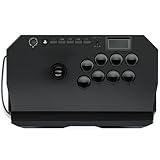


Quick picks by player and platform
| Player situation | Best fit | Why it makes sense | Typical market range |
|---|---|---|---|
| PC, Switch, and casual retro play | 8BitDo Arcade Stick | Wireless flexibility, programmable controls, and a manageable desktop footprint | $80–$100 |
| Competitive PlayStation or Xbox fighting games | Hori Fighting Stick Alpha | Full-size Japanese layout, low-latency wired connection, and replaceable Sanwa parts | $180–$230 |
| Budget-minded PC, Switch, or older-console player | Mayflash F500 Elite | Arcade-style layout with Sanwa hardware and broad compatibility through firmware or adapters | $130–$170 |
| Portable console and PC use | Qanba Drone 2 | Lighter, smaller construction with a familiar eight-button Japanese arrangement | $120–$150 |
| Premium tournament-style desk use | Victrix Pro FS | Rigid aluminum construction, spacious panel, and easy internal access | $350–$400 |
These are general market ranges rather than fixed prices. Compatibility can vary by version, firmware, and console generation, so check the exact model before buying.
What separates the best arcade sticks?
Button layout: Japanese versus Sega-style
Most modern fighting sticks use a Japanese layout: eight large face buttons arranged in two rows, with four primary buttons above four secondary buttons. This is the familiar arrangement for Street Fighter, Tekken, Guilty Gear, Mortal Kombat, and many arcade conversions. It gives the right hand enough room to press individual buttons or roll across several buttons for shortcuts and macros.
A Sega-style layout usually places the buttons in a curved row. It can feel natural for older arcade games, especially shooters, beat ’em ups, and fighting games originally designed around a six-button cabinet. The trade-off is that a curved layout may feel less familiar if you are following modern Japanese arcade-stick tutorials.
For most buyers, layout matters more than the number of buttons. Extra buttons can help with training-mode shortcuts, menu navigation, or simultaneous-button inputs, but they also increase the chance of accidental presses. A removable or lockable option button is useful if you play competitively.
Joystick type and restrictor gates
A traditional Japanese joystick uses a short lever and microswitches. The lever moves through a restrictor gate, commonly square, octagonal, or circular. A square gate has clear corners and is widely used for modern fighting games because quarter-circle and charge motions have distinct contact points. An octagonal gate offers more obvious directional edges and can feel easier for diagonals, although it is not automatically more accurate.
American-style joysticks generally have a longer shaft, a larger ball or bat top, and a looser, heavier feel. They suit classic arcade games and players who prefer broad movements. They can be excellent for retro titles, but the larger throw may require adjustment for fast modern inputs.
Gate choice is not a simple quality ranking. Precision comes from consistent switch activation and your ability to feel the directional boundaries. A square gate is the safest default for a first stick. If you regularly play classic shooters or dislike square corners, an interchangeable gate is more valuable than a premium-looking exterior.
Head-to-head: the strongest choices
Hori Fighting Stick Alpha: best upgrade path
The Fighting Stick Alpha is one of the most practical high-end choices for players who want a conventional Japanese stick and the option to replace parts later. Its full-size panel uses Sanwa Denshi controls, and the case opens for easier maintenance and artwork replacement. The layout provides enough wrist room for long sessions without feeling excessively wide.
Its main advantage is ownership flexibility: buttons, joystick, artwork, and some wiring components can be serviced instead of replacing the entire controller. The important caveat is platform matching. Hori sells different versions for PlayStation and Xbox, and the console-specific model should match the system where you intend to play most often.
8BitDo Arcade Stick: best for mixed casual use
The 8BitDo Arcade Stick is appealing when wireless play and platform variety matter more than tournament convention. It supports Nintendo Switch, Windows PC, and compatible devices depending on connection mode, and its programmable controls are useful for retro games and menu navigation. The case is more compact than many full-size sticks, making it easier to store.
Wireless convenience introduces a consideration that a wired tournament stick avoids: battery charging and connection mode. For ranked or competitive play, use the wired connection when supported. For couch-based retro sessions, wireless operation is a major advantage. Its buttons and lever are serviceable, but serious players may eventually prefer a Sanwa- or Seimitsu-based replacement setup.
Mayflash F500 Elite: best value for replaceable hardware
The F500 Elite is a strong middle-ground choice because it pairs a broad compatibility design with Sanwa buttons and joystick hardware. It works particularly well for PC and Switch users, and its compatibility with additional systems may require an adapter or an officially supported controller connection.
The larger case gives your hands useful space, but it is not especially portable. Mayflash models are also more dependent on correct firmware and connection procedures than a console-branded stick. That is a reasonable exchange for the price and repairability: you get standard arcade components without paying premium-console-stick money.
Qanba Drone 2: best compact wired option
The Drone 2 is smaller and lighter than many full-size sticks, making it a sensible choice for players who carry their controller to events or have limited desk space. It keeps the familiar eight-button layout and is designed for PlayStation and PC use, with exact support depending on the model and console.
The compact dimensions mean less room for resting the wrists and thighs. This is not a defect, but it changes the ownership experience. If you play for several hours at a time, a full-size panel may be more comfortable. For occasional sessions, travel, and smaller workspaces, the Drone 2’s reduced bulk is valuable.
Victrix Pro FS: best premium construction
The Victrix Pro FS targets players who want a rigid, spacious controller and do not mind paying for construction quality. Its aluminum body feels more like permanent arcade furniture than a lightweight accessory, while the internal layout is designed for easier access and customization.
Its size and price are the disadvantages. It is difficult to justify for someone still learning whether arcade controls suit them, and it occupies more storage space than compact alternatives. Choose it when you already know you prefer a stick and expect frequent use over several years.
Size, weight, and hardware comparison
| Model | Approx. width | Approx. weight | Joystick and button arrangement | Connection profile |
|---|---|---|---|---|
| 8BitDo Arcade Stick | About 12 in / 30 cm | About 4.5 lb / 2.1 kg | Japanese-style, eight buttons; replaceable-style arcade controls | Wired and wireless modes; PC and Switch focus |
| Hori Fighting Stick Alpha | About 15.4 in / 39 cm | About 6 lb / 2.7 kg | Japanese-style, eight buttons; Sanwa Denshi parts | Wired; PlayStation or Xbox-specific versions |
| Mayflash F500 Elite | About 14 in / 35.6 cm | About 7.5 lb / 3.4 kg | Japanese-style, eight buttons; Sanwa parts | Wired; broad support, with adapters for some systems |
| Qanba Drone 2 | About 14 in / 35.6 cm | About 6 lb / 2.7 kg | Japanese-style, eight buttons | Wired; PlayStation and PC focus |
| Victrix Pro FS | About 15.8 in / 40 cm | About 7 lb / 3.2 kg | Spacious Japanese-style panel; premium serviceable design | Wired; console-specific versions |
Dimensions and weights can vary slightly by revision and included cable. The practical lesson is that a stick around 14–16 inches wide is comfortable on a desk but less convenient to carry, while a model near 12 inches is easier to store and transport.
How to choose without overspending
- New to arcade controls: choose a $80–$150 model with a standard Japanese layout. Do not begin with a premium aluminum stick until you know you prefer a lever.
- Play several times per week: prioritize replaceable buttons, a serviceable joystick, and a rigid case. These features reduce long-term replacement costs.
- Use multiple platforms: select a model with confirmed support for every important system. “PC compatible” does not guarantee native PlayStation or Xbox compatibility.
- Have limited space: measure the desk or lap area first. Allow at least 2 inches of clearance on each side so your wrists are not forced against the case.
- Play tournaments: wired operation, a detachable or secure cable, clear button spacing, and a lockable menu switch matter more than wireless convenience.
Durability, cleaning, and common mistakes
The joystick microswitches and face buttons usually wear before the case. Symptoms include missed inputs, double presses, or a direction that activates inconsistently. Dust and skin oils can also make buttons feel sticky. Unplug the stick, remove the top panel only if the design permits it, and use compressed air in short bursts. Wipe accessible surfaces with a lightly damp microfiber cloth; do not pour cleaner into the switches.
Do not pull a lever by its shaft when transporting the controller, and do not leave heavy objects on the buttons. Keep the cable from sharply bending at the connector. If replacing parts, confirm whether the stick uses quick-disconnect terminals and whether the button diameter is the common 30 mm size, with a 24 mm size often used for auxiliary buttons.
A simple ownership calculation helps explain why serviceability matters. Suppose a $140 stick is used twice weekly for three years: 2 × 52 × 3 equals 312 sessions, or about $0.45 per session before replacement parts. A button set costing $25–$40 can extend that useful life far more cheaply than replacing the entire controller after one worn switch.
Final recommendation
For most buyers seeking the best arcade sticks, the Hori Fighting Stick Alpha is the safest serious choice when you can match the console version. Choose the 8BitDo Arcade Stick for wireless PC and Switch convenience, the Mayflash F500 Elite for broad compatibility and upgrade value, and the Qanba Drone 2 when portability matters. The Victrix Pro FS is reserved for frequent players who value premium construction and already know that a full-size lever-and-button setup is the right long-term control method.