
What's inside
As an Amazon Associate I earn from qualifying purchases. This post may contain affiliate links at no extra cost to you.
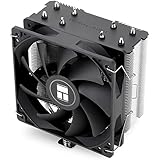
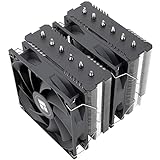
The best cheap CPU coolers for budget PCs are the Thermalright Assassin X 120 SE for low-cost single-tower builds, the Thermalright Peerless Assassin 120 SE for higher heat loads, and the Arctic Freezer 36 when quiet operation and broad modern socket support matter most.
As an Amazon Associate we earn from qualifying purchases at no extra cost to you.


Quick picks by building situation
| Situation | Best fit | Typical market range | Why choose it |
|---|---|---|---|
| Lowest-cost replacement cooler | Thermalright Assassin X 120 SE | $18–$30 | Compact 120 mm tower and strong value for mainstream six- and eight-core CPUs |
| High performance on a tight budget | Thermalright Peerless Assassin 120 SE | $35–$50 | Dual towers and two 120 mm fans provide much more thermal headroom |
| Quiet, easy-to-live-with build | Arctic Freezer 36 | $30–$45 | Efficient tower design, restrained fan behavior, and current Intel and AMD mounting support |
| Widely available conventional design | Cooler Master Hyper 212 Halo | $30–$50 | Familiar single-tower layout with a 120 mm fan and broad case compatibility |
| Simple, understated office or gaming PC | be quiet! Pure Rock 2 | $30–$45 | Low visual clutter, straightforward installation, and a 120 mm fan |
Market prices vary with mounting bundles, lighting, color, and sales. A cooler that costs $10 more can still be the better bargain if it includes the socket hardware you need and fits without replacing your case fan or memory.
What “cheap” should mean for a CPU cooler
For a budget PC, the important question is not the advertised wattage alone. A cooler must physically fit the case, clear the RAM and graphics card, include the correct mounting hardware, and dissipate the processor’s real sustained heat without making excessive noise.
As a practical guide, a decent 120 mm single-tower cooler is suitable for mainstream Ryzen 5 and Core i5 processors, including many models with six to fourteen cores, provided the motherboard power limits are sensible. A dual-tower cooler is a better choice for sustained rendering, compilation, streaming, or higher-power Core i7 and Ryzen 7 systems. No inexpensive air cooler should be selected on the assumption that it will quietly run an unrestricted flagship CPU at maximum power.
Head-to-head comparison
| Cooler | Approx. dimensions | Fan arrangement | Heat-pipe design | Best thermal class | Installation and clearance notes |
|---|---|---|---|---|---|
| Thermalright Assassin X 120 SE | Approximately 148 mm tall | 1 × 120 mm | 4 copper heat pipes | 65–125 W mainstream CPUs | Usually uncomplicated; check the case height limit and first DIMM slot |
| Thermalright Peerless Assassin 120 SE | Approximately 155 mm tall | 2 × 120 mm | 6 copper heat pipes | 125–200 W-class sustained loads | Wide dual tower; front fan can overlap tall memory |
| Arctic Freezer 36 | Approximately 159 mm tall | 1 × 120 mm, with some versions using 2 fans | 4 copper heat pipes | 100–180 W-class mainstream loads | Designed around modern platforms; verify the specific package for your socket |
| Cooler Master Hyper 212 Halo | Approximately 154 mm tall | 1 × 120 mm | 4 copper heat pipes | 65–125 W mainstream CPUs | Moderate height and generally good case compatibility; RGB version needs a suitable header or controller |
| be quiet! Pure Rock 2 | Approximately 155 mm tall | 1 × 120 mm | 4 copper heat pipes | 65–120 W mainstream CPUs | Front fan position may need adjustment around tall memory modules |
Dimensions are useful screening figures rather than a guarantee of fit: fan clips, motherboard heatsinks, RAM height, and the exact case side-panel design all affect clearance. Leave a few millimeters of margin instead of buying a cooler whose listed height exactly matches the case limit.
Best cheap CPU coolers by socket and processor
For AMD Ryzen 5 and Ryzen 7
The Assassin X 120 SE is a sensible minimum upgrade over a small stock-style cooler for processors such as the Ryzen 5 5600, Ryzen 5 7600, and similar mainstream chips. It also suits a Ryzen 7 used mainly for gaming, although sustained all-core work benefits from the Peerless Assassin 120 SE or Arctic Freezer 36.
AM5 and AM4 mounting hardware are commonly included with these coolers, but bundles can change. Confirm that the listing explicitly supports your socket before ordering. The cooler normally attaches to the motherboard’s retained AMD backplate, so do not discard that backplate during installation.
For Intel Core i5
A single-tower 120 mm cooler is a strong match for Core i5 processors when motherboard power limits follow Intel’s intended settings. The Hyper 212 Halo and Assassin X 120 SE are economical choices for gaming-oriented systems. The Freezer 36 is preferable if the PC will run long CPU-heavy workloads, because its fin area and airflow design provide more margin before the fan has to accelerate.
Intel socket support is especially important because LGA1200, LGA1700, and LGA1851 mounting patterns are not interchangeable. A cooler may fit physically but still require a separate bracket. Check the exact revision and included hardware rather than relying on the cooler family name.
For Core i7, Ryzen 9, or unrestricted power limits
Choose the Peerless Assassin 120 SE or another dual-tower cooler with six or more heat pipes if the system will compile code, render video, or run simulations for hours. It cannot repeal the thermal limits of a high-power processor, but the extra fin area slows temperature rise and allows lower fan speeds than a small single tower.
For an unrestricted high-end Intel processor, or a Ryzen 9 under heavy all-core loads, a larger premium air cooler or appropriately sized liquid cooler may be more suitable. Spending less on the cooler while leaving the motherboard’s automatic power enhancement enabled often produces more noise than performance.
Clearance and noise: the specifications that decide the purchase
- Case height: measure from the CPU socket area to the inside of the side panel. Compare this with the cooler’s total height, not just the fin-stack height.
- Memory clearance: tall RGB modules can conflict with the front fan on dual-tower coolers. Raising the fan increases total height and may make the cooler incompatible with the case.
- Graphics-card clearance: most tower coolers do not obstruct the main PCIe slot, but very wide fin stacks can make motherboard installation awkward.
- Noise: two large fans running slowly can be quieter under load than one small fan running at maximum speed. Also check whether the motherboard supports a smooth PWM fan curve.
- Installation space: large dual towers are heavier and more awkward to hold while securing the crossbar. A single tower is easier for a first-time builder.
Installation steps that prevent common problems
- Confirm the socket kit before removing the old cooler. Lay out the backplate, spacers, brackets, screws, and fan clips. Missing or mixed-generation hardware is a more common problem than cooler failure.
- Clean the CPU heat spreader. Remove old thermal compound with isopropyl alcohol and a lint-free cloth. Let the surface dry completely.
- Apply a small amount of thermal compound. A pea-sized central dot is normally sufficient for a desktop CPU. Spreading a very thick layer can increase mess without improving contact.
- Secure the heatsink evenly. Alternate between screws, turning each a few rotations at a time. Uneven pressure can reduce contact and make one side of the processor noticeably hotter.
- Install the fan for front-to-back airflow. The open side of the fan generally faces the front of the case, while the side with the support struts faces the rear exhaust fan.
- Connect the fan to CPU_FAN. Do not use a random chassis-fan header if the motherboard uses CPU_FAN monitoring to detect a working cooler.
- Set a sensible fan curve. Allow the fan to remain quiet at desktop temperatures, then increase speed progressively above roughly 60–70°C. Check temperatures during a game and a sustained workload rather than judging the cooler from a brief startup reading.
Ownership costs and maintenance
Air coolers have few consumables. Thermal compound may need replacement after several years or whenever the heatsink is removed, while the fan bearing is normally the first mechanical part to wear. A replacement 120 mm PWM fan is usually cheaper and easier to fit than replacing an entire cooler.
Dust buildup is the more immediate issue. Every few months, shut down the PC, hold the fan blades still, and blow dust through the heatsink from both directions. Do not let compressed air spin the fan at extreme speed. If temperatures rise gradually over time, inspect the heatsink fins and the front dust filter before assuming the CPU cooler has failed.
For most budget builders, the final choice is simple: buy the Assassin X 120 SE when price and easy installation dominate, step up to the Peerless Assassin 120 SE for sustained CPU workloads, and choose the Arctic Freezer 36 when lower noise and modern platform support are worth a modest premium.