
What's inside
- The best compressor pedals depend on what you want them to fix: choose the Keeley Compressor Plus for an adaptable guitar all-rounder, the MXR M87 for bass and precise metering, or the Xotic SP for a compact board and blend control.
- Quick comparison
- Which compressor suits your playing?
- How to choose by situation
- Compression controls that matter in practice
- A quiet setup: five steps
- Ownership trade-offs
- Bottom line
As an Amazon Associate I earn from qualifying purchases. This post may contain affiliate links at no extra cost to you.
The best compressor pedals depend on what you want them to fix: choose the Keeley Compressor Plus for an adaptable guitar all-rounder, the MXR M87 for bass and precise metering, or the Xotic SP for a compact board and blend control.
Compression can even out picking, add sustain, or make a clean part sit more consistently in a mix. It can also raise hiss, flatten dynamics, and take up valuable pedalboard space. The right choice depends less on how much compression a pedal promises and more on whether its controls let you balance the compressed sound against your original playing.
Quick comparison
Dimensions and weights below are manufacturer-published figures where available; they can vary slightly by measurement method. Street prices are approximate general market ranges in 2026, not fixed quotes.
As an Amazon Associate we earn from qualifying purchases at no extra cost to you.


| Pedal | Best fit | Controls and blend | Size and power | Approx. price |
|---|---|---|---|---|
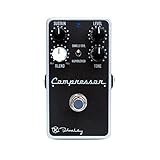
| Keeley Compressor Plus | Guitarists who want one pedal for clean, lead, and single-coil or humbucker setups | Sustain, level, blend, tone; single-coil/humbucker release switch | About 4.4 × 2.4 in; 9V DC, center-negative | $150–$200 |
| MXR M87 Bass Compressor | Bassists who need adjustable compression and visible gain-reduction feedback | Attack, release, ratio, input, output; LED gain-reduction meter | About 4.4 × 2.6 in; 9V DC, center-negative | $180–$230 |
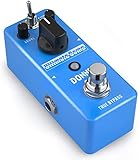
| Xotic SP Compressor | Players short on space who want a simple blend and broad compression choices | Blend knob; three compression modes and internal dip switches | About 3.5 × 1.5 in; 9V DC, center-negative | $120–$160 |
| Wampler Ego Compressor | Guitarists who want separate control over attack, tone, sustain, and dry signal | Sustain, volume, tone, attack, blend | About 4.5 × 2.5 in; 9V DC, center-negative | $180–$230 |
| Origin Effects Cali76 Compact Deluxe | Players seeking extensive control and a premium studio-style compressor format | Controls include input, output, dry blend, attack, release, and ratio | About 4.7 × 2.6 in; 9V DC, center-negative | $350–$450 |
Which compressor suits your playing?
For one versatile guitar pedal: Keeley Compressor Plus
The Compressor Plus is a sensible starting point if you switch between pickups or styles. Its blend control lets you retain some of your uncompressed attack, while the tone control helps compensate if compression makes a guitar sound dull. The single-coil/humbucker switch changes the release behavior to better suit different output levels and playing dynamics; it is a useful adjustment, not a substitute for setting the sustain knob by ear.
Choose it for clean rhythm, country-style picking, and moderate sustain. If you need independent attack and release controls, look at a more adjustable design instead.
For bass and visible control: MXR M87
The M87 stands out for its dedicated attack, release, and ratio controls, plus a meter that shows gain reduction. That feedback is especially useful when setting compression by level rather than guessing from a sustain knob. Start with a low ratio and moderate gain reduction: bass notes need enough transient to keep their definition, and heavy compression can make low end feel smaller or less responsive.
Its larger footprint and more involved control set are trade-offs. It is a strong fit for players who want to shape dynamics deliberately, rather than a tiny pedal with a single compression switch.
For a compact board: Xotic SP Compressor
The SP saves space and offers a blend knob alongside three compression modes. That makes it easier to preserve pick attack than a simple “more compression” control alone. Its small enclosure means less room for knobs, so fine adjustments rely partly on internal dip switches. Set those before mounting the pedal somewhere hard to reach.
For detailed guitar adjustment: Wampler Ego
The Ego separates attack and tone adjustments from sustain and blend. That’s useful when a pedal needs to feel less clamped without losing level support, or when you want to retain a sharper pick transient. Its controls take more time to learn than a minimal compressor, but they make it easier to address separate problems independently.
For a premium, highly adjustable option: Cali76 Compact Deluxe
Origin Effects’ Cali76 Compact Deluxe provides a broader set of compressor-style controls, including dry blend, attack, release, and ratio. It suits players who want to fine-tune response rather than rely on preset character. Its higher price is easier to justify when those controls solve a specific need; for simple level evening, a less expensive pedal may do the job.
How to choose by situation
| Your situation | Good starting choice | Why |
|---|---|---|
| First compressor; mainly clean guitar | Keeley Compressor Plus | Blend and tone controls are useful without requiring a full set of studio-style parameters. |
| Bass player who wants to see compression at work | MXR M87 | Its gain-reduction meter and dedicated timing controls make setup more legible. |
| Very limited pedalboard space | Xotic SP Compressor | Compact enclosure with a practical blend control. |
| Want to preserve picking attack and shape response | Wampler Ego or Cali76 Compact Deluxe | Separate attack and blend controls provide more adjustment options. |
| Lowest priority is detailed tweaking | Choose a simpler compressor within budget | Extra controls are only valuable if you’ll use them; reserve budget for a quiet power supply if needed. |
Compression controls that matter in practice
- Blend: Mixes the dry signal back with the compressed signal. It can restore pick attack and natural dynamics, but it does not remove hiss already raised by the compressed path.
- Sustain or compression: Usually increases the amount or audibility of compression. Turn it up gradually: excessive settings can exaggerate noise between notes and make playing feel less responsive.
- Attack: Controls how quickly compression responds to a note. A slower attack lets more of the initial pick transient through; a faster attack smooths it.
- Release: Controls how quickly the compressor recovers. A release that is too slow can keep later notes compressed; one that is too fast can make level changes sound uneven or pump.
- Level or output: Sets the pedal’s output volume. Match bypass volume before judging whether a compressor sounds better; louder often seems more impressive even when the tone is not preferable.
- Headroom and coloration: A pedal that adds little obvious coloration can help preserve an amp or instrument’s character. Stronger compression, added output, or a particular circuit voicing may make a signal feel denser or brighter. Actual headroom depends on the pedal’s design, supply voltage, and the level of the signal feeding it, so specifications alone don’t guarantee clean operation with every instrument.
A quiet setup: five steps
- Place it early in the chain. Try it after the tuner and before overdrive or distortion. This lets it even out the instrument signal before later pedals amplify it. If you prefer compression after distortion, compare both positions; the response will differ.
- Start with moderate sustain or ratio and a low blend. Play softly and hard. Increase compression only until the quieter notes become easier to hear, then add dry signal if the attack feels blunted.
- Set output to unity gain. Switch between bypass and engaged while playing at the same intensity. Adjust output until the perceived loudness is close.
- Listen between notes. If hiss becomes distracting, reduce compression first. Check cables, pickups, gain staging, and power before assuming the pedal is faulty.
- Use an isolated, correctly rated power output. Follow the manufacturer’s voltage and polarity requirements. Daisy-chain noise can occur when pedals share power, especially in a crowded setup with other noisy devices.
Ownership trade-offs
Compression itself does not wear out like a mechanical part, but knobs, footswitches, jacks, and power connections are the parts most exposed to repeated use. A compact pedal can make board layout easier but may have smaller controls; a larger unit is easier to adjust onstage but uses more space. Check whether the pedal’s control layout and power input will remain accessible once it is mounted.
Common setup mistakes are running the sustain control high by default, judging tone with a large volume jump, and using a compressor to compensate for excessive noise elsewhere in the rig. Compression raises quieter details along with quieter notes, so pickup hum, amp hiss, and handling noise can become more noticeable. If a pedal offers internal switches, note their original positions before changing them so you can restore a known starting point.
Bottom line
For most guitarists, the Keeley Compressor Plus balances useful control with a manageable learning curve. Bassists who want metering and separate timing adjustments should consider the MXR M87. The Xotic SP is the space-saving pick, while the Wampler Ego and Origin Effects Cali76 Compact Deluxe make more sense when attack, blend, and response need closer adjustment. Choose by the problem you want to solve—not by the maximum sustain setting.