
What's inside
As an Amazon Associate I earn from qualifying purchases. This post may contain affiliate links at no extra cost to you.
Best Nike Running Shoes for Every Runner: Match the Shoe to Your Run
The best Nike running shoes depend on where you run, how much cushioning you want, how your feet move, and whether you need a daily trainer or a race-day shoe. For most runners seeking one versatile pair, start with the Nike Pegasus 41; choose the Vomero 18 for softer, higher cushioning, the Structure 25 for a more guided ride, and the Vaporfly 4 for road racing.
Quick picks by running situation
| Runner’s priority | Model to consider | Published weight* | Drop* | Why it fits |
|---|---|---|---|---|
| One shoe for regular road training | Nike Pegasus 41 | About 297 g / 10.5 oz | 10 mm | ReactX foam with Air Zoom units balances everyday cushioning and responsiveness. |
| Soft, high-cushion road miles | Nike Vomero 18 | About 325 g / 11.5 oz | 10 mm | A thick, plush foam platform prioritizes comfort over a light, nimble feel. |
| More guided support | Nike Structure 25 | About 289 g / 10.2 oz | 10 mm | A supportive midsole design aims to provide a steadier transition. |
| Road-race speed | Nike Vaporfly 4 | About 190 g / 6.7 oz | 6 mm | A lightweight racing shoe with ZoomX foam and a carbon-fiber plate. |
| Track workouts or track racing | Nike ZoomX Dragonfly 2 | About 138 g / 4.9 oz | Not directly comparable | A track spike made for racing and fast track sessions, not everyday road mileage. |
*Approximate published men’s reference weights and listed heel-to-toe drops; figures vary by size and version. Check the specifications for the exact shoe and size before buying. Track spikes use a different construction, so drop comparisons with road shoes are not especially useful.
As an Amazon Associate we earn from qualifying purchases at no extra cost to you.


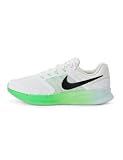
Choose by cushioning and weekly mileage
For one dependable daily trainer: Pegasus 41
The Pegasus is the practical starting point if you want one pair for easy runs, steady efforts, and occasional faster workouts. It is less plush than the Vomero and less specialized than a racing shoe, which makes it a reasonable middle ground. Consider it for regular road mileage when you prefer a familiar, moderately cushioned ride rather than a very soft or highly structured shoe.
For comfort on longer or easier runs: Vomero 18
Choose the Vomero when impact comfort and a soft, substantial feel matter more than low weight. Its extra bulk can feel reassuring on relaxed longer runs, but may be cumbersome for runners who like a close-to-the-ground, quick-turnover shoe. More foam does not automatically make a shoe more comfortable: the fit and the way the shoe feels at your normal pace still matter.
For a more supportive ride: Structure 25
The Structure is the Nike option to examine if a neutral daily trainer feels too unstable or you prefer a more guided platform. “Stability” describes a shoe’s design, not a treatment or guarantee against injury. If you have persistent pain, a history of significant foot problems, or uncertainty about what support you need, ask a qualified clinician rather than choosing based on a label alone.
Choose by surface and purpose
- Roads and paved paths: Pegasus 41 is the all-around choice; Vomero 18 favors cushioning; Structure 25 favors guidance.
- Road races: Vaporfly 4 is built for race-day speed, but its tall, plated construction is more specialized than a daily trainer. Try it at faster paces before committing to a full race.
- Track: ZoomX Dragonfly 2 is a spike, so it needs a track-compatible surface and appropriate event use. Its aggressive, lightweight design is not a substitute for a cushioned everyday shoe.
- Trails: Road models are not the right default for loose, rocky, or muddy terrain. Look for a dedicated trail shoe with outsole grip and an upper suited to the conditions; traction and protection matter more there than road-race weight.
For mixed routes, decide which surface makes up most of your running and choose around that. A road shoe may manage a dry, smooth park path, but it will not provide the grip or underfoot protection of a trail-specific design when the ground gets rough.
Fit the shoe to your foot, not just the category
Nike fit can vary between models, and a model’s width options may differ by market. Check the specific product listing for available widths instead of assuming that every version comes in a wide fit. If your forefoot is broad, your toes should not be squeezed together or forced over the edge of the footbed. If your heel slips despite a secure lacing adjustment, the shoe’s shape may not suit your foot.
Try shoes later in the day or after a run, when feet may be slightly larger. Leave a small amount of space in front of the longest toe, then walk and jog in the shoes if the retailer permits it. A snug midfoot can be useful; numbness, painful pressure, or toes hitting the front are reasons to try another size or model. Do not assume that sizing up will fix every shape mismatch.
Make the choice by budget and use
| Your situation | Best starting point | Trade-off to consider |
|---|---|---|
| New runner, mostly easy road runs | Pegasus 41 | A balanced trainer, but not as plush as the Vomero. |
| Frequent long or relaxed runs | Vomero 18 | More cushioning means more shoe to carry. |
| Prefer a steadier, guided feel | Structure 25 | Try it on: guidance that suits one runner may feel intrusive to another. |
| Training for a road race and prioritizing speed | Vaporfly 4 | Specialized and costly compared with a standard daily trainer; practice in it before race day. |
| Running on technical trails | A dedicated Nike trail shoe | Choose by terrain and grip needs, not by road-shoe cushioning alone. |
Prices change with model year, availability, and discounts. As a broad market guide, Nike daily trainers commonly sit around $100–$160 at regular pricing, while premium road racers often cost roughly $200–$300. Older colorways or previous versions may be less, but confirm that the shoe is the same model and not a different generation.
Think about wear before buying
There is no dependable mileage number at which every running shoe is “finished.” Wear depends on body weight, running form, surfaces, rotation, and storage. Inspect the outsole for unevenly worn-through rubber, check whether the upper or heel lining is damaged, and notice whether the midsole feels persistently less comfortable than when the shoe was new. Visible wear in one spot can appear before the rest of the shoe looks old.
Let shoes dry between runs, remove dirt with a soft brush and mild soap, and air-dry them away from direct heat. Avoid machine washing unless the shoe’s care instructions explicitly allow it; heat and aggressive washing can damage adhesives or materials. If you run frequently, rotating two pairs can give each pair time to dry, but it does not guarantee a particular lifespan.
Bottom line
For a versatile road shoe, begin with the Pegasus 41. Choose the Vomero 18 for a softer, more cushioned feel, the Structure 25 for a guided ride, and the Vaporfly 4 for road-race efforts. For track competition or technical trails, use footwear designed for that surface. The best choice is the one that fits comfortably at your actual running pace and matches the ground you run on most.