
What's inside
- Table of contents
- What does chop saw actually mean
- Types of chop saws
- Abrasive versus dry-cut metal saws
- Capacity, motor and speed
- Features worth paying attention to
- Fitting a chop saw into your workshop
- Who should choose which type
- Safety, sparks and fire
- Maintenance and consumables
- Common mistakes
- Buying checklist
- Frequently asked questions
- Conclusion
As an Amazon Associate I earn from qualifying purchases. This post may contain affiliate links at no extra cost to you.
Short answer: the term chop saw covers several different machines, so the best chop saw depends on what you cut. For steel tube, angle and bar, a dry-cut (cold-cut) metal saw with a carbide-tipped or toothed blade usually gives cleaner cuts with fewer sparks than a traditional abrasive-wheel saw, which in turn is cheaper and cuts hard materials aggressively. For lumber, what people call a chop saw is really a miter saw. Pick the type first, then check capacity, vise quality, guarding and your ability to manage sparks, noise and dust.
Our Top Picks
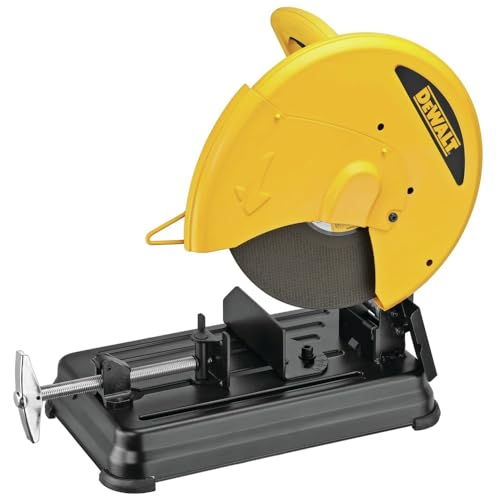

Table of contents
- What does chop saw actually mean
- Types of chop saws
- Abrasive versus dry-cut metal saws
- Capacity, motor and speed
- Features worth paying attention to
- Fitting a chop saw into your workshop
- Who should choose which type
- Safety, sparks and fire
- Maintenance and consumables
- Common mistakes
- Buying checklist
- Frequently asked questions
- Conclusion
What does chop saw actually mean
Ask three people for a chop saw and you may get three different tools. On many job sites a chop saw is a wood miter saw, since the blade chops straight down into the board. In metalworking shops it usually means a saw with a pivoting arm and a vise that cuts steel stock, historically with a thin abrasive wheel. A newer relative, the dry-cut or cold-cut metal saw, uses a toothed blade at a lower speed to cut metal with very little spark.
This guide focuses mainly on the metal-cutting machines because that is where the term is most specific, and it notes where the wood meaning applies. If you came looking for a saw for trim and framing lumber, jump to the comparison table in the next section; the tool you want is a miter saw, and the buying questions are different.
The common thread is the action: a motor-driven blade swings down on a fixed workpiece, usually clamped against a fence at a set angle. Everything else, including blade type, speed, guard design and dust or spark behavior, differs by category and drives both results and risk.
Types of chop saws
Abrasive-wheel chop saws
These use a thin, bonded abrasive disc that grinds through the metal rather than cutting it with teeth. They run at high speed, throw a large plume of sparks and leave hot, burred cuts. They are inexpensive to buy and can tackle hardened or awkward materials, but the wheels wear down, shrink and need frequent replacement. They are loud and messy and need careful guarding.
Dry-cut or cold-cut metal saws
These use a circular blade with carbide or cermet-style teeth, running at a lower rotational speed than an abrasive wheel. Chips are relatively large and cool, sparks are minimal and cuts are cleaner, often needing little deburring. The blades cost more up front but can last longer and can often be resharpened. Capacity and material suitability depend on the blade, so check what the saw maker lists.
Wood chop saws (miter saws)
For lumber, a fixed or sliding miter saw is the matching tool. It should not be fitted with abrasive wheels or used on metals unless the manufacturer explicitly approves a blade and material.
| Type | How it cuts | Sparks and heat | Cut quality | Consumables | Best suited to |
|---|---|---|---|---|---|
| Abrasive-wheel chop saw | Grinds with bonded disc | Heavy sparks, hot workpiece | Burred, needs finishing | Discs wear quickly | Rough fabrication and tough materials |
| Dry-cut metal saw | Toothed carbide blade at lower speed | Minimal sparks, warm chips | Cleaner, less burr | Blades cost more, last longer | Frequent steel and tube cutting |
| Horizontal band saw | Continuous toothed band | Almost none | Good, slower | Band blades | Quiet shops and thick stock |
| Wood miter saw | Toothed wood blade | Sawdust, no sparks | Clean on wood | Wood blades | Lumber and trim |
Abrasive versus dry-cut metal saws
This is the decision most metal-working buyers face.
Cut quality and cleanup. A dry-cut blade typically leaves a cleaner edge than an abrasive wheel, so there is less grinding before welding or painting. Abrasive cuts are often discolored and burred by heat.
Sparks and fire risk. Abrasive wheels throw bright, hot sparks over a wide area. Dry-cut saws generate far fewer, but chips are hot and still need attention. Neither type belongs near flammable vapors, finishing solvents or piles of sawdust.
Operating cost. Discs are cheap per piece but wear down quickly, which adds up with heavy use. Toothed blades cost more but are typically used for a long time before replacement, and can often be resharpened. Your own cutting volume decides which approach is cheaper over time.
Material range. Abrasive discs can handle very hard materials, but check the disc rating. Dry-cut blades are made for specific materials such as mild steel, and may not suit hardened steel or certain alloys. Always verify against the blade and saw manuals.
Dust and fumes. Abrasive cutting produces fine metal and abrasive dust. Dry cutting produces chips that you sweep up. Both can produce fumes from coatings such as paint or galvanizing, which call for ventilation and suitable respiratory protection.
Capacity, motor and speed
Capacity is stated as the largest round bar, square tube or angle that fits at 90 degrees, and it shrinks at miter angles. Do not take the largest number at face value. Check the capacity for the shape and angle you cut. A saw advertised for thick round bar may handle far less in wide flat bar or at 45 degrees.
Motor power is listed in amps for corded saws. A stronger motor holds speed under load, which improves cut quality and reduces stalling in thick sections. For light fabrication such as small tube frames, a modest motor is generally adequate. For daily cutting of thick-walled stock, power reserve and heat management matter more.
Blade speed differs by design. An abrasive wheel must never be run faster than its rating, and the saw’s maximum speed must not exceed the wheel’s rated limit. Dry-cut blades are designed for specific speed ranges, so use only blades the saw maker lists.
Features worth paying attention to
- Vise quality. The vise must hold the work firmly without slipping. A weak or sloppy vise is a safety problem, because a loose workpiece can be grabbed and thrown. Look for a quick-clamp mechanism with a solid screw and a flat jaw.
- Fence and miter angle. Many saws pivot to cut miters on tubes and angle. Look for easily read scales and a lock that holds.
- Guarding. A fixed guard plus a retractable lower guard that covers the blade when the arm is raised is the baseline. Spark deflectors and a chip tray help.
- Depth stop. Lets you control the cutting depth and helps avoid the blade biting the base or fence as the wheel wears.
- Spindle lock and tool-free blade change. Makes consumable changes easier and less likely to be rushed.
Fitting a chop saw into your workshop
Metal cutting needs its own zone. Sparks from abrasive saws fly several feet and can ignite sawdust, paper and solvent rags. Place the saw on a noncombustible surface, ideally away from the wood area. If a combined shop is unavoidable, cut metal at the end of the day, then clean thoroughly so no hot particles settle in a dust pile.
Make sure there is room for long stock. Tubes and angle iron can run six feet or more, and unsupported ends will lever the work out of the vise and bind the blade. Use roller stands or supports set at the same height as the saw table.
Ventilation matters. Open doors, add a fan that moves air away from you and consider local extraction that is rated for metal chips. Do not connect metal sparks to a standard wood-dust collector, because a spark in a dust collector can start a fire. Keep a suitable fire extinguisher within reach and know its class rating.
| Situation | Better fit | Reasoning | Considerations |
|---|---|---|---|
| Occasional metal cuts in a garage | Low-cost abrasive saw or portable alternative | Lower upfront cost for light use | Spark control, ear and face protection |
| Regular steel tube and angle cutting | Dry-cut metal saw | Cleaner cuts, less rework, fewer sparks | Blade cost and material limits |
| Thick or hardened stock | Abrasive or band saw | Handles tough material | Heat, noise, consumable use |
| Lumber and trim | Wood miter saw | Designed for wood | Use only wood-rated blades |
Who should choose which type
The hobby welder or fabricator making frames, racks and small carts cuts moderate amounts of mild steel. A dry-cut saw is attractive because the ends are ready to weld with minimal cleanup. An abrasive saw is a budget route if cuts are infrequent and the user can manage the sparks.
The woodworker who occasionally needs metal for shop furniture, jigs or hardware should think about how often the need arises. If it is a few cuts a year, a hand tool such as a hacksaw or a portable option may be enough. Owning a dedicated metal saw only makes sense if the volume justifies the space and cost.
The small business or repair shop doing daily cutting benefits from a durable dry-cut or band saw with solid support for stock, because productivity and finish quality compound over a year.
The person who really means a wood saw should look at miter saws. If your projects are trim, shelving and framing, a chop saw in the metal sense is the wrong tool. Make sure the saw you pick is designed for the material you cut.
When you are ready to browse, you can look at chop saws and compare listings against the checklist below. Cutting accessories such as metal-cutting blades and face shields should be matched to the specific saw.
Safety, sparks and fire
Chop saws are unforgiving, and abrasive wheels can shatter. Treat the safety setup as part of the purchase, not an afterthought.
- Eye and face protection. Wear safety glasses at minimum, and a face shield when using abrasive wheels or when sparks and chips are heavy.
- Hearing protection. These saws are loud enough to damage hearing over time.
- Respiratory protection. Metal dust, abrasive dust and fumes from coatings can irritate lungs. Use a respirator appropriate to the exposure and follow its instructions. A respirator reduces exposure but does not guarantee protection.
- Clothing. Wear snug sleeves, tie back hair, remove jewelry and avoid loose gloves that can be caught. Wear sturdy footwear. Natural-fiber or flame-resistant clothing resists spark burns better than some synthetics, which can melt.
- Check abrasive wheels before mounting. Inspect for cracks, chips or damage, and never use a wheel that has been dropped or that is past its expiry or condition limits. Confirm that its maximum rated speed meets or exceeds the saw speed.
- Let a new wheel run unloaded briefly behind the guard before use, standing out of the line of the wheel.
- Clamp the work. Do not hold material by hand. Support long pieces.
- Do not use the side of an abrasive wheel for grinding, since the wheel is built for cutting, not side loads.
- Control the sparks. Clear flammables from the spark path, use a nonflammable surface and keep an extinguisher accessible. Never connect metal-cutting debris to a wood-dust collector.
- Mind the hot workpiece. Cut ends and chips are hot enough to burn skin.
- Unplug before changing wheels or blades.
Maintenance and consumables
Keep the saw clean. Brush or vacuum metal chips and abrasive dust out of the base and pivot regularly, using a method that is safe for hot or sharp debris. Remove magnetized swarf from vise jaws and slides.
Check the pivot, hinge and spring for smooth motion. A sticky guard or arm that does not return fully is a hazard. Lubricate only as the manual states.
Replace abrasive discs when they have worn down enough to reduce capacity or when the diameter nears the minimum on the flange. Store discs flat and dry, away from moisture and heat, since damp storage can degrade bonded wheels.
For dry-cut blades, watch for dulling, which shows up as slower cutting, heat discoloration or larger burrs. Have blades sharpened only by a service that handles that blade type, or replace them. Check the flange and arbor for flat, clean mating surfaces. Inspect the cord, switch and brushes if the motor has them.
Common mistakes
Assuming any chop saw cuts any material. Wood blades do not belong on metal saws, and abrasive wheels do not belong on wood saws. Match blade, material and saw.
Weak work holding. Cutting round or slippery stock without a firm vise is a leading cause of kickback and jams.
Forcing the cut. Leaning on an abrasive wheel glazes it and overheats the workpiece. Lower the arm at a steady rate.
Using the wrong wheel. Wheels are rated for particular materials and speeds. Using one outside its rating risks breakage.
Ignoring spark paths. A smoldering rag or sawdust pile can start a fire minutes after you finish cutting. Check the area before you leave.
Buying on price alone. A cheaper saw with a poor vise and loose pivot can cost more in scrap, rework and risk.
Buying checklist
- Decide whether you need a metal chop saw or a wood miter saw.
- List the shapes and sizes of stock you cut, and check capacity for each at 90 and any miter angle you use.
- Choose abrasive or dry-cut based on volume, cleanliness needs and budget.
- Inspect the vise design and the clamp travel.
- Confirm the guard design and the availability of replacement blades or wheels.
- Match blade or wheel diameter, arbor size and maximum speed to the saw.
- Plan a spark-safe cutting zone with a nonflammable surface and an extinguisher.
- Budget for face shield, safety glasses, hearing protection and a respirator.
- Plan stock supports for long pieces.
- Verify your power supply and cord length.
- Read the manual and warning labels before the first cut.
Frequently asked questions
Is a chop saw the same as a miter saw?
In everyday talk the words overlap, but they are not interchangeable. A miter saw is built for wood and uses toothed wood blades. A metal chop saw is built for steel and uses abrasive wheels or metal-cutting blades. Choose based on the material.
Can I cut metal with a wood miter saw?
Only if the manufacturer approves it, and then only with a blade designed for that metal. Many wood saws are not rated for metal because of speed, sparks and chip behavior. Check the manual.
Which is better, abrasive or dry-cut?
Dry-cut usually gives cleaner cuts, fewer sparks and less deburring, with higher blade cost. Abrasive is cheaper to start and handles tough materials, but is dirtier, louder and wears consumables quickly. Your volume and material decide.
How do I know the right wheel or blade for my saw?
Use the saw maker’s specifications for diameter, arbor and maximum speed, and confirm the blade or wheel says it is suited to your material. Never exceed the rated speed of any wheel.
Are sparks dangerous in a woodworking shop?
Yes. Sparks can ignite sawdust, finishing rags and vapors. Keep metal cutting away from dust, clean the area afterward and never feed spark-laden debris into a wood dust collector.
Do I need a respirator for metal cutting?
Fine dust and coating fumes can irritate the lungs, so a respirator suited to the exposure is sensible, along with ventilation. It reduces exposure but cannot promise protection, and some coatings need specific precautions.
How should I support long stock?
Use roller stands or a bench of matching height on both sides of the saw so the work lies flat and square. Unsupported ends lever the piece in the vise and can bind the blade.
When should I replace an abrasive wheel?
Replace it when it is cracked, chipped, damp-damaged, worn near the flange limit or past the maker’s guidance. If it has been dropped, discard it.
Conclusion
The best chop saw is the one that suits the material in front of you. For metal, the main choice is between an inexpensive abrasive saw that tolerates rough work and a dry-cut saw that produces cleaner results with fewer sparks. For wood, the tool you want is a miter saw. Whatever you choose, give attention to the vise, the guarding and the room around the saw, and set aside money for the protective equipment that makes the work safer. Plan your spark zone, support long stock and match every blade or wheel to the saw. When you are ready, compare current chop saw listings against your list.
Disclosure: As an Amazon Associate, jd-woodworks.com earns from qualifying purchases made through links on this page, at no extra cost to you.