Our Top Picks
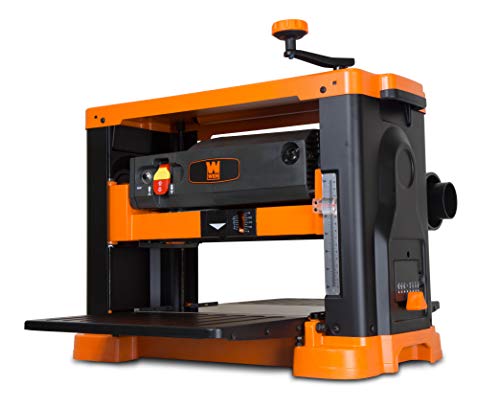 WEN PL1326 15-Amp 13-Inch Spiral Benchtop Thickness PlanerSpiral, 13-Inch, Single Speed81 poundsCheck on Amazon
As an Amazon Associate I earn from qualifying purchases. This post may contain affiliate links at no extra cost to you.
A thickness planer turns rough lumber into boards of even thickness with a clean, flat face, and open sided access makes that job easier in a home workshop. On a planer with open sides, the operator can see the board entering and leaving the cutterhead, reach the height adjustment and depth scale without obstruction, and load wide boards without fighting a closed cabinet. For an experienced DIY woodworker who mills lumber for furniture, shelving, and built-ins, that access saves time and reduces the fumbling that leads to snipe and uneven cuts.
The best open sided thickness planers for experienced diy woodworkers combine that open access with a cutterhead that leaves a smooth surface, a feed system that pulls boards through evenly, and a thickness adjustment that repeats accurately. An experienced user already knows the basics, so the buying decision turns on finer points: cutterhead design, feed speed, snipe control, and dust handling.
A note on the category is worth making plainly. Truly open-sided stationary planers, with the cutterhead supported from one side only, are scarce in the listings available on Amazon, and the verified machines below are benchtop thickness planers whose infeed and outfeed sides are open for loading, viewing, and adjustment. This guide treats open sided access in that practical sense.
Disclosure: As an Amazon Associate, we earn from qualifying purchases.
At a glance
| Product | Key spec | Best for |
|---|---|---|
| DEWALT DW735X | 13-inch width, three-knife cutterhead, two speeds, 15 amp | Fine finish and flexible feed control |
| WEN PL1326 | 13-inch width, spiral cutterhead, 15 amp | Spiral cutterhead and quieter cutting |
| Makita 2012NB | 12-inch width, two-knife cutterhead, 15 amp | Quiet operation and snipe control |
How to choose
Open access and loading. Look at how the board enters and leaves the machine. Open infeed and outfeed sides let the operator guide a long board straight, support its weight as it exits, and watch for grain direction changes that call for a lighter cut. Folding infeed and outfeed tables extend support for long boards, and they should sit level with the planer bed.
Cutterhead design. The cutterhead decides the surface left behind. The DEWALT DW735X uses three straight knives, the WEN PL1326 uses a spiral cutterhead with many small inserts, and the Makita 2012NB uses two straight knives. A spiral cutterhead cuts with a shearing action that suits figured grain and makes knife changes a matter of turning or replacing single inserts. Straight knives give a clean surface on straight-grained stock and are simple to understand and maintain. Choose the cutterhead that matches the wood species and grain the shop mills most often.
Feed speed and cut quality. Feed speed controls how many cuts the cutterhead makes per inch of board, and that number shapes the finish. The DW735X has two feed speeds, so the operator can choose a slower feed for a finer finish and a faster feed for dimensioning rough stock. The WEN PL1326 and the Makita 2012NB each run a single feed speed, which keeps operation simple and predictable. An experienced user will feel the difference on the first few boards, and the right choice depends on whether the shop values flexibility or simplicity more.
Thickness capacity and depth of cut. All three machines here handle boards up to 6 inches thick, with widths of 13 inches on the DEWALT and WEN and 12 inches on the Makita. Check the maximum depth of cut per pass, and take light passes on wide boards and dense hardwoods. A light pass leaves a better surface, puts less strain on the motor, and reduces snipe. The height adjustment should move smoothly and lock firmly, and the depth scale should be easy to read from the working position.
Snipe control. Snipe is the shallow dip left near the ends of a board when it tips into or out of the cutterhead. A carriage lock, a head clamp, and level infeed and outfeed tables all help, and the Makita 2012NB adds an automatic head clamp designed to hold the cutterhead steady. Good technique matters as much as the mechanism: support the board as it enters and leaves, and keep it level.
Dust handling. A planer produces a large volume of shavings in a short time, and open sided access means those shavings need a clear path out of the machine. Each machine here has a dust port or chip ejection that connects to a dust collector or a shop vacuum with a suitable hose. Keep the port and the inside of the hood clean, because packed shavings slow the feed and leave marks on the next board.
Top picks
DEWALT DW735X Thickness Planer

The DEWALT DW735X is a 13-inch thickness planer with a 15 amp motor, a three-knife cutterhead, and two feed speeds. Its cutterhead runs at 10,000 RPM and makes 96 cuts per inch on the fine feed setting, with a maximum depth of cut of 1/8 inch per pass. It handles boards up to 13 inches wide and 6 inches thick, with a four-column carriage lock to reduce snipe and a fan-assisted chip ejection system that clears shavings through the dust port. The package includes infeed and outfeed tables and an extra set of knives.
Best for: An experienced DIY woodworker who wants the widest capacity in this guide, two feed speeds, and a fine finish on furniture lumber.
Considerations: It is heavy for a benchtop machine and loud in use, so plan a firm bench or stand, hearing protection, and a dust collector with a suitable hose.
WEN PL1326 Thickness Planer
The WEN PL1326 is a 13-inch thickness planer with a 15 amp motor and a spiral cutterhead fitted with 26 high-speed steel inserts. The spiral cutterhead cuts with a shearing action that suits figured grain, and individual inserts can be turned or replaced when they dull. It handles boards up to 13 inches wide and 6 inches thick, with a feed rate of 26 feet per minute and a maximum depth of cut of 1/8 inch per pass. The open infeed and outfeed sides make loading wide boards straightforward, and the dust port connects to workshop extraction.
Best for: An experienced DIY woodworker who mills figured grain and wants a spiral cutterhead with easy insert maintenance at a 13-inch capacity.
Considerations: It runs a single feed speed, so the operator controls finish quality through depth of cut and feed technique rather than a speed change.
Makita 2012NB Thickness Planer

The Makita 2012NB is a 12-inch thickness planer with a 15 amp motor and a two-knife cutterhead running at 8,500 RPM. It handles boards up to 12 inches wide and 6-3/32 inches thick, with a feed rate of 28 feet per minute. Its Interna-Lok automated head clamp holds the cutterhead steady to reduce snipe, and its enclosed design keeps noise lower than many planers in its class. The open infeed and outfeed tables fold for storage, and the depth adjustment is easy to reach from the working position.
Best for: An experienced DIY woodworker who values quiet operation, snipe control, and a compact 12-inch machine for furniture and trim work.
Considerations: Its 12-inch width is narrower than the 13-inch machines here, and its two-knife cutterhead needs a full knife change when the knives dull.
Which one fits your shop
Choose the DEWALT DW735X when the shop mills a mix of rough stock and finish lumber and the operator wants two feed speeds and the finest finish control in this guide. Choose the WEN PL1326 when figured grain is common and a spiral cutterhead with replaceable inserts fits the way the shop works. Choose the Makita 2012NB when the workshop shares walls with living space and quiet operation and snipe control matter as much as raw capacity.
FAQ
What does open sided mean on a thickness planer?
It means the infeed and outfeed sides are open for loading, viewing, and adjustment, so the operator can guide a board straight and watch it pass the cutterhead. Truly open-sided stationary planers are scarce on Amazon, so this guide uses the term for verified benchtop planers with that open access.
Can a thickness planer flatten a warped board?
A planer makes the two faces parallel and brings a board to an even thickness, but it follows the shape of a bowed or twisted board unless one face is flattened first on a jointer or with a sled.
How do I reduce snipe on a benchtop planer?
Take light passes, keep the board level as it enters and leaves, support long boards with infeed and outfeed tables, and use the carriage lock or head clamp where the machine has one.
How often should planer knives be changed?
Change or turn the cutters when the surface shows tear-out, lines, or a dull, fuzzy finish, or when the motor labours on cuts it handled easily before.
Bottom line
The best open sided thickness planers for experienced diy woodworkers give open access for loading, a cutterhead that suits the grain they mill, and a thickness adjustment that repeats accurately. The DEWALT DW735X leads on feed flexibility and finish, the WEN PL1326 brings a spiral cutterhead to figured grain, and the Makita 2012NB brings quiet operation and snipe control to a compact 12-inch machine. Match the width and cutterhead to the lumber the shop mills most, take light passes, and keep dust extraction connected.
Related guides
More from Amazon
Programs that pair well with the guide above. Offers and eligibility are set by Amazon and may change.
A free business account with business pricing and bulk-buying tools for work, shop or home office.
Create a business accountFree shipping on eligible items, Prime Video and more. Eligible new members can start with a free trial.
Start a Prime free trialAudiobooks and podcasts to listen to on the go. Eligible new members can start with a free trial.
Try Audible freeAd-free music streaming. Eligible new subscribers can start with a free trial.
Try Music Unlimited freeAs an Amazon Associate we earn from qualifying purchases.