
What's inside
- What is in this guide
- What a dado blade actually does
- Types of dado blade sets
- Check your saw first: arbor, insert, and guarding
- Key features that separate good sets from poor ones
- Sizing, stack width, and diameter
- Matching a set to your projects
- Setup, safe use, and care
- Common mistakes
- Who should choose what
- Pre-purchase checklist
- Frequently asked questions
- Conclusion
As an Amazon Associate I earn from qualifying purchases. This post may contain affiliate links at no extra cost to you.
Short answer: For most woodworkers with a cabinet, hybrid, or contractor-style table saw, the best dado blade set is an 8-inch stacked set with two outside blades, a good run of chippers, and a set of shims for fine width adjustment. Choose carbide-tipped teeth over steel, pick an outside-blade tooth pattern suited to your material (plywood or solid wood), and confirm that your saw’s arbor, throat plate, and guard system can safely accept a dado stack before you buy anything.
Our Top Picks

What is in this guide
- What a dado blade actually does
- Types of dado blade sets
- Check your saw first: arbor, insert, and guarding
- Key features that separate good sets from poor ones
- Sizing, stack width, and diameter
- Matching a set to your projects
- Setup, safe use, and care
- Common mistakes
- Who should choose what
- Pre-purchase checklist
- Frequently asked questions
- Conclusion
What a dado blade actually does
A dado is a flat-bottomed channel cut across the grain of a board. A rabbet is the same idea cut along an edge, and a groove is a channel cut with the grain. All three are the backbone of case construction: bookcase shelves sit in dados, cabinet backs drop into rabbets, drawer bottoms ride in grooves. You can make these cuts with a router, with a regular blade and many passes, or with a dado set that removes a wide strip of wood in one pass.
The reason people love a dado set is repeatability. Once the stack is built to match a piece of plywood, every dado you cut will be the same width, the same depth, and flat on the bottom. That consistency is hard to match with a single-kerf blade making repeated passes, and it is quicker to set up than a router jig when you have a lot of identical joints to cut.
Types of dado blade sets
There are two basic families: stacked sets and wobble (adjustable) blades. Within the stacked family, tooth material and grind matter a great deal. The table below compares the types rather than specific products.
| Type | How it works | Cut quality | Width adjustment | Best for |
|---|---|---|---|---|
| Stacked set, carbide-tipped | Two outside blades plus loose chippers and shims on the arbor | Flat bottoms, clean shoulders when the blades are sharp | Chipper combinations plus paper or metal shims | Cabinetry, bookcases, furniture, repeat joinery |
| Stacked set, steel | Same construction, but without carbide teeth | Acceptable on softwood, dulls quickly on sheet goods | Same as carbide | Occasional light use on a tight budget |
| Wobble (adjustable) blade | A single blade or hub that tilts on the arbor to widen the cut | Slightly curved or uneven bottoms, rougher shoulders | A dial or collar sets the width | Quick utility grooves where precision is not critical |
| Dado with anti-kickback or hook-controlled teeth | Stacked design with shoulders that limit bite per tooth | Smooth feed, less grabbing | Same as stacked | Users who want a smoother-feeling cut on a lower-power saw |
Stacked dado sets
A stacked set is a pair of outside blades with chippers between them. The outside blades do the visible work: they score the edges of the cut. The chippers clear the waste between those edges. Together on the arbor they produce the width you need. Thin shims, typically paper or metal rings of a few thousandths of an inch each, sit between the blades and chippers to fine-tune the final width. This matters more than you might expect, because plywood is rarely exactly the thickness printed on the label.
Wobble blades
A wobble blade is a single blade that tilts on its hub as you rotate a collar, so the teeth sweep a wider path. They are inexpensive and quick to adjust, which is why they remain popular. The compromise is that the cut bottom tends to be slightly curved, and the width settings are approximate. If you build furniture where a shelf must fit snugly into a dado, a wobble blade will frustrate you. If you are cutting a rough groove in a shop jig, it will do the job.
Carbide-tipped teeth hold an edge much longer in abrasive plywood and MDF, so choose carbide for anything beyond occasional use.
Check your saw first: arbor, insert, and guarding
The single most overlooked step in buying a dado set is confirming that your saw can use it. Read the saw’s manual before shopping and look for the maximum dado width and diameter it allows.
- Arbor length. The arbor must be long enough to hold the full stack plus the washer and nut with the threads fully engaged. Many portable and jobsite saws limit the stack to a narrower maximum than the widest cut a set can make. The manual states the limit.
- Arbor diameter. Many table saws in North America use a five-eighths-inch arbor, but not all. Confirm the size and make sure the set’s bore matches.
- Throat plate. A standard single-blade insert has a narrow slot. A dado stack needs a wider opening, so you need a dado insert made for your saw or a shop-made zero-clearance dado insert. Never run a dado stack through a standard insert.
- Riving knife and guard. A standard riving knife is sized for a full-diameter single blade and generally cannot be used with a dado stack. Your manual will say whether a dado-compatible splitter or a stack-specific guard is available, or what procedure to follow. Some saws with active injury-mitigation systems require a specific cartridge or dado mode. Follow the manufacturer’s instructions exactly.
If the answer to any of these is unclear, contact the saw maker or read the manual before purchasing. A dado set that cannot be mounted safely is not a bargain at any price.
Key features that separate good sets from poor ones
Chipper quality and count
Chippers do not need to look pretty, but they should be flat, balanced, and well ground. Look for a set with several chipper thicknesses so you can build many widths. Sets with only a few chippers leave you relying heavily on shims, which is fine if you are patient but inconvenient for fast work. Some sets include chippers with fewer teeth on the bottom face to reduce friction, others have a full complement of teeth. Either approach works if the grind is true.
Shim assortment
Good sets include several shims. If they do not, you can buy shim packs separately. Shims let you dial in the width to fit an actual piece of plywood. Without them, you may be stuck with a dado that is a hair too tight or too loose. Keep the shims in a labeled container because they are easy to lose.
Anti-kickback features
Some stacks use teeth designed to limit how much wood each tooth can bite. These reduce the risk of the stack grabbing the workpiece, particularly useful on saws with modest power and for users who are new to dado cuts. They are not a substitute for proper technique, a fence, and push devices, but they help.
Sizing, stack width, and diameter
Eight-inch diameter is the most common size for stacked sets and is the typical choice for full-size saws. Six-inch sets also exist and are often recommended for smaller or portable saws, because the smaller diameter puts less load on the motor and arbor. A six-inch set limits the maximum cut depth, but for most dados in sheet goods and furniture parts that depth is plenty.
Stack width is the other important number. Common available widths range from narrow grooves of about a quarter inch up to widths around thirteen-sixteenths of an inch, with some sets going wider. The right range for you depends on the joinery you plan to cut:
- Drawer bottoms and thin back panels need narrow grooves.
- Three-quarter-inch shelves in bookcases and cabinets call for a stack close to that thickness, tuned with shims.
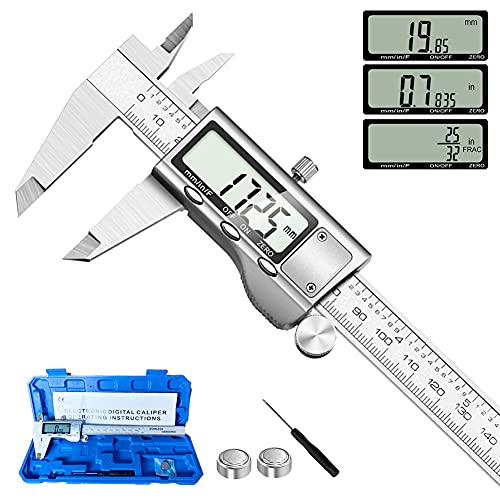
- Plywood is often slightly undersized relative to its nominal thickness, so measure the actual piece with calipers or a reliable ruler rather than assuming.
Do not exceed the stack width or diameter stated in your saw’s manual. If you need a wider cut than the saw allows, make overlapping passes with a narrower stack.
Matching a set to your projects
Cabinet and bookcase builders
If you build boxes from plywood, you want a stack that cuts clean, flat-bottomed dados in veneered sheet goods without tearing the face veneer. Choose a carbide-tipped set with a good tooth count on the outside blades and a full shim set. Use a zero-clearance insert and score a clean edge where tear-out matters.
Keep blades clean of resin and stored flat in their case. If you are still deciding between formats, a good stacked carbide set, such as a stacked dado blade set for a table saw, plus an insert made for your saw will cover most workshops.
Setup, safe use, and care
Mounting the stack
Unplug the saw before touching the arbor. Lower the arbor fully, remove the standard blade and insert, and clean the arbor flange and washer faces of dust and pitch. Place one outside blade on the arbor with the teeth facing the correct direction, add chippers and shims, then the second outside blade. Make sure carbide teeth on the outside blades do not sit directly against each other; chipper teeth should land in the gullets of the outside blades so the wood is cleared evenly. Tighten the nut firmly with the wrenches provided, then rotate the stack by hand to confirm it spins freely and nothing rubs on the new insert.
Personal protective equipment
- Wear safety glasses or a face shield every time. A dado stack throws chips with force.
- Use hearing protection. A wide stack is louder than a single blade, especially in sheet goods.
- Wear a dust mask or respirator suited to wood dust, and connect dust collection. Sheet goods like MDF produce fine dust.
- Avoid loose sleeves, gloves, and jewelry near the stack.
Safe cutting practices
- Use a miter gauge, crosscut sled, or a fence-guided push block, as appropriate. Never freehand a cut.
- When cutting with the fence, make sure the fence is parallel to the stack and that the workpiece is held firmly against it. Never use the fence and miter gauge together to trap a piece against the stack in a way that can bind.
- Use push blocks and featherboards to keep hands away from the stack, and keep your hands outside the area where the stack extends.
- Do not make through cuts with a dado set. A dado stack is for non-through cuts; the cut must leave material on the board’s top face.
- Replace the standard insert, riving knife, and guard before returning to normal blade work.
Common mistakes
- Skipping the manual. Assuming any saw can run any stack is the most serious error. Confirm arbor length, maximum width, and insert availability first.
- Using a standard throat plate. A narrow plate is unsafe with a dado stack and can be damaged by the teeth.
- Trusting nominal plywood thickness. Many sheets differ from their stated thickness. Test-cut scrap and adjust with shims.
- Taking a full-depth cut in one pass in hardwood. This overloads the motor and increases tear-out and burn marks. Cut in stages.
- Letting carbide teeth touch each other on the arbor. This chips the carbide and unbalances the stack.
Who should choose what
The table below compares set types by user profile, not by brand.
| If you are… | Consider | Why | Watch out for |
|---|---|---|---|
| Building cabinets from plywood regularly | 8-inch carbide stacked set with full chipper and shim assortment | Clean, repeatable dados that fit actual sheet thickness | Saw must support the full stack width |
| Working with a portable or jobsite saw | 6-inch carbide stacked set, narrower range | Lower load on the arbor and motor | Arbor length and insert availability |
| Making occasional rough grooves in shop projects | Entry-level stacked set or wobble blade | Low cost for infrequent use | Less precise width and a rougher bottom |
| Cutting mostly solid hardwood furniture parts | Carbide stacked set with sharp, well-balanced outside blades | Clean shoulders, long edge life | Motor strain; use light passes |
| Cutting lots of melamine or veneer plywood | Carbide set with high tooth count on outside blades | Less chipping on brittle surfaces | Use zero-clearance insert and a scoring pass |
Pre-purchase checklist
- Read the saw manual and note the maximum stack width, diameter, and arbor size.
- Confirm that a dado-compatible insert is available for your saw, or plan to make a zero-clearance one.
- Confirm how your saw’s riving knife and guard behave with a dado stack, and follow the manual’s guidance.
- Choose carbide-tipped teeth unless you will use the set rarely.
- Check that the set includes a range of chippers and a shim pack.
- Match the outside blade tooth pattern to your main material, plywood or solid wood.
- Measure real plywood thickness with calipers before buying shims.
Frequently asked questions
Is a stacked dado set better than a wobble blade?
For accuracy, yes. A stacked set cuts a flatter bottom and holds its width setting more reliably. A wobble blade is faster to adjust and usually costs less, so it can make sense for rough work, but it is a compromise for fine joinery.
Do I need an 8-inch set or a 6-inch set?
Most full-size table saws are designed for eight-inch stacks. Six-inch sets suit smaller saws or users who want less load on the arbor. Always follow the maximum diameter listed in your saw’s manual.
Can I use a dado set on any table saw?
No. The saw needs a long enough arbor, a compatible insert, and a guarding arrangement approved by the maker for dado use. Some saws cannot accept a dado at all. Check the manual first.
How do I get a dado that fits plywood exactly?
Measure the actual plywood thickness, build a stack close to that width with chippers, then fine-tune with shims. Cut a test dado in scrap of the same sheet and check the fit before cutting project parts. Add or remove thin shims until the fit is snug but not tight.
Why does my dado have a rough or burned bottom?
Common causes include dull teeth, resin buildup, a feed rate that is too slow, a stack that is unbalanced or poorly mounted, or taking too deep a cut in one pass. Clean the blades, check the mounting, feed steadily, and cut in stages.
How do I reduce tear-out in veneered plywood?
Use a zero-clearance insert, apply tape along the cut line, make a light scoring pass first, and support the workpiece close to the cut. A set with a higher tooth count on the outside blades also helps.
Can I rip or crosscut through a board with a dado stack?
No. A dado stack is not designed for through cuts, and doing so is unsafe. Use a standard blade for ripping and crosscutting, and change back the insert and guarding afterward.
How often should dado blades be sharpened?
There is no fixed schedule. Sharpen when the cut starts to burn, tear, or require more feed pressure, even after cleaning. Heavy use on plywood and MDF dulls carbide sooner than occasional use on softwood. A professional sharpening service can restore the outside blades and chippers.
Conclusion
The best dado blade set for your table saw is the one your saw can run safely and that matches the work you do most. For most shops that means a carbide-tipped, eight-inch stacked set with a generous chipper and shim assortment; for smaller saws it may mean a six-inch stack, and for light, occasional use a simpler set or a router may be enough. Start with the manual, install the correct insert, respect the guarding instructions, and take sensible passes. Do that, and a dado set will give you clean, repeatable joints for years.
Helpful accessories to consider alongside a new set include a dado throat plate, a pair of push blocks, a featherboard, and a set of calipers for measuring plywood. Check that any insert you buy is made for your specific saw model.
Disclosure: As an Amazon Associate, jd-woodworks.com earns from qualifying purchases. If you click a link marked as sponsored and buy, we may receive a small commission at no extra cost to you.