
What's inside
As an Amazon Associate I earn from qualifying purchases. This post may contain affiliate links at no extra cost to you.
Best Electric Planers: Corded and Cordless Picks for Smooth, Flat Stock
For most shop work, choose a 3-1/4-inch corded hand planer for steady stock removal; choose a cordless model when mobility matters, and a benchtop planer when you need to flatten boards wider than a hand planer’s narrow pass. The right electric planer depends less on the headline power rating than on your stock width, the depth of cut you actually need, and whether you can keep a battery supplied during a long session.
These are different tools, not interchangeable versions of one tool. A handheld electric wood planer is for trimming doors, easing edges, fitting joinery, and taking controlled passes off a board. A benchtop thickness planer makes opposite faces parallel and handles wider stock, but it does not reliably flatten a twisted board by itself. The picks below are established models; verify current regional specifications and kit contents before buying, since batteries and accessories vary.
As an Amazon Associate we earn from qualifying purchases at no extra cost to you.
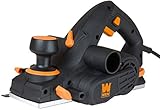
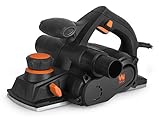

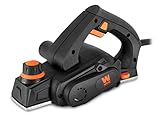
Best picks by the work you do
- Best corded handheld for regular shop use: Makita KP0800K. Its 3-1/4-inch cutting width and 3/32-inch maximum cut per pass suit door fitting and routine edge or face cleanup. Choose it over a cordless tool if you’ll make repeated passes and don’t want to manage battery charge.
- Best cordless for mobile work: DeWalt DCP580. This 20V MAX planer offers a 3-1/4-inch width and up to 5/64 inch of cut per pass. It’s a practical match for installation work, repairs, and short trimming sessions away from an outlet.
- Best cordless for a broader pass: Milwaukee M18 2623-20. Its 3-1/4-inch width and maximum 5/64-inch cut make it comparable in basic capacity to the DeWalt. Favor it if you already own compatible M18 batteries; a bare tool is poor value if you need to buy into the battery system.
- Best benchtop option for small shops: DeWalt DW735. The 13-inch width capacity and two-speed feed are better suited to dimensioning furniture parts and wider boards than any handheld planer. It is heavy and requires dedicated bench or stand space, so it is not the pick for occasional door adjustments.
Capacity comparison: what the numbers mean in practice
| Model | Type | Cut width | Maximum cut per pass | Rabbeting capacity | Power and useful fit |
|---|---|---|---|---|---|
| Makita KP0800K | Corded handheld | 3-1/4 in. | 3/32 in. | Up to 1 in. | 6.5 A; repeated shop passes |
| DeWalt DCP580 | Cordless handheld | 3-1/4 in. | 5/64 in. | Up to 9/64 in. | 20V MAX; mobile trimming |
| Milwaukee M18 2623-20 | Cordless handheld | 3-1/4 in. | 5/64 in. | Up to 5/16 in. | M18 battery system; edging and rabbets |
| DeWalt DW735 | Benchtop thickness planer | 13 in. | 1/8 in. maximum; shallower passes are often preferable | Not applicable | 15 A corded; wider stock and batch work |
Maximum cut depth is a limit, not a recommended setting for every board. A deep pass can strain the motor, tear grain, and leave a rougher surface—especially in figured wood or when the blades are dull. For controlled work, start with a shallow setting, check the result, and increase only if the tool is cutting cleanly. Rabbeting depth also differs from cut depth: it describes how far the tool’s edge guide or housing can let it step down beside an edge. Confirm the model’s guide arrangement before relying on that maximum for a particular joint.
Corded or cordless? Estimate runtime before you buy
A corded planer is the safer choice for a long session, a fixed bench, or repeated material removal. It delivers power without a battery break, though the cord can snag on stock or interfere with a pass. A cordless planer is easier to carry to a job site and avoids trailing cable, but runtime depends on battery capacity, wood species, cut depth, feed pressure, and how continuously the tool runs.
Manufacturers generally do not provide a dependable universal runtime figure for planers. Instead, estimate from your workload and treat any runtime claim as a best-case guide. For example, if a job takes 20 minutes of actual cutting and your chosen battery-and-tool combination gives about 10 minutes of comparable loaded cutting, plan on at least two charged packs, plus a reserve. “Comparable” matters: light trimming of softwood is not equivalent to deep passes through dense hardwood. If you already own compatible batteries, the cordless option may be economical; if not, include the cost of two packs and a charger when comparing it with a corded model.
Match the planer to your stock and workspace
| Your situation | Better fit | Why |
|---|---|---|
| One-off door fitting or occasional edge cleanup | Entry-level corded handheld | Lower purchase cost; no battery ecosystem needed |
| Frequent site work or repairs around a house | Cordless handheld with two batteries | Portability and less cord management; a spare reduces downtime |
| Furniture parts and boards wider than 3-1/4 in. | 13-in. benchtop thickness planer | Wider capacity and repeatable thicknessing across a board |
| Small shop with little storage space | Handheld planer, plus a straightedge and workholding | Compact storage, but flattening broad or twisted stock takes more setup |
| New user making precise, visible passes | Handheld with a stable auxiliary fence and shallow setting | More control at edges; practice on scrap before approaching finished work |
A benchtop thickness planer is not a substitute for a jointer or a flattening sled. If a board is cupped, bowed, or twisted, feeding it through a thickness planer can reproduce that shape on the opposite face. First establish one flat reference face—using a jointer, a suitable sled, or careful hand-tool work—then thickness the other face. For a narrow board or a small fitting adjustment, a handheld planer is more direct.
Ownership details that affect results
On handheld models, blades are the main wear item. Dull or nicked blades leave ridges, burnish the surface, or pull fibers from the grain. Replace or rotate blades according to the manufacturer’s instructions, and keep the blade pair matched and correctly seated; a small height mismatch can leave a step down the board. Check the base for pitch and resin buildup, clear chips from the exhaust, and unplug the corded tool or remove the battery before servicing it.
Use a dust bag or suitable extraction where possible. Planers produce chips quickly, and a clogged outlet can spoil the cut and overheat the tool. Secure the work so it cannot shift, keep the base flat at the start and end of each pass, and let the motor reach speed before engaging the wood. Avoid forcing the planer: excessive pressure can tilt the tool and create a deeper bite at one end.
For benchtop machines, budget for sharp knives or cutter inserts, dust collection, and enough infeed and outfeed support. Long boards that sag can create snipe—deeper cuts near the ends—so support the stock level and follow the machine manual’s feed and setup guidance. Replacement knives and dust extraction are recurring ownership costs, not optional details for a busy shop.
Bottom line
Buy the Makita KP0800K if your work is mostly corded, handheld trimming and you value a deeper per-pass capacity. Choose the DeWalt DCP580 or Milwaukee M18 2623-20 when mobility and an existing battery platform matter more than uninterrupted runtime; compare rabbeting needs, since their stated capacities differ. For boards wider than a handheld planer can cover, choose a benchtop planer such as the DeWalt DW735—but flatten one face first. Matching the tool to stock width and session length will matter more than chasing the largest maximum cut figure.