
What's inside
As an Amazon Associate I earn from qualifying purchases. This post may contain affiliate links at no extra cost to you.
Best Laser Etched Tumblers: Machines, Settings, and What to Buy
For occasional stainless-steel tumblers, a 10W diode laser with a compatible rotary is the lowest-cost practical setup; for faster, more consistent bare-metal marking, choose a 30–50W fiber laser; and for coated tumblers or a wider range of materials, a 40–60W CO₂ laser is the more versatile but bulkier option.
The key buying question is not just laser power. It’s whether the machine can focus on the tumbler’s curved surface, whether its rotary fits your cup diameter and shape, and whether you’re prepared to remove coatings or use a marking compound on bare stainless steel. The ranges below are approximate: machine bundles, rotary designs, and usable work areas vary by model.
As an Amazon Associate we earn from qualifying purchases at no extra cost to you.

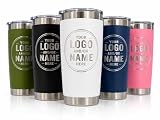

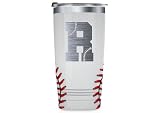
Machine types compared
| Machine type | Typical power | Stainless-steel result | Rotary capacity to look for | Typical machine cost | Setup and best fit |
|---|---|---|---|---|---|
| Diode laser | 10–20W optical output | Usually marks bare stainless with a marking compound; can remove some painted or powder-coated finishes to reveal metal underneath | About 20–100 mm diameter, depending on rotary and machine clearance | About $300–$1,200, before accessories | Lower entry cost; needs careful focusing and usually several test passes |
| CO₂ laser | 40–60W | Good at removing many coatings; bare stainless generally needs a marking compound rather than direct engraving | Often about 20–100 mm, subject to rotary and enclosure clearance | About $1,500–$4,000 | More space, ventilation, alignment, and cooling considerations; suits frequent work and other nonmetal materials |
| Fiber laser | 30–50W | Directly marks bare stainless; can produce dark marks or deeper engraving, depending on settings and machine | Often about 20–100 mm with an appropriate rotary; confirm the specific chuck or roller range | About $2,000–$5,000 | Higher upfront cost and a smaller material niche than CO₂; strong choice for regular metal marking |
These are broad market ranges, not guaranteed package prices. A rotary, exhaust equipment, enclosure, lens, and software may be included or sold separately. Confirm the stated power is optical output for a diode machine, not input power.
Choose by your work, not just the machine
| Your situation | Practical pick | Why |
|---|---|---|
| Beginner, limited budget, a few coated cups a month | 10W diode plus a compatible roller rotary | Low entry cost; coated designs can be made by removing the finish. Expect test pieces and slower jobs. |
| Small shop, mixed projects, regular coated tumbler orders | 40–60W CO₂ with rotary | Better suited to a mix of coated drinkware and nonmetal projects, if you have room for the machine and ventilation. |
| Frequent bare stainless-steel marking | 30–50W fiber with chuck or roller rotary | Marks bare metal directly and avoids applying a marking compound for typical marking work. |
| Many cup shapes or larger handled vessels | Any machine whose rotary range and clearance fit the actual cup | Measure the widest section, handle, and usable engraving area. A advertised diameter range alone won’t confirm physical clearance. |
Rotary fit: the detail that prevents a bad purchase
A laser marking rotary turns the tumbler so the laser can work around its circumference. Roller rotaries support the cup on wheels and are relatively simple to load. Chuck rotaries grip the vessel and can hold some tapered or irregular pieces more securely, but setup and centering can take longer. Neither style is automatically compatible with every laser: check software support, cable or controller compatibility, machine-bed clearance, and the rotary’s diameter range.
Measure the cup at the widest point that will pass through the machine, not only at its base. Also check whether the design area is level enough to stay in focus as the cup rotates. Strong tapers can change the surface-to-laser distance across the design, producing uneven marks unless the rotary or machine can compensate. Handles can hit the enclosure or gantry even when the cup’s diameter is within the rotary’s stated range.
How to get a reliable mark
-
Identify the surface. Many tumblers are stainless steel with a colored powder-coated or painted exterior. A diode or CO₂ laser commonly removes that coating to expose the metal. Bare stainless usually needs a marking compound with those laser types; fiber lasers can mark bare stainless directly. Results vary by alloy and finish.
-
Measure and level the cup. Fit the rotary, center the tumbler, and make sure it turns without slipping or wobbling. Set focus on the actual marking surface. On a tapered cup, focus at the center of the design area and keep the artwork within a region where the surface stays acceptably close to focus.
-
Calibrate rotation before engraving. Use the machine’s rotary settings and a small test shape to check that a commanded rotation produces the expected movement. Incorrect steps-per-rotation or circumference settings stretch or compress artwork. Mark the cup with a removable guide or run a low-risk outline to verify placement.
-
Run a material test grid. Start with the manufacturer’s recommended range for your laser, lens, coating, and marking compound. Change one variable at a time—power, speed, or pass count—and record the result. There is no universal setting: two nominally identical tumblers can mark differently because their coatings and curvature differ.
-
Clean and inspect. Remove residue using the compound maker’s directions, then check the mark under good light. Avoid abrasive cleaning that can scratch the surrounding finish. Use suitable ventilation and follow the laser and material safety instructions, especially when removing coatings.
For a diode or CO₂ laser on bare stainless, a marking compound is a consumable cost and adds application and cleanup time. On coated cups, the coating itself determines how cleanly the laser reveals the metal. For either method, keep a settings log by tumbler brand and finish; it reduces repeat testing and helps spot changes when a supplier changes coatings.
Work out the real cost before buying
Suppose a small operation makes 20 cups a month. A $600 diode setup with a $150 rotary and $100 for basic ventilation or accessories costs about $850 upfront. Ignoring labor and consumables, that is roughly $4.25 per cup over the first 200 cups, or $1.70 over 500 cups. A $3,000 fiber setup with a $300 rotary is about $3,300 upfront: roughly $16.50 per cup over 200 cups, or $6.60 over 500. These are simple purchase-cost estimates, not profit calculations; they exclude failed blanks, maintenance, power, shipping, and labor.
The cheaper machine can make sense for coated cups and modest volume. If direct bare-metal marking, faster throughput, or fewer coating-related variables matter to your business, the fiber machine’s higher initial cost may be easier to justify. A CO₂ laser is most compelling when tumbler work is part of a broader shop workflow rather than the only job.
Ownership realities
-
Rotary alignment is a recurring task. Loading cups off-center or allowing rollers to slip can shift a design. Recheck alignment when changing vessel shapes.
-
Focus and cleanliness affect consistency. Dust on optics, a dirty cup, or a change in cup height can reduce mark quality. Follow the manufacturer’s lens-cleaning guidance; don’t wipe optics with ordinary shop towels.
-
Coatings and compounds vary. Keep settings notes, test a sample from each new batch, and don’t assume a saved recipe will transfer perfectly to another finish.
-
Plan for safe operation. Use the enclosure, exhaust, and laser-rated protection specified for your machine and wavelength. Never leave a laser running unattended, and verify that the cup’s coating is suitable for laser processing.
Bottom line
For a beginner making a few coated laser etched tumblers, buy a diode machine only after confirming that its rotary, software, and physical clearance suit your cups. For a mixed-material shop with room and ventilation, a CO₂ setup offers broader use. If bare stainless-steel marking is the main job, a 30–50W fiber laser is the clearest fit. In every case, check the rotary’s actual diameter range and the cup’s shape before ordering: compatibility matters more than a power number on a product listing.