
What's inside
As an Amazon Associate I earn from qualifying purchases. This post may contain affiliate links at no extra cost to you.
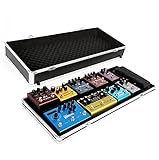
The best pedalboard cases for most touring musicians in 2026 are hard-shell cases with at least 10–15 mm of internal foam clearance over your tallest pedal, recessed latches, and—if you fly regularly—an ATA-300 rating; our overall pick by category is the SKB 3i-series injection-molded case for air travel, the Gator G-Tour plywood road case for van touring, and a padded soft case like the Mono Pedalboard Club for local gigging.
As an Amazon Associate we earn from qualifying purchases at no extra cost to you.


How to Choose: The Six Criteria That Actually Matter
Before comparing specific cases, get clear on what separates a touring-grade case from a gig-bag-with-a-handle:
- Material: Injection-molded polymer (SKB 3i, Pelican-style) is waterproof and crushproof but heavy. Plywood/ABS laminate (Gator G-Tour, Odyssey) is the classic road case—tough, repairable, mid-weight. Soft cases (Mono, Pedaltrain soft bags) are lightest but offer no crush protection.
- Interior dimensions: Measure your loaded board including the tallest pedal knob and the jack plugs, then add 25–40 mm of headroom. A case that’s 10 mm too shallow will shear a toggle switch on the first airline drop.
- Padding: Eggshell/pick-and-pluck foam is fine for one board; wedge foam or padded dividers suit players who swap pedals. Cheap thin foam compresses flat within a year of touring.
- Wheels: Non-negotiable once your loaded board exceeds about 12 kg. Look for recessed, replaceable inline-skate wheels—exposed plastic wheels snap off in transit.
- Handle strength: Spring-loaded, recessed steel-core handles survive load-ins; surface-mounted plastic handles are the first failure point on budget cases.
- Latch and seal quality: TSA-lockable latches and a gasket seal matter if you check the case. Twist latches on plywood cases are field-repairable; molded latches aren’t.
Spec Comparison: The Cases Worth Buying in 2026
| Case | Type / Material | Interior (approx.) | Weight | Wheels | Typical Price Range |
|---|---|---|---|---|---|
| SKB 3i-4214 (or board-specific 3i) | Injection-molded, gasket-sealed | ~107 × 36 × 14 cm | ~8–9 kg empty | Yes, inline | $250–$400 |
| Gator G-Tour Pedalboard (Large) | 9 mm plywood + laminate, ATA-style | ~76 × 41 × 15 cm | ~9–11 kg empty | On larger sizes | $200–$350 |
| Pedaltrain PT-3 / Novo hard case option | Fitted hard or soft options | ~61 × 36 × 10 cm board + case | ~4–7 kg | Hard case only | $120–$280 |
| Temple Audio Trio / Duo hard case | Plywood flight case, board-matched | Sized to Trio 28/43 | ~6–8 kg | Optional | $200–$350 |
| Mono Pedalboard Club / soft case | Padded hybrid soft case | Various; ~68 × 38 cm | ~3–4 kg | No | $130–$230 |
| Boss BCB-90X / BCB-1000 | Molded resin, integrated board | Holds ~9 pedals | ~4 kg | Yes (BCB-1000) | $200–$300 |
Note that the Boss BCB series is a different animal: it’s a case with a built-in board, best for players running 6–9 compact pedals and nothing oversized.
Which Case for Which Situation
Flying regularly (checked baggage)
Go injection-molded: SKB 3i series or a Pelican-style case cut for your board. These are watertight, survive conveyor drops, and meet airline checked-size limits in the mid sizes. Budget $250–$400. The trade-off is weight—a loaded 3i can approach the 23 kg checked-bag limit, so weigh the whole package at home.
Van/bus touring with a crew
Plywood ATA-style cases (Gator G-Tour, Odyssey) are built for truck-pack abuse. They stack, take forklift hits, and every part—corners, latches, casters—is replaceable. Heavier than molded cases, but that stops mattering when someone else does the lifting.
Local gigs, carrying your own gear
A padded soft case or the hard case bundled with a Pedaltrain or Temple Audio board is the sane choice. Mono’s cases use semi-rigid EVA shells that shrug off rain and stairway bumps; they will not survive being checked on a plane.
Fly dates where you rent the board
Some touring players carry pedals loose in a padded insert inside a carry-on roller, then Velcro them onto a rented or house board. If that’s you, prioritize dense foam inserts (30+ kg/m³) over case size.
Fit Calculation: Don’t Guess the Depth
The most common buying mistake is matching only the board footprint. Do this instead:
- Measure board length and width, including any attached patch bay or power supply overhang. Add 20–30 mm each side for cable slack against the case wall.
- Measure height from the case floor: board thickness + tallest pedal + knob/jack clearance. A typical Pedaltrain Classic (65 mm board height incl. feet) with a Strymon pedal and right-angle plug needs roughly 110–130 mm of internal depth once foam compresses.
- Check foam compression: pick-and-pluck foam loses ~30% height under sustained load, so spec 20–30 mm of vertical headroom beyond your tallest point.
Example: a Temple Audio Duo 34 board with a Line 6 HX Stomp and one vintage-style fuzz pedal needs a case rated for at least ~90 × 40 × 14 cm interior—putting you in “large” territory even though the board itself is compact.
Ownership Realities Nobody Mentions on the Box
- Wheels wear first. Inline wheels last roughly 1–3 years of weekly touring before bearings grind or tread splits; buy a case with bolt-on, replaceable wheels and keep spares in your spare-parts kit.
- Foam is a consumable. Pick-and-pluck tears where pedals sit; eggshell foam goes flat. Plan to re-line a heavily used case every 2–4 years—foam sheets are cheap and available by size.
- TSA latches get broken. Even on good cases, expect a snapped latch eventually. Plywood cases accept off-the-shelf replacement latches; molded cases often require manufacturer parts.
- Weight creep is real. Musicians routinely forget the case itself weighs 8–11 kg. A “light” 6 kg board becomes a 15–17 kg checked item; oversized/overweight fees often exceed the case’s price over a single tour.
- Moisture damage happens inside sealed cases. Loading a wet board into a gasket-sealed case traps humidity and corrodes jacks. Let the board dry before closing the lid, and toss in a desiccant pack for storage.
Bottom Line
Match the case to the transport, not the brand: injection-molded (SKB 3i) if you fly, plywood (Gator G-Tour, Odyssey) if you tour by road, a semi-rigid soft case (Mono) if you carry it yourself. Whatever you pick, verify interior depth with the foam-compression math above, confirm the wheels are replaceable, and weigh the fully loaded package against airline limits before your first fly date.