3 Best Wall Mount Dust Collectors for Shops (November 2026)
Compare the best wall mounted dust collectors for weekend woodworking projects, with CFM, bag size and filtration from each listing to size one machine right.
As an Amazon Associate I earn from qualifying purchases. This post may contain affiliate links at no extra cost to you.
A weekend shop usually runs one machine at a time, so the real decision is not raw power but fit: enough airflow for your hungriest tool, a bag you will actually empty, and a mount that keeps the collector off floor space you do not have. A thickness planer also fills a small bag fast, which changes the math.
OUR TOP PICK
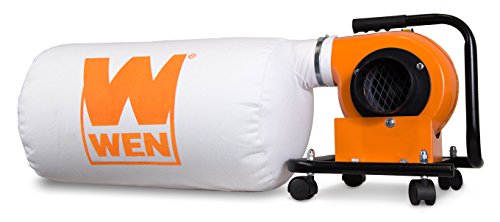
WEN Woodworking Dust Collector, 5.7-Amp Motor with 12-Gallon Bag, Mobile Base, and Optional Wall Mount (DC3401)
This guide is for garage and basement woodworkers who build on weekends and want collection at a single machine without giving up a parking spot. Every pick below hangs on a wall or offers a built-in wall mount, and each was chosen from the airflow, inlet size and filtration figures printed in its own Amazon listing. Between them, the three cover the ways weekend shops actually work: a fixed station, a tool layout that changes, and sanding-heavy builds.
Quick Picks
As an Amazon Associate we earn from qualifying purchases.
Product
Best for
Key spec from title
WEN DC3401
Light, movable single-machine collection
660 CFM, 12-gallon bag
WEN DC3474
Quieter induction power at one fixed station
600 CFM, 15-gallon bag
BUCKTOOL DC30A-1
A true wall-hung unit with remote control
550 CFM, 2-micron filter bag
How to Choose
Match Airflow to One Hungry Machine
Weekend work means one tool runs at a time, so a single 4-inch inlet is not the compromise it would be in a production shop. What matters is whether the rated airflow survives a short hose run to your planer or table saw, the two machines that make the most chips. Figures around 550 to 660 CFM, as listed for the collectors here, suit that one-machine pattern well. Long flex hose, tight elbows and a clogged bag all eat into the number on the box, so keep runs short and straight wherever the layout allows.
Anchor the Mount Into Studs, Never Just Drywall
Treat mounting as a safety job, not a cosmetic one. A wall collector vibrates for hours, and a unit in this class can weigh anywhere from roughly twenty to over forty pounds before the bag fills with dense chips. Lag the bracket into wall studs, or into solid blocking you add between them, and confirm the fasteners match the bracket holes rather than substituting whatever screws are in the drawer. Leave clear space below the unit so the bag can hang fully and come off without a fight, and recheck bracket tightness after the first few sessions.
Read the Bag Before You Fall for the Motor
The filter bag is both the collection bin and the exhaust filter on these single-stage machines, so its micron rating decides how much fine dust goes back into the room. Ratings in these listings run from 2 to 5 microns, and finer is worth having if you sand indoors. Capacity matters just as much: a 12-gallon bag under a planer can pack tight in a single Saturday, while a 15-gallon bag buys breathing room. Zippered bottoms and viewing windows, where listed, turn emptying from a dust cloud into a two-minute job.
Brushed, Induction, and the Noise You Live With
Motor type shapes how a weekend session feels. A small brushed motor keeps a collector light and easy to move, but it is usually the louder, shorter-lived design. An induction motor runs quieter and asks for almost no maintenance, at the cost of extra weight on the wall. Check the amp draw in the listing against the circuit you plan to share with the tool itself, because a collector and a planer starting together can trip a modest breaker. A remote control, where one is included, saves walking back and forth between switch and saw.
The 3 Best Options
WEN Woodworking Dust Collector, 5.7-Amp Motor with 12-Gallon Bag, Mobile Base, and Optional Wall Mount (DC3401)
Top Pick
WEN Woodworking Dust Collector, 5.7-Amp Motor with 12-Gallon Bag, Mobile Base, and Optional Wall Mount (DC3401)
Best for: One-machine weekend shops that need to move the collector between tools.
This is the pick for a weekend woodworker whose shop rearranges itself between projects. At the lightest end of this group, the DC3401 can hang on its optional wall mount above a bench saw during one build, then come down and roll to the planer on its lockable casters for the next. Its 660 CFM rating is the strongest listed here, which suits a single machine fed by a short hose. The onboard carrying handle makes the lifting part honest work rather than a two-person job, and the zippered bag empties without unclamping a band over a bin.
WEN Woodworking Dust Collector, 7.4-Amp Induction Motor with 15-Gallon Bag, Mobile Base, and Optional Wall Mount (DC3474)
Runner-Up
WEN Woodworking Dust Collector, 7.4-Amp Induction Motor with 15-Gallon Bag, Mobile Base, and Optional Wall Mount (DC3474)
Best for: A fixed planer or saw station where quieter induction power and a bigger bag matter.
Choose the DC3474 when the collector will live in one spot and serve the machine you use most, such as a planer parked against the same wall every weekend. The 7.4-amp induction motor trades a little listed airflow for quieter, maintenance-free running, and the 9-inch impeller moves chips steadily through the 4-inch port. Its 15-gallon bag is the largest here, which matters on planing days when shavings arrive by the bucketful. Four swivel casters and a carrying handle still let you reposition it, and removing the wheels lets the built-in mount take over on the wall.
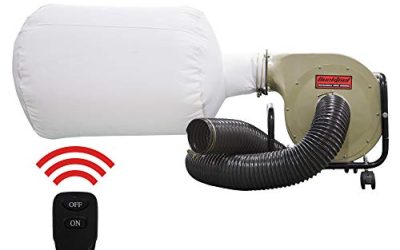
BUCKTOOL 1HP 6.5AMP Wall-mount Dust Collector with Remote Control and 2-micron Dust Filter Bag 550CFM Air Flow DC30A-1
BUCKTOOL 1HP 6.5AMP Wall-mount Dust Collector with Remote Control and 2-micron Dust Filter Bag 550CFM Air Flow DC30A-1
Best for: A permanent wall station where finer 2-micron filtration and remote switching matter most.
The BUCKTOOL is the only true wall-only design in this group, and it suits a shop that has already decided where collection lives. Its 1 HP motor is listed at 550 CFM, a step below the two WEN units, but the 2-micron filter bag is the finest filtration here, which counts if your weekends involve long sanding sessions in an enclosed garage. The included remote control is a genuine convenience at a fixed station, since the switch can stay up on the wall while you work at the saw. The 3.1 cubic foot bag gives reasonable room between emptyings for one machine.
Which One Fits Your Situation
Your Shop Rearranges Between Every Project
Pick the WEN DC3401. Weekend projects rarely use the same tool layout twice, and this unit follows the work: on the wall when the bench needs room, on its casters when the planer comes out. It is the lightest collector here and carries the highest listed airflow, so moving it never feels like a penalty. The smaller 12-gallon bag is the trade, and for mixed small builds it fills slowly enough to forgive.
One Machine Does Most of Your Work
Choose the WEN DC3474 and mount it beside that machine for good. A fixed planer or table saw station rewards the quieter induction motor and the 15-gallon bag, because the collector simply becomes part of the station. You give up a little listed airflow and some portability, but you stop thinking about dust collection entirely, which is exactly what a two-day project window needs.
You Sand a Lot in a Closed Garage
The BUCKTOOL DC30A-1 fits this pattern best. Its 2-micron bag is the finest filter in the group, and sanding dust is precisely the fine fraction that coarser bags return to the air. The remote control also helps here, since sanding sessions involve frequent short runs of the collector. Accept the lower 550 CFM figure as the price of that filtration at a single station.
Floor Space Is Gone but One Wall Is Free
Any of the three will hang, but the BUCKTOOL is designed for nothing else, while both WEN models treat the wall as one option among two. If the wall is permanent and the layout settled, the BUCKTOOL’s fixed bracket and remote make sense. If there is any chance the shop layout changes next season, take a WEN and keep the casters as your insurance policy.
Common Mistakes
Hanging the bracket on drywall anchors instead of driving fasteners into studs or blocking.
Running twenty feet of flex hose to a 550 CFM collector and blaming the motor for weak suction.
Letting a planer pack the bag solid, which strangles airflow long before the bag looks full.
Comparing micron ratings across brands without checking whether the figure describes the bag or an optional filter.
Forgetting the circuit: a collector and a planer starting together can trip a shared breaker mid-cut.
Frequently Asked Questions
Is 550 to 660 CFM enough for a thickness planer?
For one planer on a short hose, yes, that is the workload these collectors are built around. A planer makes bulky chips rather than fine dust, and a 4-inch port with airflow in this range keeps up as long as the bag is not packed full. Empty the bag before long planing sessions, because a half-full bag already costs suction you can feel at the machine.
Can I run two machines off one wall mounted collector?
Not at the same time in any useful way. These are single-inlet, one-machine collectors, and splitting the hose with a wye divides airflow neither tool can spare. The workable weekend pattern is one hose moved between machines, or a short run of duct with blast gates where only one gate is ever open. If two machines genuinely run together in your shop, you need a larger central collector instead.
How high should I mount the collector?
High enough that the filter bag hangs fully extended and can be removed without bending it around shelving, and low enough that you can reach the switch and lift the unit onto its bracket safely. For most garage walls that means the bracket roughly at chest to head height. Measure your chosen model’s bag length in the listing, then add clearance below for a bin during emptying.
Does a finer micron bag reduce suction?
A finer bag can resist airflow more than a coarse one, especially as it loads with dust, which is why the 2-micron BUCKTOOL is also the lowest-rated for airflow here at 550 CFM. In practice the difference is modest for one machine on a short hose. Shake or empty the bag on schedule and the trade stays worth it, particularly if you sand indoors where the fine fraction matters most.
J
JD's Woodworks Editorial Team
We compare specs, warranty terms, long-term owner feedback and street pricing before anything earns a spot. Rankings are never paid.
Affiliate disclosure. As an Amazon Associate we earn from qualifying purchases at no extra cost to you. Prices accurate as of the date shown.
Compare the best two stage dust collectors for weekend woodworking projects, with cyclone separation, canister filters, drum sizes and inlet specs compared.
Compare the best cyclone dust collectors for experienced DIY woodworkers, with airflow, canister filtration, remote control and drum capacity compared.
Stationary thickness planers that ship with a dust hood, compared for home shops: 15, 20 and 22 inch helical floor models with listing specs and ASINs.
True open-sided thickness planers are rare on Amazon. See the verified open-end pick with a dust connection, its listing specs, safety notes and buying checks.
Floor standing band saws for garage workshops compared on resaw height, throat, motor power and dust ports, with setup and safety checks before buying.
Compare the best cyclone dust collectors for weekend woodworking projects, with airflow, drum size and filter ratings from each listing to pick the right fit.