
What's inside
- Quick comparison: the strongest CNC cutters for wood
- Best overall: Shapeoko 5 Pro
- Best for a small, serious shop: Onefinity Woodworker
- Best budget choice: Genmitsu 4040-class machines
- Best for limited space and clean operation: Carbide 3D Nomad 3
- Decision matrix: which CNC cutter fits your situation?
- What actually determines cutting performance
- Ownership realities: setup, wear, and maintenance
- Final recommendation
- Related Guides
As an Amazon Associate I earn from qualifying purchases. This post may contain affiliate links at no extra cost to you.
If you want one recommendation, choose the Shapeoko 5 Pro for the best balance of usable cutting area, router power, material flexibility, and beginner-friendly software; choose a Genmitsu 4040-class machine for a small budget, a Carbide 3D Nomad 3 for compact enclosed work, or an Onefinity Woodworker when rigidity and upgrade potential matter more than a simple first setup.
A CNC wood cutter is only useful when its working envelope, cutting system, and software match the work you actually intend to make. A machine advertised as “large” may lose several inches of travel to clamps, dust collection, or an unusable edge zone. The comparison below focuses on practical cutting area, spindle or router capability, material range, assembly, and ownership rather than appearance or headline motor speed.
As an Amazon Associate we earn from qualifying purchases at no extra cost to you.
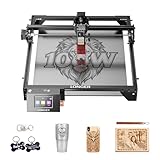

Quick comparison: the strongest CNC cutters for wood
Dimensions are nominal working areas; exact specifications can vary by configuration, wasteboard, spoilboard, and included accessories. Prices are broad 2026 market ranges for typical new machine packages, not exact quotations.
| Machine or class | Approx. cutting area | Cutting system | Materials it suits | Typical assembly | Software supplied or supported | Typical market range |
|---|---|---|---|---|---|---|
| Genmitsu 4040-class desktop CNC | About 15.7 × 15.7 × 3 in | Compact 300–710 W class spindle, depending on kit | Softwood, plywood, MDF, acrylic, plastics, light aluminum | About 2–6 hours | Usually Candle, UGS, or a vendor-supplied controller workflow; verify the exact kit | About $500–$1,000 |
| Carbide 3D Nomad 3 | About 8 × 8 × 3 in | Integrated compact spindle | Hardwood, plywood, MDF, acrylic, plastics, light non-ferrous metals | Minimal setup; under 1 hour for most owners | Carbide Create and Carbide Motion | About $2,500–$3,000 |
| Shapeoko 5 Pro, 2×2 configuration | About 33 × 33 × 4 in | Router-based system; spindle upgrade options may vary | Softwood, hardwood, plywood, MDF, acrylic, plastics, occasional aluminum | About 3–8 hours | Carbide Create and Carbide Motion | About $3,000–$4,500 |
| Onefinity Woodworker, X-50 class | Roughly 32 × 32 × 4 in, configuration-dependent | Typically a Makita-style router; spindle packages are optional | Hardwood, plywood, MDF, acrylic, plastics, and light aluminum with suitable tooling | About 2–6 hours | Controller software based on Buildbotics; CAD/CAM choice is separate | About $2,500–$5,000 |
Best overall: Shapeoko 5 Pro
The Shapeoko 5 Pro is the most convincing all-round cnc wood cutter machine for a hobbyist who expects projects to grow. Its roughly 33-by-33-inch work area handles signs, cabinet doors, relief carvings, templates, and furniture components without immediately forcing you to tile the design. The Z clearance is also more useful than the shallow capacity of many desktop machines.
Its router-based cutting system is not the same as a purpose-built industrial spindle, but it has enough power for hardwood and MDF when feeds, depth of cut, and tooling are sensible. Acrylic is workable with a sharp single-flute or O-flute cutter, conservative chip loads, and adequate chip clearance. Aluminum is possible only as a light-duty operation, not as the machine’s main purpose.
Carbide Create and Carbide Motion make this a comparatively safe choice for a first wood CNC cutter. The software is easier to learn than many generic controller combinations, while still supporting pockets, contours, V-carving, tabs, toolpaths, and basic 3D work. Allow a day for assembly, squaring, wasteboard installation, and calibration rather than assuming it is ready immediately from the box.
Best for a small, serious shop: Onefinity Woodworker
Onefinity’s rail-and-block design appeals to owners who prioritize rigidity, serviceability, and future expansion. A Woodworker-size machine gives a comparable large work envelope to other full-size hobby CNC cutters for wood, but the package is less prescriptive: you may need to choose the router, dust collection, CAD/CAM software, and some workholding equipment yourself.
That flexibility is an advantage for an experienced user and a hidden cost for a beginner. The standard router arrangement is capable of wood, MDF, plywood, and acrylic, but it is louder and less integrated than a dedicated water-cooled spindle. A spindle-equipped version can offer better speed control and longer duty cycles, although it increases wiring complexity and total cost.
The controller uses a Buildbotics-based workflow, while design and CAM software may be purchased separately. Check the exact bundle before ordering: “controller included” does not necessarily mean a full CAD/CAM program is included. Choose this CNC cutter for wood if you use it weekly, expect to make jigs or furniture parts, and are comfortable assembling a more configurable system.
Best budget choice: Genmitsu 4040-class machines
A Genmitsu 4040-class machine is a practical entry point when your projects fit within approximately 16 by 16 inches. It can cut signs, coasters, small trays, plaques, guitar parts, and test pieces in softwood, plywood, MDF, and acrylic. The smaller frame also fits on a sturdy workbench and costs substantially less than a full-size wood cutter CNC machine.
The trade-off is not just cutting area. Smaller machines commonly have lighter frames, more visible vibration, less effective dust collection, and greater sensitivity to loose V-wheels, belts, or lead screws. A compact spindle may cut wood adequately, but it will not remove material as confidently as a larger router or spindle. Expect to make shallower passes in hardwood and to spend more time securing the workpiece.
Software varies by exact Genmitsu package. Some bundles provide an offline controller and access to Candle or Universal Gcode Sender, while others depend on your own CAD/CAM workflow. Confirm that the controller, sender software, limit switches, and emergency-stop arrangement are included before comparing prices.
Best for limited space and clean operation: Carbide 3D Nomad 3
The Nomad 3 is the easiest recommendation when the priority is a compact, enclosed machine rather than maximum production capacity. Its approximately 8-by-8-inch cutting area is restrictive for large signs, but excellent for small engraving, jewelry components, prototypes, instrument parts, and decorative panels.
Because it is enclosed and highly integrated, the Nomad requires less workshop infrastructure than an open-frame router. Carbide Create and Carbide Motion provide a coherent design-to-cut workflow, making it approachable for someone who does not want to assemble a machine from rails, motors, spoilboard, and wiring.
It is not the economical choice per square inch. A simple calculation illustrates the difference: a nominal 8-by-8-inch area provides 64 square inches, while a 33-by-33-inch machine provides about 1,089 square inches—roughly 17 times the area. Choose the Nomad for convenience and small parts, not because it is a bargain large-format CNC cutter.
Decision matrix: which CNC cutter fits your situation?
| Your situation | Best fit | Why | Main compromise |
|---|---|---|---|
| First machine, limited budget, projects under 16 inches | Genmitsu 4040-class | Low entry cost and useful basic capacity | More tuning, noise, and vibration |
| Beginner who wants guided software and room to grow | Shapeoko 5 Pro | Large area and integrated Carbide workflow | Higher cost and a longer assembly session |
| Weekly production of signs, doors, templates, or furniture parts | Shapeoko 5 Pro or Onefinity Woodworker | Large work area and better throughput | Dust collection and workholding become essential |
| Experienced user wanting upgrades and configuration freedom | Onefinity Woodworker | Rigid, modular platform with flexible software choices | More decisions and accessories to buy separately |
| Apartment, classroom, or small bench; mostly small parts | Carbide 3D Nomad 3 | Enclosed, compact, and easy to start | Very limited cutting area |
What actually determines cutting performance
Real cutting area: subtract clamps, dust shoes, hold-down hardware, and the edge margin from the advertised travel. A 24-inch panel may not fit safely on a machine with nominal 24-inch travel.
Router or spindle power: power alone does not determine performance. Rigidity, runout, collet quality, cutter geometry, and chip evacuation matter just as much. A sharp 1/8-inch cutter used with the correct chip load can outperform a larger cutter forced through a vibrating frame.
Material range: softwood and MDF are forgiving starting materials. Hardwood needs sharp tooling and rigid workholding. Acrylic needs heat control and chip evacuation; rubbing instead of cutting causes melting. Plywood quality varies widely, and glue lines can dull inexpensive cutters quickly.
Software: CAD creates the shape, CAM converts it into toolpaths, and the controller sends those instructions to the machine. Carbide machines are attractive because their supplied software covers these stages for common work. With a configurable machine, budget separately for CAD/CAM if the package does not include it.
Ownership realities: setup, wear, and maintenance
- Square the machine before cutting. Check frame diagonals, gantry alignment, and spoilboard flatness. A small squareness error becomes obvious on wide sign lettering and fitted joints.
- Secure the material mechanically. Use screws outside the toolpath, clamps that clear the gantry, or a properly surfaced spoilboard. Double-sided tape alone is unreliable for aggressive pockets.
- Start with shallow passes. If a 1/4-inch cutter is rated for a 1/8-inch depth in a particular hardwood setup, do not assume the machine can safely take the full diameter in one pass. Increase depth only after checking sound, finish, and motor load.
- Clean after every dusty session. MDF dust reaches bearings, rails, switches, and electronics. Vacuum the work area, brush exposed rails as directed by the manufacturer, and keep dust out of the router or spindle cooling path.
- Expect cutters to wear first. Dull edges produce burning, fuzzy MDF edges, melted acrylic, and excessive load. Keep separate cutters for plywood, MDF, hardwood, and acrylic, and replace them when finish quality drops rather than compensating with slower feeds indefinitely.
- Recheck fasteners and belts. Vibration gradually loosens hardware and changes belt tension. A monthly inspection is sensible for occasional use; weekly production users should check critical fasteners and tool holding more often.
Final recommendation
For most hobbyists asking which cnc cutter wood machine to buy, the Shapeoko 5 Pro is the safest general recommendation because it combines a genuinely useful work area with approachable software and broad wood, MDF, plywood, and acrylic capability. Buy a Genmitsu 4040-class machine when budget and bench space dominate. Choose the Nomad 3 for small, enclosed work, and choose Onefinity when you value a more configurable platform and expect regular shop use.
Before ordering any cnc cutter for wood, measure your largest intended project, add clearance for workholding, confirm what software and cutting motor are actually in the box, and budget for dust collection, spoilboard material, end mills, and a reliable way to secure stock. Those details determine whether the machine becomes a useful workshop tool or an expensive project sitting on the bench.