
What's inside
As an Amazon Associate I earn from qualifying purchases. This post may contain affiliate links at no extra cost to you.
If you want a purpose-built dewalt planer stand, choose the DeWalt DW7350 for the best balance of working height, planer fit, and infeed support; choose a universal mobile base when you need to move several machines, carry a heavier load, or keep the budget lower.
As an Amazon Associate we earn from qualifying purchases at no extra cost to you.


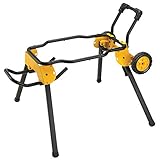
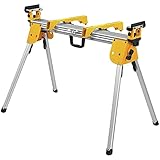
DeWalt DW7350 vs. a Universal Mobile Base
The DW7350 is designed specifically for the DeWalt DW735 and DW735X thickness planers. It combines a rigid steel stand with four casters, a lower shelf, and a footprint that keeps the planer stable while boards enter and leave the machine. A universal mobile base is more adaptable: it can support a planer, jointer, bandsaw, or shop cabinet, but its quality depends heavily on the frame, caster design, and how accurately you assemble it.
| Feature | DeWalt DW7350 | Universal mobile base |
|---|---|---|
| Primary purpose | Dedicated stand for DW735/DW735X planers | Adaptable platform for multiple machines |
| Typical working height | About 30–31 inches to the planer table, depending on setup | Usually adds about 3–5 inches beneath the machine |
| Approximate footprint | About 23–24 inches wide by 22–24 inches deep | Commonly adjustable from roughly 18–28 inches per side |
| Published load range | Approximately 300 pounds | Typically 500–1,500 pounds, depending on model |
| Frame material | Powder-coated steel tubing and sheet steel | Steel angle, stamped steel, or aluminum components |
| Wheel arrangement | Four integrated casters with wheel locks | Usually two fixed and two swiveling casters, or four swivels |
| Best reason to buy | Correct fit and predictable planer height | Higher capacity and one base for several tools |
Dimensions and capacities can vary by production revision and seller specification, so confirm the current DW7350 manual and the base manufacturer’s load rating before purchase. The important comparison is not simply whether either option can carry the planer. Both normally can. It is whether the platform remains rigid when a long, heavy board is pushing against the infeed table.
Working height: the DW7350 is easier to live with
A DeWalt DW735 planer is already a fairly tall benchtop machine. The DW7350 places it at a comfortable standing height without requiring a custom frame or a thick sacrificial top. That consistency matters because the outfeed table should be level with the planer bed, and long boards are less likely to dip as they leave the machine.
Universal bases usually lift the planer only a few inches above the floor. That can be useful in a compact shop, but the resulting height may be lower than ideal for repeated work. A lower machine also makes it harder to see the board as it enters the cutterhead and can encourage the operator to support the board from an awkward position.
Do not automatically add a tall platform to compensate. Raising a planer increases the leverage created by a long board and can make a narrow mobile base easier to tip. If you need a different height, use a rigid, full-width top securely bolted to the base rather than loose plywood resting on the frame.
Mobility and wheel-lock quality
The DW7350’s integrated casters are convenient because there is no separate brake pedal or lifting mechanism to position. Once the wheel locks are engaged, the stand has a predictable relationship with the floor. This is valuable when making several passes on a wide board.
Universal bases vary much more. A basic four-swivel-caster base may roll easily but can “walk” sideways when the board contacts the infeed rollers. A lift-style base often gives better stability because the machine rests on fixed feet during use and rolls only when the lifting pedal is engaged. That design is usually preferable for a planer used several times a week.
Check three details before buying a universal base:
- Locking method: individual caster brakes stop wheel rotation, but they may not prevent swiveling. A lift-and-settle mechanism or leveling feet usually provides a firmer parked position.
- Caster diameter: 3-inch wheels are common; 4-inch wheels roll more smoothly over thresholds and dust buildup, but raise the machine higher.
- Contact points: the base should support the machine near its corners, not only at the center of a thin bottom panel.
How the stand affects snipe and long-board support
Stand choice cannot eliminate snipe by itself. Snipe is usually caused by the board lifting or dropping as it enters or exits the cutterhead, incorrect roller pressure, loose table extensions, or feeding technique. However, a rigid and level stand can make the problem easier to control.
For a simple sizing check, consider a 96-inch board. If the planer table is 31 inches high and the board falls only 1/16 inch at the end of a pass, the unsupported end is already below the cutter path. A roller stand or outfeed table positioned at the same 31-inch height prevents that drop. If the stand flexes or rocks, the support height changes while the board is passing through, increasing the chance of end marks.
With either stand:
- Place the infeed support close enough that the board cannot pivot before the first roller grips it.
- Place outfeed support so the board remains level for at least 12–24 inches beyond the planer.
- Use supports that are level with, or just slightly below, the planer table; supports set too high can lift the board into the cutterhead.
- Keep the stand square and tighten every fastener after the first few sessions.
- Use the machine’s recommended snipe-reduction procedure, including proper table and roller adjustment.
The DW7350 has an advantage here because its fixed footprint makes it easier to align permanent roller stands. A universal base can work just as well, but only after you lock its position and verify that the planer remains level when the casters are loaded.
Which option fits your shop?
| Your situation | Better choice | Why |
|---|---|---|
| You use a DW735 regularly and want the least setup work | DW7350 | Dedicated mounting pattern, known height, and compact footprint |
| You move a planer and other heavy machines | Universal lift-style base | Higher capacity and reuse across several tools |
| You have a very small shop and store the planer against a wall | Either; favor a narrow base | Measure doorways, aisles, and storage clearance before buying |
| You process long boards frequently | DW7350 or a rigid universal base with leveling feet | Stability matters more than maximum rolling capacity |
| You want the lowest initial cost | Basic universal base | Often costs less, but may require a top plate and better hardware |
| You are new to mobile tool stands | DW7350 | Fewer sizing and mounting decisions |
Installation and ownership details that matter
When setting up a DW735 with stand, bolt the planer down rather than relying on its weight alone. Confirm that the mounting bolts do not protrude into the machine’s base, then check that the stand does not rock on the shop floor. A thin shim under one foot is safer than forcing the frame into alignment by over-tightening one bolt.
On a universal base, measure the planer before ordering. The frame must fit beneath the machine without blocking ventilation, access to the cutterhead cover, or the height-adjustment mechanism. Leave room to remove the dust hood and connect a dust collector hose. A base rated for 1,000 pounds is not automatically suitable if its rails flex under a 90-pound machine positioned high above the wheels.
Dust is the first ownership issue to address. Clean chips from caster pivots, wheel brakes, and leveling screws periodically. Check fasteners after the first few hours of use and again whenever the stand begins to rock. Caster brakes eventually wear, and inexpensive swivel casters can develop play; replacing them is usually more practical than trying to compensate with loose shims.
Final recommendation
For a DeWalt planer with stand that is used mainly for the DW735 or DW735X, the DW7350 is the safer all-around choice. Its dedicated fit and predictable height make infeed and outfeed alignment simpler, which is more useful for controlling long-board snipe than a high headline load rating.
Choose a universal mobile base when its extra capacity, adjustable footprint, or compatibility with other shop machines solves a real problem. Prefer a lift-style model with leveling feet if the planer will stay parked during use. Whichever stand you select, spend part of the budget on rigid roller support and careful leveling: those additions have a greater effect on board control than mobility alone.