
What's inside
As an Amazon Associate I earn from qualifying purchases. This post may contain affiliate links at no extra cost to you.
If you just want the short answer: the xTool S1 (40W diode) fits most woodworkers and crafters, the F1 Ultra is the pick if you need metal engraving via its infrared laser, and the P2 CO2 machine is the right call only if you cut thick acrylic or run production batches. Below is how each xTool engraver actually differs in work area, laser type, materials, enclosure, rotary support, and the bench space it demands.
As an Amazon Associate we earn from qualifying purchases at no extra cost to you.

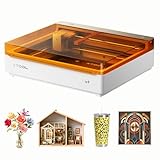


The Current xTool Lineup at a Glance
| Model | Laser type | Power | Work area | Enclosed? | Footprint needed |
|---|---|---|---|---|---|
| D1 Pro | Diode (455nm blue) | 10W / 20W / 40W | ~430 × 390 mm | No (optional enclosure) | ~650 × 600 mm bench + ventilation |
| S1 | Diode (455nm), optional 1064nm IR module | 20W / 40W (2W IR) | ~498 × 319 mm | Yes, Class 1 | ~765 × 630 mm, tabletop |
| F1 | Dual: diode + infrared | 10W diode + 2W IR | ~115 × 115 mm | Yes, portable | ~270 × 350 mm; fits on a shelf |
| F1 Ultra | Dual: diode + infrared (fiber-style) | 20W diode + 20W IR | ~220 × 220 mm | Yes | ~350 × 400 mm, tabletop |
| P2 | CO2 (glass tube) | 55W | ~600 × 308 mm, passthrough for long stock | Yes, Class 1 | ~1000 × 640 mm + clearance for lid and exhaust |
| M1 | Diode + blade cutter (hybrid) | 5W / 10W | ~385 × 300 mm | Yes | ~560 × 450 mm, desktop |
Two structural choices drive everything else: laser wavelength and enclosure. Wavelength decides what materials you can mark; enclosure decides where the machine can safely live.
Laser Type: Diode vs. Infrared vs. CO2
This is where most buying mistakes happen.
Blue diode (D1 Pro, S1, M1, diode side of F1/F1 Ultra)
455nm diode lasers cut and engrave wood, leather, paper, dark acrylic, and coated metals. They mark bare metal only with a marking spray, and they cannot cut clear or blue acrylic — the beam passes through or reflects. For cutting boards, signs, plywood inlays, and leather patches, diode is the workhorse.
The xTool infrared laser (1064nm)
The xTool infrared laser module is the feature that separates the F1 and F1 Ultra — and the optional IR module for the S1 — from cheaper diodes. At 1064nm, the beam is absorbed by metals and some plastics that shrug off blue light. Practically, this means clean engraving on bare stainless steel, aluminum, brass, gold, and silver without marking spray. The 2W IR in the F1 is fine for jewelry tags and pocket knives; the 20W IR in the F1 Ultra engraves metal fast enough for batch work like serialized parts or tumblers. If metal engraving is incidental, the S1’s add-on IR module is the cheaper path. If metal is the point, buy the F1 Ultra outright — its IR output is roughly ten times stronger.
CO2 (P2)
A 55W CO2 tube cuts up to ~20mm softwood and clear acrylic of any color, engraves glass and stone directly, and runs at speeds diodes can’t match. The tradeoffs: glass tubes are consumables (expect replacement after roughly 1,000–2,000 hours depending on duty cycle), require cooling, and the machine needs real ventilation plumbing. This is a small-business tool, not a hobby tool.
Work Area and the Space the Setup Really Needs
Advertised work area isn’t the same as desk footprint. Add the machine body, lid swing or riser clearance, exhaust hose routing, and material staging room:
- F1: Genuinely portable. Works on a kitchen table, stores in a cabinet. The 115mm square field limits you to small goods — tags, coasters, jewelry, lighter engraving.
- F1 Ultra: Still compact, but heavier and meant to stay put. Its conveyor attachment option lets you process batches of small items sequentially, which partially offsets the modest field size.
- S1: The practical sweet spot for signs and cutting boards up to ~50cm wide. Fully enclosed with lid-open interlock, so it’s safe around kids and doesn’t strictly require a separate room — but you still need to vent smoke outside or through a purifier.
- D1 Pro: Open-frame. It can engrave objects taller than its gantry by propping up the frame, but you must manage eye protection for everyone in the room and rig your own exhaust. Budget for the enclosure add-on or a DIY box.
- P2: Plan for a dedicated bench roughly 1m deep, clearance above for the lid, and a window or duct for the exhaust hose. The passthrough slot handles stock longer than the bed — useful for full-length signs.
Rotary and Accessory Compatibility
If tumblers, rings, or pens are in your plans, check rotary support before buying:
- S1: Supports the RA2 Pro rotary (roller and chuck modes) inside the enclosure with the riser base — handles mugs, tumblers, and rings.
- F1 / F1 Ultra: The F1 Ultra’s chuck rotary is excellent for rings and cylindrical metal parts, which pairs naturally with the IR laser for jewelry work.
- D1 Pro: RA2 Pro compatible, but open-frame rotary setups are awkward to vent.
- P2: Rotary supported; the curved-surface camera mapping is a real advantage for odd-shaped objects.
- M1: No rotary — its niche is thin-material cutting with the blade plus light engraving.
Which Model for Which Buyer
| Your situation | Pick | Why |
|---|---|---|
| Wood signs, cutting boards, leather goods; garage or spare room | S1 40W | Enclosed safety, biggest diode bed per dollar, IR module upgrade path |
| Tight budget, willing to manage ventilation yourself | D1 Pro 20W | Lowest entry cost; same diode capability minus enclosure |
| Jewelry, knife markings, metal tags as a side business | F1 Ultra | 20W xTool infrared laser engraves bare metal at production speed |
| Craft fairs, engraving on-site, minimal space | F1 | Portable, enclosed, covers wood + light metal work |
| Acrylic products, thick cuts, daily batch production | P2 | CO2 speed and clear-acrylic cutting diodes can’t do |
| Stickers, vinyl, cards, plus occasional engraving | M1 | Blade + laser hybrid; weakest engraving of the group |
Ownership Realities Listings Skip
- Lenses foul fast. Smoke coats the focus lens; expect to clean it every few hours of cutting with lens wipes, or you’ll lose power and char edges. This is the most common “my laser got weaker” complaint.
- Air assist isn’t optional for cutting. It’s bundled or essential on these machines; cutting wood without it means flame flare-ups and scorched kerf.
- Honeycomb beds get sticky. Resin residue builds up and causes flashback marks on material backs. Degrease monthly under heavy use.
- Consumables budget: CO2 tube for the P2 (multi-year, but expensive), diode modules last longer but aren’t immortal, exhaust filters need replacing every few months of regular use. Figure roughly 5–10% of machine cost per year under moderate use.
- Common mistake: Buying 10W to save money, then hitting the ceiling on 6mm plywood. For cutting (not just engraving), 20W is the practical floor; 40W roughly halves cut time.
Bottom Line
Match the laser wavelength to your materials first, then the bed size to your projects, then the footprint to your space. For most woodworkers the S1 40W is the balanced answer; the xTool infrared laser in the F1 Ultra is the decisive reason to spend more if metal is on your list, and the P2 only earns its floor space when CO2 capability is genuinely required.