
Our Top Picks
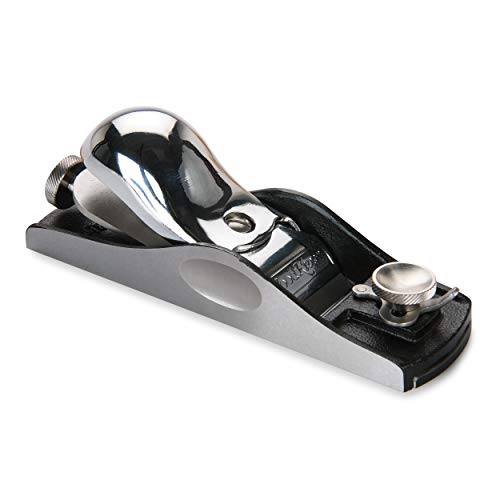 Woodriver Low Angle Block Plane With Adjustable Mouth7.85 x 3.15 x 2.75 Inches2.04 poundsCheck on Amazon


What's inside
As an Amazon Associate I earn from qualifying purchases. This post may contain affiliate links at no extra cost to you.
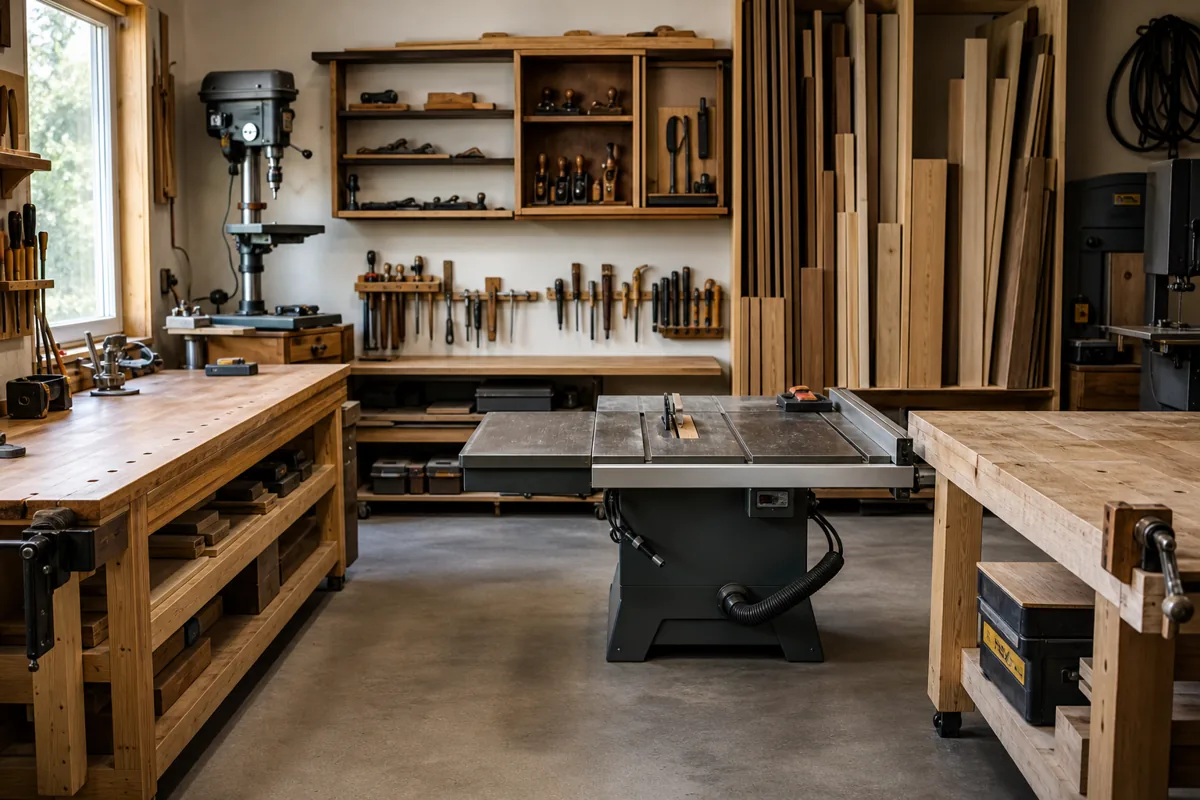
I own a job site table saw, a benchtop planer, a router, a track saw and more cordless tools than I have outlets, all crammed into a two-car garage that still has to fit a car. So it surprised me how much of my woodworking got easier once I stopped treating hand tools as nostalgia and started treating them as problem solvers. The list of essential hand tools woodworking actually rewards is short, cheaper than any machine I own, and it covers the exact jobs my machines are bad at.
Bad at is the operating phrase. My planer will not flatten a board wider than its bed. My sander cannot reach the inside corner of a rabbet. My saws cannot trim a proud plug flush without drama. And none of it runs at nine at night with a bedroom on the other side of the garage wall. Those constraints, not tradition, are why a small rack of hand tools hangs over my bench and keeps getting used.
As an Amazon Associate we earn from qualifying purchases at no extra cost to you.


| Hand tool | What it fixes in a machine shop | Cheap or spend up? |
|---|---|---|
| Low-angle block plane | End grain, proud plugs, fitting drawers and lids | Spend up, buy once |
| Bevel-edge chisels, four sizes | Hinge mortises, paring, cleanup | Mid-range if you sharpen |
| Marking knife and gauge | Layout that lands where you cut | Cheap is fine |
| Card scraper | Tearout and squeeze-out with no dust | Cheapest useful tool you own |
| Japanese pull saw | Flush cuts and quick crosscuts, zero setup | Mid-range, replaceable blades |
| Combination square | Checking whether your machines are honest | Spend up, it is your reference |
Why I keep buying hand tools for a shop full of cordless tools
Noise. My garage shares a wall with a bedroom, so anything with a motor is a decision I make before eight o’clock. A block plane is not. I get more done in quiet twenty minute sessions than in the loud Saturday marathons I picture while shopping for tools.
Setup time. When the cut takes fifteen seconds and the jig takes eight minutes, the machine is losing. Trimming one dowel, easing one edge, fixing the one spot where a drawer binds. A chisel is back on the rack before I have found the right sanding disc.
No jointer. I do not own one and I am not buying one, because the footprint would cost me the car. So I buy lumber slightly oversized, flatten one face with a plane and a pair of winding sticks, then run the other face through the planer. Slower than a jointer, quiet, and it fits a shop that has to close up every night.
My essential hand tools woodworking short list
Six tools. If the rack vanished tonight, I would rebuy these and nothing else.
A low-angle block plane
The one I reach for daily. One handed, it knocks the factory sharpness off an edge in two passes, trims plugs flush, and fits a drawer or a lid better than sanding, which rounds over the crisp edge you were trying to keep. Get an adjustable mouth. That one feature is the difference between clean end grain and torn end grain.
Low-angle adjustable-mouth block plane
Spend up a tier here. Budget castings are usually acceptable, but soft blade steel and a sloppy adjuster will frustrate you into leaving the plane in a drawer. Look for an adjustable mouth and a sole that sits flat on glass.
Four chisels, not twelve
My first purchase was a twelve piece bundle in a plastic case, and I use four of them: quarter, half, three quarter and one inch. That covers hinge mortises, cleaning up a shoulder, paring a joint flush and digging cured glue out of a corner. Bevel edge, with a handle you can tap with a mallet.
Bevel-edge chisel set, four sizes
Four widths cover almost everything a furniture or cabinet project asks for. Mid-range chisels kept sharp will outwork premium chisels left dull, so put the savings toward a sharpening setup instead of widths you will never grab.
A marking knife and a marking gauge
A pencil line is wide enough to hide a mistake in. A knife line is a wall for the chisel to drop into, and a gauge repeats that line on every part without measuring twice. Cheapest accuracy upgrade I know of, and it made my joinery look better than my skill deserved.
A card scraper
Cheapest useful tool on my bench. It pulls tearout out of figured maple with no dust, no swirl marks and no disc clogging with cured finish. Turning the burr takes an evening of frustration to learn and about thirty seconds to redo after that.
A Japanese pull saw
It cuts on the pull stroke, so a thin blade stays in tension and the kerf stays narrow. I keep a flush cut version for plugs and dowels and a stiffer backed one for crosscuts I will not unbury the miter saw for. Blades get replaced rather than sharpened, which is a real running cost.
One square you trust completely
Every machine in my shop drifts and I cannot correct drift I cannot see. One good combination square becomes the reference everything else gets checked against, fence and planer bed included. If the square lies, everything downstream lies with it.
- ✔ Quiet enough for late-night shop time
- ✔ No dust collection or hearing protection needed
- ✔ Zero setup for one-off cuts and fitting
- ✔ Handles parts too small or too wide for machines
- ✔ Cheap next to any power tool
- ✘ Nothing works well until you can sharpen
- ✘ Slow for repetitive dimensioning
- ✘ Real learning curve with little visible progress at first
- ✘ Very easy to overbuy tools you never use
The hand tools I bought and regret
The twelve piece chisel bundle. A full size bench plane bought before I could sharpen, which taught me only that heavy tools can be useless. A spokeshave that has shaped exactly one chair leg. A pricey dovetail saw purchased while my sawing was too rough to notice the difference. A brass and rosewood gauge I bought because it was pretty.
The pattern is obvious in hindsight. I was buying tools for the woodworking I imagined instead of the woodworking on my bench.
Sharpening is the real price of admission
This is where I was wrong the longest. I assumed a new chisel arrived sharp. Mostly it arrives ground, which is not the same thing, and a dull plane feels exactly like a plane you are bad at using. I spent a year thinking I lacked the hands.
What I do now is a coarse and a fine diamond plate on the bench, a cheap honing guide and a leather strop. Two or three minutes at the start of a session rather than waiting for the tool to quit. A honing guide is not cheating, it is repeatability, and freehand can wait until you care about the last five percent.
Diamond sharpening plates, coarse and fine
If you add one thing this year, make it sharpening rather than another plane. Plates, a guide and a strop will make the edges you already own feel like different tools. Flat and fast matters more than brand.
Frequently asked questions
Do I need hand tools if I already own a table saw, planer and sander? Not to build furniture, no. But a few of them make the machines you own more useful, because machines are good at repetitive dimensioning and bad at one-off fitting, and fitting is where projects are won or lost.
What is the best first hand tool to buy? A sharpening setup, then a low-angle block plane, in that order. A sharp budget plane beats a dull premium one every time.
Are vintage hand planes a good deal for a beginner? They can be, at a price. Flea market planes are often cheap because the sole needs flattening, the frog needs seating and the blade needs regrinding. If you enjoy tuning tools, that is a good winter project. If you want a bookshelf this month, buy new mid-range and skip the detour.
What I would tell my younger self: a sharpening kit, one block plane, four chisels, a knife, a gauge and a scraper. Then stop shopping and build things for six months. The list gets shorter the longer you do this, and the tools that stay are the ones solving problems your machines cannot.
Check prices on Amazon →