
What's inside
- Laser cutter price ranges by technology
- What the machine price does not include
- Choose by shop situation, not by advertised wattage
- A worked cost-per-use calculation
- Ventilation and material choices affect the real cost
- Maintenance realities and common ownership mistakes
- What about a tree cutting laser machine?
- Bottom line: how much should you budget?
- Related Guides
As an Amazon Associate I earn from qualifying purchases. This post may contain affiliate links at no extra cost to you.
The realistic laser cutter cost in 2026 is about $500–$1,500 for a small diode machine, $2,000–$8,000 for a hobby CO₂ machine, $4,000–$15,000 for a production CO₂ machine, and $10,000–$60,000 or more for an industrial system; the machine price is only part of the woodworking-shop budget.
For a useful buying decision, plan for the complete installed cost: machine, enclosure, ventilation, cooling, software, shipping, electrical work, consumables, and maintenance. A low-cost laser cutter can be excellent for signs, ornaments, templates, and small-batch joinery, but the cheapest listing is rarely the cheapest machine to operate.
As an Amazon Associate we earn from qualifying purchases at no extra cost to you.

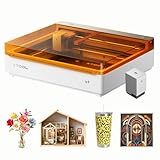


Laser cutter price ranges by technology
| Laser type | Typical working area | Typical power | Machine price in 2026 | Best woodworking uses |
|---|---|---|---|---|
| Diode | 400 × 400 to 850 × 400 mm | 5–40 W optical output | $500–$3,000 | Thin plywood, veneer, leather, engraving, small signs |
| Desktop CO₂ | 400 × 300 to 600 × 400 mm | 40–80 W | $2,000–$8,000 | Faster plywood cutting, acrylic, hardwood engraving |
| Cabinet CO₂ | 600 × 400 to 1,300 × 900 mm | 80–180 W | $4,000–$15,000 | Furniture components, batches, larger signs |
| Production CO₂ | 1,300 × 900 to 2,500 × 1,300 mm | 150–500 W | $15,000–$60,000+ | Continuous commercial production |
| Fiber marking/cutting | 100 × 100 to 300 × 300 mm marking fields | 20–100 W | $3,000–$30,000+ | Metal tags, hardware marking, not ordinary wood cutting |
Diode machines generally have the lowest laser cutting machine price, but their cutting speed and maximum thickness are limited. A 10–20 W diode can cut thin plywood in multiple passes, while a 60–100 W CO₂ system is usually much faster and more consistent for production work. A nominal “100 W” diode listing should not be compared directly with a 100 W CO₂ tube: the technologies deliver power differently.
What the machine price does not include
A realistic cost of a laser cutter includes the following additions:
- Ventilation: $100–$500 for a short, low-restriction duct run; $500–$2,500 or more for an enclosure, inline fan, filters, long ducting, and professional installation.
- Cooling: Diode systems may need only air cooling. CO₂ machines commonly need a chiller or controlled water-cooling system costing $200–$1,500. A basic pump-and-bucket arrangement may be inexpensive, but it provides less temperature control and protection.
- Software: Free or included control software may be enough for basic work. Budget $0–$600 for design and laser-control software, plus possible annual subscriptions or paid updates.
- Shipping and handling: $100–$1,500 for a small machine is common; crated cabinet machines, lift-gate delivery, customs, and residential access can push freight above $3,000.
- Electrical preparation: $150–$1,000 for a dedicated circuit, outlets, grounding, and installation. Larger machines may require 240 V service.
- Air assist and filtration: $100–$800 for a pump, compressor, nozzle system, or filtration upgrade. Air assist improves edges and reduces flare-ups.
- Workholding and accessories: $100–$1,000 for a honeycomb bed, pin bed, rotary attachment, camera alignment system, spare lenses, and measuring tools.
As a practical example, a $3,000 desktop CO₂ machine may become a $4,300–$6,000 project after freight, chiller, ventilation, electrical work, software, and initial accessories. A $900 diode machine may land closer to $1,400–$2,300 when enclosed and safely vented.
Choose by shop situation, not by advertised wattage
| Your situation | Most sensible choice | Expected total setup budget | Why |
|---|---|---|---|
| Under $2,000, occasional projects, limited space | Enclosed 10–20 W diode | $1,200–$2,500 | Low entry cost and modest electrical demand; slower cutting |
| $3,000–$7,000, weekly orders, 120 V shop | Desktop 40–80 W CO₂ | $4,000–$9,000 | Better throughput for plywood and acrylic |
| Small business, several hours per day | 80–150 W cabinet CO₂ | $7,000–$20,000 | Larger bed, stronger cooling, and improved batch capacity |
| Full-time production and large sheet goods | 150 W or larger production CO₂ | $20,000–$75,000+ | Higher uptime, automation, service support, and reduced handling |
| Metal identification plates or tool marking | 20–50 W fiber marker | $5,000–$20,000 | Designed for metal marking; not a substitute for a wood-cutting CO₂ machine |
Brands such as xTool and Glowforge are commonly associated with accessible desktop systems, while OMTech offers a broad range of hobby and cabinet CO₂ machines. Thunder Laser, Epilog, and Trotec generally occupy more expensive professional segments. The right choice depends on service availability, bed size, warranty terms, and documented safety features as much as on brand.
A worked cost-per-use calculation
Suppose a woodworker buys a $5,000 CO₂ machine and spends $1,500 on ventilation, cooling, freight, electrical work, and accessories. The initial investment is $6,500. If the machine produces 1,000 sellable projects during its first three years, the equipment portion is $6.50 per project before material and labor.
Now add operating costs. Electricity might average $0.10–$0.40 per machine hour depending on local rates and machine size. A lens, mirrors, filters, and routine replacement parts may average $0.50–$2.00 per operating hour when spread across production. If a project takes 20 minutes, a reasonable equipment-and-maintenance allowance might be $0.40–$1.00 per piece, excluding plywood, masking, design time, packing, and failed cuts.
This calculation explains why a faster CO₂ machine can be less expensive per finished item than a cheap diode. If the diode takes 45 minutes for a job and the CO₂ machine takes 12 minutes, labor and throughput may matter more than the initial laser cutter price.
Ventilation and material choices affect the real cost
Wood releases smoke, resin, and fine particulates when cut. Use an enclosed machine with exhaust routed outdoors where permitted, or use a properly rated filtration system when outdoor venting is not possible. A weak fan, long flexible hose, or clogged filter reduces airflow and leaves soot on the workpiece and optics.
Never assume every sheet labeled “plywood” is laser-safe. Adhesives can produce unpleasant or hazardous fumes, and some treated, painted, PVC-containing, or unknown composite materials should not be cut. MDF and laser-compatible plywood are common choices, but verify the adhesive and material guidance from the supplier. A fume extractor may add hundreds or thousands of dollars to the price of laser cutting, but it is not an optional decoration for an indoor shop.
Maintenance realities and common ownership mistakes
- Optics get dirty first: Smoke deposits on lenses, mirrors, and protective windows reduce cutting power and can cause overheating. Inspect and clean them according to the manufacturer’s instructions.
- Alignment changes performance: CO₂ mirrors must remain aligned across the bed. Poor alignment can produce a clean cut near one corner and a weak cut elsewhere.
- Cooling must be monitored: Excessive tube temperature shortens CO₂ tube life. Use a temperature-controlled chiller where required rather than relying on guesswork.
- Air assist prevents avoidable damage: It reduces flare-ups, clears smoke from the kerf, and helps protect the lens.
- Belts, rails, fans, and filters wear: Expect periodic cleaning and eventual replacement rather than treating the machine as maintenance-free.
- Fire safety is essential: Never leave a laser operating unattended. Keep an appropriate extinguisher nearby and test the emergency stop, lid interlock, and exhaust system.
CO₂ laser tubes and diode modules are not permanent. A diode module may last several thousand to tens of thousands of operating hours under suitable conditions, while a glass CO₂ tube may require replacement sooner depending on power, cooling, and use. Replacement costs vary from roughly $100–$500 for many diode modules and $200–$1,500 or more for CO₂ tubes, not including labor or alignment.
What about a tree cutting laser machine?
If “tree cutting laser machine price” means cutting living trees or large branches, ordinary woodworking laser cutters are not the appropriate tool. Desktop and cabinet lasers are designed for sheet materials and thin stock, not forestry work. For tree marking, bark engraving, or cutting prepared wood blanks, the relevant budget is the diode or CO₂ range above. Cutting trunks or branches requires conventional forestry equipment and professional safety procedures, not a shop laser.
Bottom line: how much should you budget?
For occasional woodworking, budget at least $1,200–$2,500 for a properly enclosed diode setup. For reliable weekly production, $4,000–$9,000 is a more realistic starting point for a desktop CO₂ system. A serious commercial woodworking shop should expect $10,000–$30,000 before stepping up to larger automated equipment.
Compare the complete installed cost, usable bed area, cutting speed, ventilation requirements, service support, and expected maintenance. The cheapest laser cutter price is attractive only if the machine can safely process your materials at the volume your shop actually needs.