
What's inside
As an Amazon Associate I earn from qualifying purchases. This post may contain affiliate links at no extra cost to you.
The best desktop CNC mill for most woodworkers and serious hobbyists in 2026 is one that pairs a rigid cast-iron or heavy aluminum frame with at least 600W of spindle power — the Tormach PCNC 440 remains the benchmark for cutting metal at home, while the Bantam Tools Desktop CNC and Nomad 3-class machines handle aluminum and precision small parts, and 3040/3018-style routers cover hardwood and soft materials at entry budgets.
Choosing among desktop CNC mills comes down to five variables: work envelope, spindle power, frame rigidity, software stack, and the hardest material you plan to cut. Get those right and the decision makes itself.
As an Amazon Associate we earn from qualifying purchases at no extra cost to you.

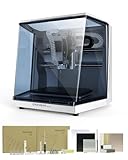
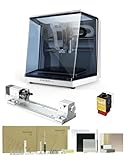

Work Envelope and Rigidity: The Two Specs That Matter Most
A desktop CNC mill’s work envelope determines the largest part you can machine in one setup. Most desktop machines offer between roughly 200 x 150mm (Bantam Tools class) and about 250 x 250 x 75mm (PCNC 440 class). Small envelopes are not a weakness if your parts fit — a machine cutting entirely within a small, stiff frame often holds tighter tolerances than a larger gantry flexing under load.
Rigidity is what separates a mill from a router dressed up as one. True metal-capable machines use dovetail or linear ways on cast bases; light aluminum-extrusion gantries with round rails deflect visibly under a 3mm endmill in aluminum. If steel is on your list, weight is a proxy for rigidity — a 100kg benchtop machine will outcut a 12kg extrusion frame every time, even with identical spindle ratings.
Spindle Power and Material Limits
Material capability maps roughly to spindle and frame class:
- 500W and below, light frames: hardwood, MDF, plastics, PCB engraving. Aluminum only in thin stock at very slow feeds.
- 1–1.5kW, medium frames: confident aluminum machining, brass, hardwoods, engraving. A desktop CNC mill for aluminum realistically starts here, with compressed-air or mist cooling strongly recommended.
- 1.5kW+ on a cast frame: steel in small parts and shallow passes. A desktop CNC mill cutting steel is possible — the PCNC 440 does it routinely — but expect reduced material removal rates versus industrial machines, and budget for quality carbide tooling and flood or mist coolant.
Head-to-Head: Representative Desktop CNC Mills
| Machine class | Example | Work envelope (mm) | Spindle | Weight | Comfortable materials | Typical price range |
|---|---|---|---|---|---|---|
| Entry engraver/router | Genmitsu 3018-PRO class | 300 x 180 x 45 | ~300W DC spindle | ~10 kg | Wood, plastic, PCB, soft engraving | $200–500 |
| Precision small-parts mill | Bantam Tools Desktop CNC Milling Machine | ~140 x 114 x 82 | ~250W, high RPM | ~22 kg | Aluminum, brass, FR4, Delrin | $3,500–4,500 |
| Enclosed all-rounder | Carbide 3D Nomad 3 | ~203 x 203 x 76 | ~1.2kW ER-11 | ~30 kg | Hardwood, aluminum, plastics | $2,800–3,000 |
| True benchtop metal mill | Tormach PCNC 440 | 254 x 159 x 254 | ~1.5kW R8 spindle | ~205 kg | Aluminum, steel, titanium (light) | $6,000–7,500+ (stand/coolant extra) |
The pattern: every jump in real metal capability costs roughly double and adds serious weight. Decide the hardest material first, then buy the smallest envelope that fits your parts — you’ll get a stiffer, more accurate machine for the money.
Decision Matrix: Match Your Situation to a Machine
| Your situation | Recommended class |
|---|---|
| Learning CNC, wood and PCB only, under $500 | 3018/3040-class router kit |
| Jewelry, wax molds, small aluminum brackets, tight tolerances | Bantam Tools-class precision mill |
| Mixed shop: hardwood signs + occasional aluminum parts, enclosed operation | Nomad 3-class enclosed mill |
| Garage shop, real steel parts, gunsmithing or prototyping | PCNC 440-class benchtop mill |
| Apartment, noise-sensitive | Enclosed mill only; skip open-frame metal cutting |
Software: The Hidden Cost of Ownership
A cnc mill desktop users actually enjoy running needs a smooth CAD → CAM → control chain. The Bantam Tools and Nomad machines ship with purpose-built software that compresses the learning curve to a weekend. The PCNC 440 runs PathPilot, a genuinely professional control, but you’ll supply your own CAD/CAM — Fusion 360’s personal tier covers most hobbyists, while commercial users should budget for a license. Entry routers rely on GRBL senders and free CAM like Easel or F-Engrave, which work but demand more manual setup per job.
Check two details before buying: whether probing/touch-off is supported natively (it cuts setup time dramatically) and whether the controller is closed or accepts standard G-code.
Ownership Realities Listings Don’t Mention
- Endmills are your real recurring cost. Expect to break tooling while learning — budget $15–30 per quality carbide cutter and several spares. On a $3,500 machine, a realistic first-year tooling and stock budget is $300–600.
- Chip management is non-negotiable. Metal swarf works into ways and leadscrews. Enclosed machines exist partly for this reason. Plan a shop-vac routine and way-cover cleaning weekly if you cut metal.
- Fixturing is half the craft. Small mills ship with tiny vises or just T-slots. Budget for a machinist vise, parallels, and soft jaws — often $100–300 — or you’ll fight workholding more than the machine.
- First thing to wear: spindle bearings (especially pushing side-loads in steel), linear bearings on neglected machines, and leadscrew backlash if you run dry. Lubricate on schedule and tram the head after shipping.
- Common beginner mistake: cutting aluminum with router-style feeds. Aluminum wants chip load, not speed — slow down, use a single- or two-flute cutter, and add mist cooling or you’ll weld chips to the tool.
FAQ
Can a desktop CNC mill cut steel?
Yes, but only at the heavy cast-frame end of the market — machines in the PCNC 440 class, roughly 1.5kW spindles on 200kg bases. Expect shallow depths of cut and slower cycle times than floor-standing mills. Sub-15kg machines claiming steel capability are marketing, not engineering.
What size desktop CNC mill do I need for aluminum?
Envelope should exceed your largest part by at least 25–30mm per side for fixturing clearance. More important than size is rigidity — look for linear rails, a 1kW+ spindle, and ideally an enclosure for chip control.
Is a desktop CNC mill worth it versus a 3D printer?
They solve different problems. A mill produces functional parts in wood, aluminum, and engineering plastics with isotropic strength; printing is faster for prototypes and complex internal geometry. If your parts need metal, threads, or flat mating surfaces, the mill earns its bench space.