
What's inside
- Quick picks by woodworking situation
- Blade steel: O1, A2, PM-V11, and carbide compared
- Thickness and geometry matter as much as steel
- Compatibility checklist before buying
- How to sharpen hand planer blades without creating tear-out
- Preventing tear-out in real wood
- Ownership costs and maintenance
- Bottom line
- Related Guides
As an Amazon Associate I earn from qualifying purchases. This post may contain affiliate links at no extra cost to you.
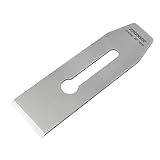
The best hand planer blades for clean, tear-out-free cuts are thick, accurately ground blades matched to your plane: PM-V11 or A2 for difficult hardwoods and frequent use, O1 for easy sharpening and lower cost, and correctly sized carbide blades for electric hand planers.
As an Amazon Associate we earn from qualifying purchases at no extra cost to you.



Quick picks by woodworking situation
| Situation | Best blade type | Why it fits | Typical choice |
|---|---|---|---|
| Occasional furniture repairs | O1 carbon steel, 2–3 mm thick | Affordable and quick to sharpen with ordinary waterstones | Correct-size O1 replacement iron |
| Frequent hardwood work | A2 or PM-V11, 3.2–4.8 mm thick | Longer edge life and greater resistance to edge damage | Veritas PM-V11 or Lie-Nielsen A2 iron |
| Low-angle plane and end grain | Thick A2 or PM-V11 iron, 25°–30° bevel | Supports a stable cutting edge while the plane’s bed supplies the effective angle | Low-angle replacement iron made for that plane |
| Traditional Stanley-style bench plane | O1 or A2 iron with matching chipbreaker | Easy to fit when the frog, cap iron, and mouth geometry are compatible | Replacement iron specified for the plane number |
| Electric hand planer | Reversible carbide or HSS cutter, usually 82 mm or 110 mm | Designed for a cutterhead rather than a bench-plane frog | Manufacturer-specified double-edge blade |
Blade steel: O1, A2, PM-V11, and carbide compared
O1 carbon steel
O1 is the practical choice when sharpening speed matters more than maximum edge life. It responds well to waterstones, oilstones, and diamond plates, and a small nick can usually be removed without an exhausting grinding session. The tradeoff is faster wear in abrasive woods such as oak, teak, figured maple, and reclaimed lumber. Rust prevention also matters: wipe the blade dry and apply a thin corrosion inhibitor after use.
A2 tool steel
A2 generally holds an edge longer than O1 and is a strong all-rounder for bench planes. Its wear resistance is useful when flattening hardwood panels or taking repeated shavings from a long board. It takes more work to sharpen, particularly if the edge has been badly damaged, but it offers a useful balance between durability and maintainability. Lie-Nielsen supplies many plane irons in A2 steel.
PM-V11 powder-metallurgy steel
PM-V11 is a premium powder-metallurgy steel used by Veritas. Its appeal is high wear resistance with a fine, durable edge. It is especially sensible for users who plane hardwood regularly and would rather sharpen less often. The extra hardness is not magic protection against tear-out: a dull or poorly supported edge can still lift fibers. It also rewards a good diamond plate or quality abrasive system because reshaping it takes longer than reshaping O1.
Carbide and HSS for electric hand planers
Electric hand planer blades are a separate category. Many portable electric planers use reversible carbide cutters, commonly 82 mm wide, while larger models may use 110 mm or other proprietary sizes. Carbide lasts well against ordinary construction lumber and occasional grit, but it is brittle: striking a nail can chip the cutting corner. HSS cutters may be used on some machines and can be resharpened more readily, but compatibility must come first. Never substitute a bench-plane iron or an apparently similar cutter in an electric planer; balance, screw position, thickness, and cutterhead clearance are safety-critical.
Thickness and geometry matter as much as steel
A standard Bailey-pattern bench-plane iron is often about 2.4 mm thick, while premium replacement irons commonly measure about 3.2 mm to 4.8 mm. A thicker iron resists vibration and stays flatter under the chipbreaker, which can make the cut feel more controlled. It will not automatically fit a vintage plane: check the frog width, lateral-adjuster slot, cap-iron screw position, and available clearance.
Bevel angle changes the effective cutting angle. In a conventional bevel-down plane, the bed angle is the main cutting angle, so a 25°–30° primary bevel is common. In a bevel-up plane, the blade bevel contributes directly. A 25° bevel on a 12° bed produces an effective angle of roughly 37°, while a 38° bevel produces roughly 50°. The lower angle cuts easily in long-grain softwood; the higher angle can reduce lifting in difficult grain, at the cost of more pushing effort.
For a durable edge, grind a primary bevel around 25° and add a narrow secondary bevel of approximately 30°–33° for ordinary work. On a bevel-up plane used for figured maple or reversing grain, a 35°–38° bevel is a useful experiment. Increase the angle gradually rather than changing it dramatically, because higher geometry is not a substitute for a properly set chipbreaker and a fine mouth opening.
Compatibility checklist before buying
- Plane type: identify bevel-up, bevel-down, block plane, jointer plane, scrub plane, or shoulder plane.
- Nominal plane number: a No. 4 iron is not interchangeable with a No. 5 or No. 4½ merely because the widths look similar.
- Width: measure the existing iron at its cutting edge and across the body; common bench-plane sizes range from about 38 mm to 60 mm.
- Thickness: confirm that the thicker replacement does not interfere with the frog, mouth, cap iron, or adjustment mechanism.
- Chipbreaker: the original cap iron may not mate correctly with a very thick premium iron.
- Electric planer specification: match length, width, thickness, hole pattern, rotation direction, and whether the cutter is reversible.
How to sharpen hand planer blades without creating tear-out
Sharpness is determined by a clean intersection of the back and bevel, not by a mirror finish alone. The following hand planer blade sharpening method works for most O1, A2, and PM-V11 irons.
- Flatten only the working portion of the back. Polish the first 10–20 mm behind the edge. Do not waste time flattening the entire back unless the blade is severely distorted.
- Establish the primary bevel. Use a honing guide or a stable freehand angle. A grinder can remove damage quickly, but keep the steel cool; overheating can soften the edge.
- Hone a secondary bevel. Raise the guide slightly to create a narrow 1–2 mm micro-bevel. This removes less steel at each sharpening.
- Remove the burr. Finish with light strokes on the back, then alternate one bevel stroke and one back stroke. A persistent wire edge causes the plane to feel sharp briefly and then fail quickly.
- Strop carefully if desired. A few light strokes can remove remaining burr fragments, but rounding the edge with excessive stropping reduces cutting accuracy.
For routine sharpening, a 1,000-grit abrasive repairs the edge, 4,000–6,000 grit refines it, and 8,000 grit or a strop can improve polish. These are useful ranges rather than strict requirements. A coarse diamond plate is valuable for reshaping a damaged edge; a fine plate, waterstone, or ceramic stone handles maintenance. When sharpening hand planer blades, keep the bevel even across the width and avoid rocking the iron, which creates a convex edge that changes the cutting geometry.
Preventing tear-out in real wood
Even the best blade can tear difficult grain if the setup is wrong. Reduce the cut depth until the shaving is thin, close the mouth as far as the shaving will allow, and support the workpiece firmly. Plane with the grain where possible; on reversing or figured grain, skew the plane, use a higher effective angle, or take a very light finishing cut. A tight chipbreaker set approximately 0.5–1 mm behind the edge can bend and control the shaving, but it must sit perfectly without a gap.
Species also change the decision. Pine and straight-grained spruce are easy on an edge but can compress under a dull blade. Hard maple and beech reward a durable A2 or PM-V11 iron and a higher effective angle. Oak and ash may produce clean shavings with O1, but their abrasive minerals increase sharpening frequency. Reclaimed wood should be treated as contaminated until inspected and cleaned; hidden grit can destroy a fine edge in one pass.
Ownership costs and maintenance
Consider sharpening time as well as purchase price. Suppose an O1 blade costs $35 and needs sharpening after every three hours of active planing, while a premium PM-V11 blade costs $90 and lasts six hours under the same workload. Over 60 hours, the O1 requires about 20 sharpening cycles and the PM-V11 about 10. If each sharpening takes 8 minutes, the O1 consumes roughly 160 minutes and the PM-V11 80 minutes, before assigning any value to your time. The premium blade is not automatically cheaper, but frequent hardwood work can justify it.
The cutting edge usually wears first, followed by the cap-iron mating surface and adjustment hardware on heavily used planes. Store irons dry, protect the edge with a guard, remove resin with a suitable cleaner, and do not leave carbon steel on a damp bench. Replace an electric planer cutter as a matched set when the manual specifies this; uneven cutter height can create ridges and imbalance.
Bottom line
Choose O1 if you value inexpensive, forgiving sharpening; A2 for a durable general-purpose bench-plane blade; and PM-V11 when repeated hardwood work makes edge retention worth the cost. Prioritize the exact plane and cutterhead dimensions before steel upgrades. A correctly fitted, finely sharpened blade taking a thin shaving will produce cleaner work than an expensive blade with the wrong thickness, bevel geometry, or adjustment.