
What's inside
- Quick comparison: the strongest choices by use case
- Best DIY CNC mill for each situation
- Gantry stiffness matters more than headline spindle wattage
- Router, trim spindle, or VFD spindle?
- Lead screws versus ball screws
- Decision matrix
- A simple sizing calculation before you buy
- Ownership realities: what wears first
- Final recommendation
- Related Guides
As an Amazon Associate I earn from qualifying purchases. This post may contain affiliate links at no extra cost to you.
The best DIY CNC mill depends on what you mean by “work”: choose a rigid benchtop mill or PrintNC-style build for light aluminum, a Shapeoko 5 Pro or Onefinity Elite for reliable wood and plastic production, and a low-cost 3018/4040 router only for small parts and learning.
As an Amazon Associate we earn from qualifying purchases at no extra cost to you.
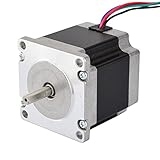

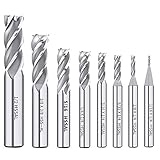
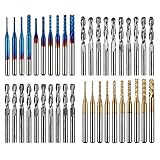
Quick comparison: the strongest choices by use case
| Build or machine | Typical work area | Frame and drive system | Spindle or router | Realistic materials | Typical 2026 market range |
|---|---|---|---|---|---|
| Shapeoko 5 Pro | About 33 × 33 or 33 × 33 × 4 in, depending on configuration | Aluminum extrusion gantry, V-wheels, belt-driven axes | Router or optional spindle package | Wood, plywood, MDF, plastics, engraving aluminum | $2,000–$3,500 configured |
| Onefinity Elite | Approximately 32 × 32 to 50 × 50 in work-area options | Steel-tube rails with ball screws | Router or water-cooled spindle | Wood, plastics, composites, occasional shallow aluminum cuts | $2,500–$5,000 configured |
| Desktop 3018 or 4040 CNC | About 11 × 7 × 2 in for 3018; roughly 15 × 15 × 3 in for many 4040 designs | Small aluminum frame, lead screws, compact linear guides or V-wheels | 300–800 W trim-style spindle | Wood, plastic, PCB engraving, wax, very light aluminum | $300–$1,200 |
| PrintNC-style DIY mill | Commonly 24 × 24 × 8 in, but builder-defined | Welded or bolted steel frame, supported linear rails, ball screws | 1.5–2.2 kW high-frequency spindle | Hardwood, plastics, aluminum, and limited brass work with conservative tooling | $2,500–$6,000 to build |
| Benchtop CNC metal mill | Often 12–24 in X travel, 6–12 in Y, 10–14 in Z | Cast-iron column and table, dovetail or box ways, ball screws on upgraded models | 1–2 hp motor or factory spindle | Aluminum, brass, plastics, steel at modest depth and feed rates | $3,000–$10,000+ |
Work areas and prices vary with frame size, electronics, spindle, enclosure, and shipping. Treat the figures as buying ranges rather than guaranteed specifications.
Best DIY CNC mill for each situation
Best overall for wood and sheet goods: Shapeoko 5 Pro
The Shapeoko 5 Pro is the practical choice when the priority is cutting signs, furniture parts, guitar components, templates, and nested plywood. Its large aluminum extrusion frame provides useful capacity without requiring a welded base, and belt-driven motion keeps the design relatively simple to maintain.
Its limitation is torsional stiffness. A large gantry spanning a wide work area deflects more easily than a steel, ball-screw machine. That is rarely a problem in pine, MDF, plywood, or plastic, but it becomes important when cutting aluminum. Use small-diameter carbide cutters, shallow step-downs, strong workholding, and conservative feed rates. It is better described as a CNC router that can perform light aluminum operations than as a metal mill.
Best for repeatable motion and larger projects: Onefinity Elite
The Onefinity Elite uses ball screws rather than ordinary timing belts. Ball screws generally provide less elastic motion, better low-speed control, and more predictable positioning under changing loads. Its tube-rail architecture also gives the gantry a more substantial foundation than many entry-level extrusion routers.
Choose it over a belt-driven machine when you routinely cut thick hardwood, make repeated parts, or want a larger machine in a garage or workshop without designing the entire structure yourself. It still is not equivalent to a cast-iron machining center: spindle power, frame mass, and workholding remain the limiting factors for aluminum and steel.
Best low-cost learning platform: a 3018 or 4040 CNC
A 3018-class machine makes sense for learning CAD/CAM, probing, zeroing, engraving, and basic G-code. A 4040-class machine provides more usable area and is usually a better long-term purchase if the budget allows. Both typically use lead screws and relatively light frames.
These machines can cut wood, acrylic, HDPE, and other plastics effectively with suitable tooling. Aluminum is possible only as shallow, narrow cuts with excellent chip evacuation and rigid clamping. Steel is not a realistic general-purpose material for this class. The common mistake is assuming that a 500 W spindle can compensate for a flexible gantry; spindle power does not prevent vibration caused by frame deflection.
Best DIY route for serious light-metal work: PrintNC-style construction
A PrintNC-style build is the most compelling option for a capable DIY CNC mill when the builder can fabricate, align, and troubleshoot a machine. Steel tubing, supported linear rails, ball screws, and a 1.5–2.2 kW spindle can produce a much stiffer platform than a hobby router.
The tradeoff is that the advertised work envelope is not the whole project. You must budget for a squared and stress-resistant frame, rail alignment, screw supports, couplers, spindle control, electrical safety, enclosure construction, and calibration. A poorly aligned PrintNC can perform worse than a smaller commercial machine. With proper setup, it can handle hardwood, plastics, aluminum, and occasional brass work; steel cutting is possible only under conservative conditions and is not its natural strength.
Gantry stiffness matters more than headline spindle wattage
Cutting forces travel from the tool into the spindle mount, gantry, rails, frame, and workbench. Every flexible component contributes to chatter. A wide moving gantry is convenient for large panels, but its beam can twist when the cutter is far from the side supports. Steel tubing and cast iron resist this better than thin aluminum extrusion.
- Wood: A moderately rigid gantry is usually sufficient because wood cuts tolerate higher material-removal rates and intermittent loads.
- Plastic: Rigidity helps prevent melted edges and chatter, but chip clearance and correct spindle speed are equally important.
- Aluminum: Short tool stick-out, rigid clamping, low radial engagement, and a stiff frame become essential.
- Steel: A router-style gantry is generally the wrong platform. Use a heavy metal mill with castings, enclosed ways, and a suitable spindle.
Ball screws improve motion transmission, but they do not turn a light frame into a rigid one. Conversely, belt-driven routers can make excellent wood parts when their frame, workholding, and cutting parameters are matched to the job.
Router, trim spindle, or VFD spindle?
A compact router is inexpensive and easy to replace, but it is loud, has limited low-speed torque, and often has more runout than a quality CNC spindle. It suits wood and occasional plastic work.
A 500–800 W DC spindle is common on desktop machines. It is quieter and easier to control than a router, but its small bearings and limited power restrict aluminum cutting.
A 1.5 kW or 2.2 kW water-cooled spindle, controlled by a variable-frequency drive, is the better choice for a rigid DIY build. It supports ER11 or ER20 collets, steadier speed control, and longer duty cycles. It also requires proper electrical grounding, emergency-stop wiring, cooling, and an enclosure. Do not select a high-power spindle before confirming that the gantry, Z-axis, and workbench can withstand its mass.
Lead screws versus ball screws
Lead screws are inexpensive and can hold position well on small machines, but they create more friction and usually have lower efficiency. Their nuts wear, especially when contaminated by abrasive MDF dust. They are adequate for 3018-class equipment and light-duty axes.
Ball screws use recirculating bearings, reducing friction and backlash when correctly preloaded. They are preferable for a heavy DIY CNC mill, particularly on the Z axis and on machines cutting aluminum. They cost more, require better alignment, and can be damaged by chips if left unprotected. Wipers, bellows, or covers are not optional in a dusty shop.
Decision matrix
| Your situation | Best fit | Why | Do not expect |
|---|---|---|---|
| Under $1,200, learning CAD/CAM, small parts | 4040-class desktop CNC | Low entry cost and simple mechanics | Fast cutting or reliable steel work |
| Frequent signs, plywood, and furniture components | Shapeoko 5 Pro | Large work area and manageable maintenance | Heavy aluminum material removal |
| Repeated hardwood parts and a preference for ball screws | Onefinity Elite | Better motion control and robust rail architecture | Cast-iron mill stiffness |
| Weekly aluminum work and willingness to build | PrintNC-style steel machine | Higher stiffness and configurable travel | A quick weekend assembly |
| Mostly aluminum, brass, or steel in a compact shop | Benchtop metal mill | Mass, ways, and metal-oriented geometry | Very large sheet-goods capacity |
A simple sizing calculation before you buy
Suppose your largest planned cabinet component is 28 × 18 inches. Do not buy a machine with exactly 28 × 18 inches of advertised travel. Allow at least 2 inches per axis for clamps, tabs, edge clearance, and probing. The practical minimum becomes 32 × 22 inches. If you also want to rotate the part for grain direction or hold a spoilboard fixture, a 33 × 33-inch class machine is a more comfortable choice.
For aluminum, calculate tool reach as well. A 20 mm-thick plate does not require a long tool, but a 100 mm-tall fixture does. Every extra millimeter of stick-out increases leverage on the spindle and gantry, so use the shortest cutter that clears the workpiece.
Ownership realities: what wears first
- Cutters: MDF and plywood dull tools quickly because of glue and abrasive fillers. Keep separate cutters for wood, plastic, and aluminum.
- Spoilboards: Surface a wood spoilboard periodically, but replace it when recessed areas prevent reliable clamping.
- Motion hardware: Inspect V-wheels, belts, lead-screw nuts, and ball-screw play monthly if the machine is used regularly.
- Dust control: Vacuum MDF dust before it reaches rails and screws. Do not mix chips with open electronics or spindle cooling equipment.
- Workholding: Loose stock is a safety hazard and a dimensional problem. Use clamps, threaded inserts, a vacuum table, or a properly surfaced spoilboard.
Final recommendation
For most woodworkers, buy a Shapeoko 5 Pro or Onefinity Elite according to whether large capacity or ball-screw motion matters more. Choose a 4040-class desktop machine only when small parts and low cost are decisive. If aluminum is central to the plan, skip the light router frame and build or buy a genuinely rigid, ball-screw metal-oriented machine. The best DIY CNC mill is not the one with the biggest travel or spindle number; it is the one whose stiffness, motion system, tooling, and work envelope match the material you will cut most often.