
What's inside
- Quick picks by project and experience
- What separates the best leather working kits?
- Head-to-head comparison of common kit types
- Best beginner setup for wallets
- What a belt-capable kit must add
- Choosing a kit for bags and larger projects
- Decision matrix: which kit fits your situation?
- Durability: what wears out first?
- A simple ownership-cost calculation
- Final buying checklist
As an Amazon Associate I earn from qualifying purchases. This post may contain affiliate links at no extra cost to you.
The best leather working kits are the ones that match your first projects: a compact starter set for wallets, a heavier punch-and-stitch set for belts, or a broader tool collection for bags and regular workshop use.
As an Amazon Associate we earn from qualifying purchases at no extra cost to you.

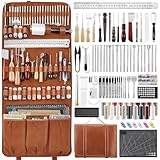


Quick picks by project and experience
- Best for first wallets: a 20–35-piece beginner kit with pricking irons, edge tools, needles, thread, and a small cutting mat.
- Best for belts: a kit containing a 1.5–4 mm hole punch range, oblong buckle punch, strap-end punch, mallet, and a firm cutting surface.
- Best for bags: a 40–70-piece kit with multiple stitching chisels, longer punches, rivet-setting tools, edge bevelers, and spare consumables.
- Best for frequent use: a smaller selection of replaceable, hardened-steel tools from an established leathercraft supplier rather than a large kit filled with soft metal tools.
- Best value for careful beginners: a mid-range kit with fewer tools but a better awl, sharper punches, and properly sized stitching chisels.
What separates the best leather working kits?
Kit size is not a reliable measure of value. A 100-piece set may count every needle, thread spool, and interchangeable punch as a separate item, while a 25-piece set can cover the essential operations more effectively. Prioritize the tools that determine accuracy: the cutting blade, stitching chisels or pricking irons, awl, hole punches, mallet, edge beveler, and measuring tools.
For wallets and small accessories, 2.7–3.0 mm stitching spacing is a useful all-purpose range. It produces a balanced appearance without requiring extremely fine thread or unusually narrow seams. Belts and heavier bags generally benefit from 3.0–4.0 mm spacing, while fine watch straps and card holders may suit 2.0–2.7 mm spacing.
Head-to-head comparison of common kit types
| Kit type | Typical piece count | Typical contents | Best project capacity | Likely service life | Typical market range |
|---|---|---|---|---|---|
| Compact beginner kit | 20–35 pieces | 2–4 stitching chisels, awl, knife, needles, thread, basic punches | 8–15 wallets or small accessories | 1–3 years with occasional use | $25–$60 |
| Intermediate wallet-and-belt kit | 35–55 pieces | Multiple hole sizes, oblong punch, edge bevelers, setters, mallet, rulers | 15–40 wallets, belts, and small bags | 3–7 years with maintenance | $60–$150 |
| Expanded bag-making kit | 50–80 pieces | Longer chisels, rivet and snap setters, skiving tool, punches, stitching supplies | Small and medium bags, panels, belts | 4–8 years; consumables replaced sooner | $120–$300 |
| Modular professional setup | 15–40 selected tools | Replaceable premium punches, separate chisels, sharpening equipment, specialist tools | Regular production and large projects | 8–15+ years for quality steel tools | $250–$700+ |
These figures describe typical kit categories rather than fixed specifications for every boxed set. Check the maker’s current contents before ordering, particularly when a listing counts spare blades, thread colors, or individual punch sizes as separate pieces.
Best beginner setup for wallets
A wallet-focused kit should include a sharp utility or leather knife, a metal ruler, a scratch awl, stitching chisels, harness needles, waxed thread, an edge beveler, a burnishing tool, and at least one stitching pony or another way to hold the work. A cutting mat is also important; cutting directly on a table quickly dulls blades and can damage the work surface.
Look for chisels with 2.7–3.0 mm spacing and two, four, and six prongs. The two-prong tool handles corners and short edges; the wider tools make long seams faster. A kit with only a four-prong chisel can work, but it is less convenient for tight turns and irregular patterns.
Many inexpensive kits include very blunt edge bevelers. That is not a small defect: a poor beveler tears the edge instead of removing a clean strip. If the rest of the kit is suitable, it can be more economical to replace the beveler than to discard the entire set.
What a belt-capable kit must add
Belts expose weak tools because they require long, straight cuts and large, clean holes. In addition to the wallet tools, choose a kit with a 1.5–4 mm round hole-punch range, an oblong punch for the buckle tongue, a strap-end punch or a reliable template method, and a mallet intended for striking punches.
Confirm that the punch sizes match your hardware. A belt using a 40 mm buckle may need a different oblong opening from one using a 30 mm buckle. A kit that includes many small round punches but no oblong punch is not a complete belt kit, regardless of its advertised piece count.
For a first belt, 3.5–4.0 mm vegetable-tanned leather is a practical thickness range. A basic kit may handle the punching and stitching, but it will not replace a long, rigid ruler, a square, and a stable cutting surface. These workshop items often matter more than extra decorative stamps.
Choosing a kit for bags and larger projects
Bags demand more than additional punches. Look for longer stitching chisels, a skiving knife or adjustable skiving tool, a cutting gauge, rivet and snap setters, a stronger stitching pony, and tools for edge finishing. A kit should also include enough thread to complete a project rather than only a short sample length.
For larger panels, a 300 mm ruler is useful for pattern work, while a 600 mm ruler makes long strap and gusset cuts easier. A kit containing only a 150 mm ruler may be adequate for card holders but becomes frustrating on bags. Similarly, four-ounce thread is common for general leatherwork, but heavier bags may need a different thread diameter and stronger hardware.
Do not assume that every included snap setter fits every snap. Press-fit hardware is size-specific. If a bag kit includes setters, record the compatible snap or rivet diameter before buying extra hardware.
Decision matrix: which kit fits your situation?
| Your situation | Recommended kit | Why | What to upgrade first |
|---|---|---|---|
| Budget under $60; making one or two wallets | 20–35-piece compact kit | Covers basic cutting, punching, and saddle stitching without unused specialist tools | Chisels or edge beveler |
| Small workspace; projects once a month | 30–45-piece case-based kit | Easy storage and enough tools for wallets, key cases, and simple belts | Cutting mat and stitching pony |
| Making belts regularly | Intermediate belt-capable kit | Includes large punches and hardware-setting tools that small kits omit | Oblong punch and long ruler |
| Planning bags or selling finished work | Expanded or modular setup | Better repeatability, skiving control, and replaceable components | Premium punches and sharpening system |
| Already own knives and rulers | Specialized punch-and-stitch kit | Avoids paying for duplicate low-cost accessories | Project-specific punch sizes |
Durability: what wears out first?
Consumables usually disappear before tools fail. Waxed thread, blades, sandpaper, glue, snaps, rivets, and replacement needles should be budgeted separately. Among tools, inexpensive cutting blades dull quickly, awl points bend when used against hard surfaces, and punch edges lose their bite when struck on wood, tile, or metal.
Use a dense polyethylene cutting board or purpose-made punching slab beneath punches. Keep punch edges lightly protected when stored, wipe steel tools after use, and never leave damp leather residue on them. A leather strop can maintain an awl or knife edge, but it will not repair a badly chipped punch; damaged punches generally need careful sharpening or replacement.
Tool handles also matter. Smooth, narrow handles become uncomfortable during a long belt project. For occasional crafting, this may not matter, but frequent users should favor tools with secure grips and consistent alignment. Storage cases protect points from knocking together, although soft fabric cases do not prevent rust in humid workshops.
A simple ownership-cost calculation
Suppose a $45 beginner kit produces eight usable wallets before the owner replaces the thread, two blades, and a worn beveler costing $18 altogether. The initial cost is $45 + $18 = $63, or about $7.88 per wallet before leather and hardware. A $120 intermediate kit that remains serviceable for 30 wallets costs about $4 per wallet before consumables. The cheaper box is therefore not automatically the lower-cost choice if you expect to keep making projects.
Conversely, if you only plan to make two wallets, the larger kit may leave money tied up in punches and setters you never use. Match durability to frequency rather than buying the biggest assortment.
Final buying checklist
- Choose stitching spacing before choosing chisels.
- Check whether the kit includes an oblong belt punch if belts are part of the plan.
- Confirm punch and setter sizes against your intended hardware.
- Prefer hardened or rust-resistant steel and cleanly ground edges.
- Count usable project supplies, not just advertised pieces.
- Allow room in the budget for a cutting mat, punching slab, ruler, and replacement consumables.
- Choose a modular kit when you expect to make bags or sell your work; choose a compact kit for occasional wallets and small accessories.
The best leather working kits provide a coherent path from cutting to stitching and finishing. For most beginners, a sharp mid-range wallet-and-belt kit is the strongest starting point: it avoids the fragile tools common in very cheap assortments while leaving room to add specialist punches as projects become more ambitious.