
What's inside
As an Amazon Associate I earn from qualifying purchases. This post may contain affiliate links at no extra cost to you.
For most people who want to laser cut leather, a 40–55W CO₂ machine with an enclosed work area, air assist, and effective exhaust is the best balance of clean edges, usable speed, and material flexibility; a 20W diode is the lower-cost choice for thin vegetable-tanned leather and small projects.
The right leather laser cutter depends less on headline wattage than on four practical questions: how thick your leather is, how much discoloration you can accept, whether you can vent fumes outdoors, and how often you will use the machine. Leather also behaves differently according to its tanning chemistry, so a setting that works on vegetable-tanned hide may produce an unacceptable edge on chrome-tanned material.
As an Amazon Associate we earn from qualifying purchases at no extra cost to you.
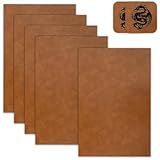


Quick comparison: the best machine types for leather
| Machine type or example | Typical usable power | Work area | Clean-cut leather thickness | Typical cutting speed | Best fit |
|---|---|---|---|---|---|
| 20W enclosed diode machine, such as xTool S1 20W | 20W optical | 498 × 319 mm | Up to about 2.5–3 mm vegetable-tanned leather in multiple passes | About 5–15 mm/s for dependable cuts | Beginners, small shops, patches and wallets |
| 40W enclosed diode machine, such as xTool S1 40W | 40W optical | 498 × 319 mm | About 3–4 mm vegetable-tanned leather, depending on density | About 8–20 mm/s | More frequent work without moving to CO₂ |
| 40–55W desktop CO₂ machine, such as OMTech Polar 350 | 50W class | 510 × 300 mm | About 4–6 mm vegetable-tanned leather in one or a few passes | About 10–25 mm/s | Regular production and thicker stock |
| 55W enclosed CO₂ machine, such as Glowforge Pro | CO₂ laser, manufacturer-rated power | 495 × 279 mm | About 3–5 mm, subject to material testing | Fast for repeated engraved and cut designs | Accessible software and guided workflows |
| 80–100W cabinet CO₂ machine | 80–100W | 600 × 900 mm or larger | About 6–10 mm vegetable-tanned leather | About 15–35 mm/s | Production studios and large panels |
These thicknesses are working ranges rather than promises. Dense, oily, laminated, or unusually wet leather can require slower settings, extra passes, or a different focus height. Diode machines also vary substantially by optical design and air-assist performance.
Best choice by situation
| Your situation | Recommended choice | Why |
|---|---|---|
| Budget under roughly $1,000 and occasional projects | 20W enclosed diode | Lower entry cost and electrical demand; suitable for thin leather and engraving |
| First machine, limited technical experience | Enclosed diode with a honeycomb bed and built-in safety features | Simpler setup and less demanding cooling than a water-cooled CO₂ tube |
| Weekly wallets, belts, or batches of small goods | 40–55W CO₂ | Fewer passes and better throughput on 2–5 mm leather |
| Small room or apartment workspace | Compact enclosed machine only if outdoor exhaust is possible | An enclosure does not eliminate smoke, odor, or the need for ventilation |
| Large bags, panels, or many pieces per day | 80–100W cabinet CO₂ | Larger bed and faster production reduce repositioning and handling |
| Mostly engraving names and logos on thin leather | 10–20W diode or desktop CO₂ | Cutting power matters less than controllable low-power engraving |
Vegetable-tanned versus chrome-tanned leather
Vegetable-tanned leather
Vegetable-tanned leather is generally the easier and more predictable material for laser cutting. It tends to produce a crisp brown-to-dark edge, especially with air assist and a clean honeycomb bed. Natural hides can still vary: waxes, oils, sealers, dye, and thickness all change the result.
A 20W diode can cut thin 1–2 mm veg-tan effectively, but a 40W CO₂ machine is more comfortable for 3–5 mm belts, straps, and structural parts. If the edge becomes too dark, reduce heat by increasing speed, lowering power where possible, improving focus, and using stronger air assist. Masking the top surface with paper transfer tape can reduce smoke staining, although the adhesive must be tested because some tapes char or leave residue.
Chrome-tanned leather
Chrome-tanned leather is less predictable. Its dyes, finishes, oils, and surface coatings can create more discoloration, greasy residue, or persistent odor than unfinished veg-tan. More importantly, the seller may not disclose every coating or treatment. Do not laser material that contains PVC, vinyl, artificial leather with unknown composition, or a finish that produces corrosive fumes. Ask the supplier for the tanning and coating information before cutting.
For chrome-tanned leather, a laser is often better used for shallow engraving than for visible edge-critical cuts. Test a hidden corner first, inspect the cut edge after cooling, and wipe residue with a material-safe cleaner. If the edge must remain light and attractive, a knife plotter, clicker die, or sharp manual knife may produce a better result.
What makes a clean leather cut?
- Air assist: A pump delivering roughly 15–30 litres per minute helps clear smoke and reduces flare-ups. It also keeps the lens cleaner.
- Accurate focus: Focus on the upper surface for thin stock. For thick leather, a slightly adjusted focus or a second pass may cut more evenly than simply increasing power.
- Bed design: A honeycomb or knife-blade bed limits back-reflection and reduces soot on the underside.
- Exhaust: Aim for a dedicated exhaust hose of about 100–150 mm diameter leading outdoors. A small in-line fan and a short, smooth duct run usually perform better than a long flexible hose with sharp bends.
- Stable material: Flatten curled hide with low-tack masking or magnets placed outside the cutting path. Movement during a second pass can ruin registration.
- Test grids: Cut a small power-and-speed matrix on the same hide before committing a full sheet.
A practical setup method
Start with a 50 × 50 mm test square from the exact leather batch. Create rows using different speeds and columns using different power levels. For example, on a 20W diode, test 5, 8, 12, and 16 mm/s at several power levels; on a 50W CO₂ machine, begin with faster settings and one pass, then add a second pass only if necessary.
- Confirm the leather is untreated, PVC-free, and suitable for laser processing.
- Clean loose dust from the surface and place the hide flat on the bed.
- Set focus and turn on exhaust and air assist before firing the laser.
- Run the smallest test pattern first, checking both the top face and the underside.
- Choose the fastest setting that cuts through consistently. Excess power usually means a darker, wider kerf rather than a better cut.
- Clean the lens and bed after the test if smoke residue is visible, then run the production job.
Allow at least 1 mm of spacing between adjacent small parts until you know the machine’s kerf and smoke behavior. A typical kerf is approximately 0.1–0.3 mm, but the effective dimension can become larger when the edge chars or the leather compresses.
Ventilation, maintenance, and ownership costs
Ventilation is not an optional accessory for leather laser cutting. Carbon filters can reduce odor, but they are consumables and do not make unknown leather safe to cut. Never leave the machine unattended, and keep a suitable extinguisher nearby. The exhaust fan, air-assist pump, and cooling system are common wear points; CO₂ machines additionally require mirrors, a lens, and often a water-cooling setup.
Clean the lens frequently when cutting leather because smoke deposits absorb energy and can cause overheating. Inspect the honeycomb for stuck fibers and remove oily residue before it accumulates. On water-cooled CO₂ machines, check tubing and coolant level, and replace coolant according to the manufacturer’s instructions. A neglected lens can turn a job that once needed one pass into a slow, scorched multi-pass job.
For a simple ownership estimate, suppose a machine costs $1,200, lasts five years, and is used 200 times per year. Ignoring resale value, the machine cost is $1,200 ÷ 1,000 uses, or about $1.20 per use. Add electricity, exhaust filters, lens cleaning supplies, and failed test pieces; a practical small-shop allowance is often another $0.50–$2 per job. This is why a faster CO₂ machine can become cheaper per finished item when producing batches, even if its purchase price is much higher.
Bottom line
Choose a 20W enclosed diode if you are learning, have limited space, and mainly cut thin vegetable-tanned leather. Choose a 40–55W CO₂ leather laser cutter if you make belts, bags, or repeated batches and need cleaner cuts through thicker hide. Choose an 80–100W cabinet machine only when the larger bed and production speed justify the installation, ventilation, cooling, and maintenance requirements. For chrome-tanned leather, prioritize supplier documentation and edge testing over raw laser power; in many cases, a non-laser cutting method remains the cleaner and safer choice.