
What's inside
As an Amazon Associate I earn from qualifying purchases. This post may contain affiliate links at no extra cost to you.
Someone searching for the best golf advice is usually stuck in a loop: too many conflicting swing theories on social media, not enough structure to translate tips into lower scores. The gap between useful guidance and noise is specificity. A line like “keep your head down” does nothing; a three-step pre-shot trigger with a breathing cadence that you can rehearse on a Tuesday evening does. The products on this list span that spectrum, from books that hand you a repeatable mental framework to card games that simply make a Saturday foursome more fun.
We compared published specs, list prices, and aggregate owner feedback across eight items, ranging from traditional coaching texts to novelty party products that happen to carry the word “advice” in their listing. Pricing runs from under nine dollars to just above thirty-five, so value is entirely dependent on whether you need actual instruction, a gift, or a themed activity. The 2026 landscape is crowded, and we sorted the useful from the purely decorative.
As an Amazon Associate we earn from qualifying purchases at no extra cost to you. Product prices and availability are accurate as of the date shown and are subject to change.




Quick Picks
| Product | Best for | Price |
|---|---|---|
| Trump: The Best Golf Advice I Ever Received | Celebrity golf philosophy | $35.32 |
| On-Course Golf Card Game | Mixed-skill group play | $19.99 |
| 30 Pack Golf Baby Shower Games | Golf-themed shower activities | $8.99 |
| Everyday Golf Psychology | Practical mental-game strategies | $17.99 |
| Harvey Penick’s Little Red Book | Foundational course management | $14.10 |
| Golf is Not a Game of Perfect | Frustrated perfectionists | $14.97 |
| The Inner Game of Golf | Self-coaching and overthinking | $9.99 |
| On-Course Golf Game (100 Cards) | Multiplayer golf gift | $17.99 |
How We Picked
Four criteria governed our selection. First, relevance to the buyer’s actual problem: does the item address a gap between knowing what to do and executing it under pressure? Second, durability of the advice — content that remains useful across equipment generations and swing trends. Third, price-to-utility ratio relative to alternatives in the same format. Fourth, consistency of owner-reported clarity; we flagged products where reviewers frequently mention confusion or wasted pages.
The 8 Best What Is The Golf Advice in 2026
Trump: The Best Golf Advice I Ever Received
- Entertaining conversational tone with broad course-management wisdom
- Compiles multiple voices rather than a single doctrine
- Premium price for content that reads as memoir more than structured coaching
This book is for collectors and golfers who enjoy celebrity perspectives on the game rather than technical drills. Owners describe the format as anecdotal and aphoristic, which suits readers seeking inspiration over methodology. The tone is confident and occasionally contentious, keeping pages turning for fans of the persona. However, golfers searching for a repeatable pre-shot routine or a putting drill will find no structured framework here. Skip this one if you need step-by-step instruction on a specific stroke or shot shape; this is opinion and personality, not a coaching manual. At its price point, the cost-per-lesson is steep compared to more focused titles on this list.
On-Course Golf Card Game
- Genuinely equalizes mixed-skill foursomes during casual rounds
- Portable, durable card stock with simple rules
- Contains no instruction that would lower your handicap
For weekend groups where one player routinely embarrasses the rest, this card game assigns point modifiers that bring weaker golfers into contention. Owners report the format adds friendly rivalry without slowing pace of play, and the skill-level equalization works across a nine-hole outing. It is a social lubricant, not a teaching tool, so temper expectations if you came here looking for the best golf advice in an instructional sense. Skip this if your group already plays organized handicap events and enjoys the competitive structure those formats provide; the cards override that framework entirely.
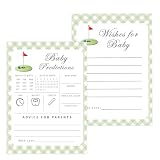
30 Pack Golf Baby Shower Games
- Complete kit with low per-unit cost and attractive table design
- Generous quantity for parties of ten or more guests
- Single-use event item with zero transfer to actual golf improvement
This pack is for party planners organizing a golf-themed baby shower who need prediction cards, advice notes for new parents, and hole-in-one wish prompts that double as décor. Owners praise the cohesive visual presentation and the convenience of a bundled kit. The “advice” here refers to well-wishes directed at an expectant parent, not coaching guidance for a golfer. Skip this product if your search intent is instructional improvement; it is a social prop designed for a single event, not a resource you will reference on the practice green.
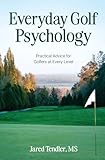
Everyday Golf Psychology
- Immediately applicable frameworks accessible to non-psychology readers
- Covers cognitive biases specific to on-course decision-making
- Overlaps with older mental-game titles, so veterans may find redundancy
Targeted at mid-handicappers who hit great range shots but tighten up once stakes appear, this book breaks down the biases that sabotage course management and offers concrete triggers to interrupt them before the swing. Owners consistently cite improved composure within a handful of rounds after applying the pre-shot routines. The language is plain and the examples feel drawn from real nine-hole situations rather than a laboratory. Skip this if you are a beginner still building mechanical fundamentals; psychological layers sit on top of technique, not beneath it. Pair it with a short-game manual for a fuller practice plan.
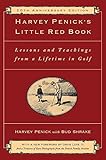
Harvey Penick’s Little Red Book
- Exceptional value per page covering full-round scenarios
- Owner feedback remains strong decades after publication
- Older format lacks photos, diagrams, and current equipment references
Penick’s compact volume distills a lifetime of teaching into vignette-style paragraphs on grip, tempo, chipping, and on-course strategy. It is the closest thing this list has to a universal baseline recommendation, and owner reviews continue to affirm its relevance regardless of when it was first read. The writing is warm and economical, never condescending. The main limitation is visual: players who learn best with swing-plane illustrations or video will find the text-only approach thin. Skip this if you require a structured drill library with measurable reps; Penick gives you principles, you must build the practice around them.
Golf is Not a Game of Perfect
- Short, readable in one sitting, directly addresses emotional barriers
- Reframes mistakes as statistically inevitable to reduce spiral thinking
- Provides no drill library or mechanical corrections
For the golfer whose scorecard anxiety produces paralysis over the ball, this book resets expectations and introduces acceptance-based routines that limit post-bogey damage. Owners with high self-expectations report the biggest shift after internalizing the statistical argument that even tour professionals miss greens and three-putt regularly. It is thin, focused, and easy to finish in an evening. However, if your primary miss is a chronic push-slice, no amount of reframing will close that face angle at impact. Skip this if your game is limited by mechanics rather than mindset; use it alongside a swing resource, not instead of one.
The Inner Game of Golf
- Lowest price among true instructional titles on this list
- Introduces a reusable two-self mental model applicable without a coach
- Prose style feels dated and occasionally repetitive for brevity-seeking readers
Gallwey’s landmark work teaches self-observation as a coaching substitute: quiet the instructor-self, trust the doer-self. Owners who overthink every shot describe it as a turning point, particularly on the range where no external eye can interrupt the internal monologue. The framework is simple enough to recall mid-round and apply to chipping, putting, and full swings alike. The writing predates modern sports psychology vocabulary, so some readers find the rhythm slow. Skip this if you already own multiple mental-game books and want fresh angles; Everyday Golf Psychology covers similar ground with a more contemporary structure.
On-Course Golf Game (100 Interactive Cards)
- Generous card count with high replay value across seasons
- Fun for non-golfers who join the multiplayer table
- Minimal instructional content; the “advice” is comedic, not corrective
This hundred-card set targets gift buyers shopping for a golfer who already owns every book on the shelf. The format plays solo or with up to four people, mixing humor prompts with optional score-keeping twists that keep casual rounds lively. Owners highlight its shelf-appeal as a present and its ability to include partners or kids who do not play golf. It will not shave strokes off anyone’s handicap, so set expectations accordingly. Skip this if the recipient actively wants to lower scores; this is entertainment designed for the clubhouse, not the practice tee.
Buying Guide
Instructional Depth Versus Entertainment Value
The widest dividing line on this list is between books that contain teachable frameworks and products whose “advice” is novelty or party content. If your goal is lowering a handicap, only four of the eight items deliver structured guidance: Penick’s book, Everyday Golf Psychology, Golf is Not a Game of Perfect, and The Inner Game of Golf. The card games and shower kit serve social purposes. Knowing which category you need before purchasing saves both money and shelf space.
Price-to-Utility Ratio for Mental-Game Titles
Mental-game instruction clusters in a narrow price band under eighteen dollars, making value differences small but meaningful. The Inner Game of Golf sits at the lowest point while still offering a reusable framework. Everyday Golf Psychology costs modestly more but updates the same territory with contemporary language. If you own neither, starting with the less expensive option and upgrading later is a low-risk path that keeps your budget flexible.
Format Compatibility With Your Learning Style
Text-only books demand active reading and self-interpretation, which suits analytical golfers but frustrates kinesthetic learners who need visuals or reps. Card-based products invert that: they are interactive but carry almost no theory. Before buying, match the format to how you absorb information. If you have struggled with dense instructional prose in the past, a visual-first approach or a guided audio companion will serve you better than another pocket book regardless of its content.
Our Verdict
Top pick: Harvey Penick’s Little Red Book. It offers the broadest applicable instruction at a mid-range price, with owner feedback that has remained strong for decades. Budget pick: The Inner Game of Golf at just under ten dollars delivers a genuinely transformative mental model for the lowest entry cost. Condition where another wins: if your foursome is genuinely mixed-skill and your goal is enjoyment rather than stroke reduction, the On-Course Golf Card Game outperforms every book here because it solves a social problem no manual addresses.
FAQ
Do card games actually help you play better golf?
No. The card games on this list equalize scoring during casual play or provide entertainment at social gatherings, but they contain no instruction that transfers to swing mechanics or course management. They are products for the clubhouse, not the practice range.
Which book should a complete beginner start with?
Harvey Penick’s Little Red Book covers enough fundamental ground — grip, alignment, tempo, short game, and on-course decision-making — to serve as a first reference. Its vignette format lets you read one lesson per range session without feeling lost.
Is The Inner Game of Golf still relevant given newer psychology books?
Yes, as an introduction. The core two-self framework remains a valid mental model, and many modern titles build on Gallwey’s foundation rather than contradicting it. If you already own the concept, a newer book like Everyday Golf Psychology will feel fresher.
Why is there such a wide price gap among these products?
The highest-priced item is a branded celebrity book whose cost reflects licensing and production values, while the lowest-priced entries are printed cards or compact paperbacks. Price here signals format and brand premium, not necessarily instructional quality, so evaluate by the criteria above rather than by sticker number.