
What's inside
As an Amazon Associate I earn from qualifying purchases. This post may contain affiliate links at no extra cost to you.
Our Top Picks


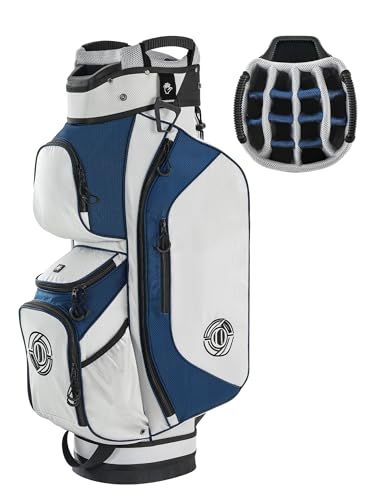
Best Golf Bags for Walking or Riding: The Right Pick Depends on Your Round
The best golf bags are lightweight stand bags for golfers who walk most rounds, cart bags for golfers who ride, and hybrid bags for anyone who regularly alternates between the two. Before choosing, compare loaded carry weight, how reliably the stand deploys, the divider layout, usable pocket space, rain protection, and whether the bag sits securely on your particular cart.
Quick comparison
The figures below are approximate manufacturer-listed specifications for representative models available in recent product lines; configurations can vary by year and region. Bag weights are generally stated without clubs, balls, or other gear.
As an Amazon Associate we earn from qualifying purchases at no extra cost to you.


| Bag | Type | Approx. empty weight | Divider layout | Best fit |
|---|---|---|---|---|
| Sun Mountain 2.5+ Stand Bag | Stand | About 2.7 lb | Four-way top | Frequent walkers prioritizing low weight |
| Titleist Players 4 | Stand | About 3.7 lb | Four-way top | Walkers wanting a compact, organized carry bag |
| Ping Hoofer | Stand | About 5.5 lb | Five-way top | Walkers who carry more gear and want extra storage |
| Sun Mountain C-130 | Cart | About 6.6 lb | 14-way top | Riders who want separated club slots and generous storage |
Use these as comparison points, not guarantees: versions and included accessories change, and “water-resistant” is not the same as fully waterproof.
Choose by how you play
If you walk most rounds: Sun Mountain 2.5+ or Titleist Players 4
For regular walking, every extra item matters. A very light bag such as the Sun Mountain 2.5+ keeps the empty load down, but a smaller top and fewer storage options suit golfers who carry only the essentials. The Titleist Players 4 adds a little weight while retaining a compact four-way layout, a useful compromise for golfers who want a little more organization.
Neither a four-way top nor a light frame gives every club its own full-length channel. Grips can bunch together, particularly if you carry oversized putter or driver grips. Arrange clubs consistently and return each one to the same area to reduce tangling.
If you walk with extra gear: Ping Hoofer
The Hoofer is a more storage-oriented stand bag, with a five-way top and multiple pockets. That can be helpful if you carry a rain layer, snacks, valuables, and accessories. The trade-off is weight: at roughly 5.5 pounds empty, it starts heavier than ultralight options before you add a single club.
Check how the shoulder straps fit you, not just how many straps the bag has. A bag that shifts or rubs when loaded can feel heavier over 18 holes. If possible, load it with your usual gear and walk around before committing.
If you ride most rounds: Sun Mountain C-130
A cart bag is designed around storage and cart access rather than comfortable carrying. The C-130’s 14-way top separates clubs more than a typical stand-bag top, which can make selection and replacement easier. Its larger footprint and extra weight are sensible on a riding round but inconvenient on a long walk.
Before buying, check the cart’s strap path and the bag’s base shape. A cart strap that crosses a pocket zipper can make storage inaccessible; a bag that twists on the tray can be frustrating even if it technically fits. Look for a strap pass-through or a cart-compatible layout, and confirm that the putter well and frequently used pockets remain reachable when strapped in.
What the specifications don’t tell you
Empty weight is only the starting point
Clubs, balls, water, a rangefinder, and rain gear add substantial weight. A useful comparison is to pack each candidate with what you normally bring and weigh it on a luggage scale. For a rough example, if a 2.7-pound bag carries 18 pounds of equipment, your total load is about 20.7 pounds. A 5.5-pound bag with the same equipment weighs about 23.5 pounds—a difference of 2.8 pounds throughout the walk. If the heavier bag earns its place through better fit or storage, that may be worth it; if not, leave unused gear at home.
Stand stability depends on the ground
Stand bags can wobble or slide on steep, soft, or uneven lies. Check that both legs open fully and the base sits flat before setting the bag down. A wide, stable stance matters more than a stand that merely pops open. Avoid forcing the legs against a curb or hard obstruction, since repeated strain can loosen joints or damage the mechanism.
Divider count is not the same as full-length separation
A 14-way top may keep club heads neatly spaced, but confirm whether its dividers continue down the bag. Short dividers can still allow shafts and grips to tangle lower in the body. Conversely, a four- or five-way top can work well if you group clubs by type and don’t mind occasional grip overlap. Golfers with bulky grips should pay particular attention to the top opening and divider spacing.
Water protection has limits
Water-resistant fabric and covered zippers can handle light showers, but they do not necessarily keep contents dry in prolonged rain. A rain hood helps protect club heads; it does not seal every pocket. If you often play in wet conditions, look for a clearly stated waterproof design with sealed seams and zippers, or keep electronics and spare gloves in a separate waterproof pouch. Dry the bag fully after a wet round, including the hood and pockets, to limit mildew and odors.
Buying checklist for your usual round
- Walk four or more rounds a month: Prioritize fit and a low empty weight; choose a compact stand bag unless you truly use the extra storage.
- Ride most of the time: Favor a cart bag with accessible pockets, a secure base, and a strap layout that works with your cart.
- Split walking and riding: Consider a stand bag with a stable base and cart-strap pass-through, or a hybrid design. Confirm it sits securely on your specific cart before buying.
- Carry many accessories: Choose by pocket layout, not pocket count alone. Check that valuables, rangefinder, water, and rain gear each have a practical place.
- Play in frequent rain: Verify the manufacturer’s waterproofing claims and protect sensitive items separately.
Keep the bag working well
Stand legs, strap anchors, zippers, and the bag’s base take the most routine wear. After a round, shake out grass and grit, wipe mud from the base and leg joints, and leave pockets open until they are dry. Don’t overload a pocket with heavy items on one side: uneven weight can make a stand bag tip and can strain seams. On a riding bag, check that cart straps are snug without crushing pocket contents.
For most dedicated walkers, a light stand bag is the best starting point; the Sun Mountain 2.5+ suits a minimalist load, while the Titleist Players 4 offers a little more structure. Choose the Ping Hoofer when storage matters more than shaving every pound. For regular cart use, the Sun Mountain C-130 is the more practical style of bag. The right choice is the one that carries comfortably—or stays secure on your cart—with the gear you actually bring.