
What's inside
As an Amazon Associate I earn from qualifying purchases. This post may contain affiliate links at no extra cost to you.
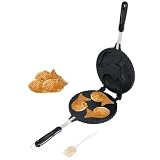
The best taiyaki maker for fish shaped cakes is a heavy-gauge stovetop pan for crisp, generously filled cakes, while a dedicated electric taiyaki baker is the better choice for repeatable results, smaller kitchens, and easier temperature control.
Choosing between them comes down to more than the fish outline. Plate depth determines how much anko, custard, chocolate, or cheese you can add; the cavity length affects serving size; and the coating, hinge, and handle determine whether cleanup takes minutes or becomes a recurring nuisance. The comparison below focuses on those ownership details rather than appearance alone.
As an Amazon Associate we earn from qualifying purchases at no extra cost to you.


Quick picks by situation
| Situation | Best choice | Why | Typical market range |
|---|---|---|---|
| First-time buyer with limited storage | Compact electric maker with removable plates | Predictable heat, upright storage, and less stovetop juggling | $35–$80 |
| Maximum filling and crisp edges | Deep stovetop cast-aluminum or cast-iron pan | Deeper cavities and strong direct heat support thicker shells | $25–$70 |
| Frequent family batches | Electric four-cavity unit | More cakes per cycle and consistent portion size | $70–$180 |
| Occasional use and lowest cost | Two-cavity stovetop pan | Low purchase cost, no appliance cord, and simple construction | $18–$45 |
| Induction cooktop | Pan explicitly marked induction-compatible | Many lightweight aluminum pans will not heat on induction | $30–$80 |
Stovetop versus electric taiyaki makers
Stovetop pans: better browning and filling control
A stovetop maker consists of two hinged plates, usually with a long handle. You preheat it, add batter to one side, pipe in filling, cover it with more batter, and close the plates over a gas, electric, or compatible induction burner. The direct contact produces pronounced browning and lets you adjust the pan position if one side of the burner runs hotter.
The strongest stovetop models are made from cast aluminum or cast iron. Cast aluminum heats relatively quickly and is easier to lift; cast iron retains heat well but is heavier and may require seasoning. Deep cavities are particularly useful because they leave room for filling without forcing it through the tail or fins.
The drawbacks are manual temperature control and slower learning. A pan that is too hot burns the thin fins before the center cooks. A pan that is too cool produces pale cakes that stick when you try to turn them. Stovetop models also need more counter space while open, and their long handles can make storage awkward.
Electric makers: easier timing and repeatability
Electric appliances generally have insulated handles, a heating element in one or both plates, and an indicator light or thermostat. They are easier for beginners because the temperature range is narrower than on a powerful gas burner. A model with removable dishwasher-safe plates, such as the plate-based format used by Vitantonio waffle bakers with optional taiyaki plates, is especially convenient when you want to change between cake shapes.
Electric units usually make smaller, thinner fish than deep stovetop pans. That is not necessarily a disadvantage: thinner cakes cook quickly and use less batter per portion. The trade-off is filling capacity. A shallow electric cavity may suit a teaspoon of red-bean paste, but it can burst if you add a large spoonful of chunky fruit or thick pastry cream.
Look for a locking lid, a cord at least 70 inches long, non-slip feet, and a removable plate design. A fixed plate can still work well, but cleaning becomes more careful because the appliance itself cannot be submerged.
Plate depth and fish-cake size matter more than the mold count
Manufacturers do not always publish cavity depth, so measure or ask for it before buying. The following ranges are useful for comparing otherwise similar makers.
| Maker type | Typical fish size | Approximate cavity depth | Filling capacity per fish | Typical cycle output |
|---|---|---|---|---|
| Small electric | 4.5–5.5 inches | 0.5–0.75 inch | 1–2 teaspoons | 2 fish in 3–6 minutes |
| Standard electric | 5–6.5 inches | 0.6–0.9 inch | 2–3 teaspoons | 2–4 fish in 4–8 minutes |
| Deep stovetop | 5.5–7 inches | 0.8–1.2 inches | 1–2 tablespoons | 2 fish in 4–7 minutes |
| Commercial-style electric | 6–8 inches | 0.8–1.1 inches | 2–3 tablespoons | 4–6 fish in 5–10 minutes |
These are practical category ranges, not guaranteed specifications for every model. A deeper cavity is valuable only if the hinge closes evenly. If the upper plate presses directly into the filling, even a nominally deep mold will produce thin, uneven cakes.
Nonstick performance and construction
A smooth nonstick coating is the easiest option for delicate tails and fins, but it is also the part most likely to wear first. Use silicone, wood, or nylon utensils; never cut around the fish with a knife or metal skewer. Avoid aerosol cooking sprays, which can leave a sticky polymerized film on heated nonstick surfaces.
For a coated pan, inspect the hinge and the rim as carefully as the cooking surface. A loose hinge can squeeze batter out of the mold, while a rough rim catches baked-on crumbs. Bare cast iron can last for decades with correct seasoning, but it requires drying immediately and a thin layer of oil after cleaning. Enameled cast iron avoids some seasoning work but is heavier and can chip if the plates strike together.
Do not assume “dishwasher safe” means maintenance-free. Repeated high-heat dishwasher cycles can dull coatings, corrode hinges, and leave batter residue in plate seams. Removable plates are usually easier to clean by hand in warm water.
How much capacity do you actually need?
Use this simple portion calculation before choosing a cavity. Suppose you want eight fish cakes and plan to put 12 grams of filling in each. You need:
8 cakes × 12 grams = 96 grams of filling.
If a small electric mold holds only 6 grams comfortably, you would need roughly 16 cakes to use that amount without overfilling. A deep two-cavity stovetop pan that holds 12–15 grams per fish is a closer fit, even though it makes fewer cakes at once. For chunky fillings, reduce the target by about one-third because pieces occupy more volume and create pressure points when the lid closes.
Cooking method that prevents leaks and sticking
- Preheat gradually. Warm an electric maker until its indicator changes, or heat a stovetop pan over medium-low heat for several minutes. Excessive heat is the main cause of burned fins.
- Oil lightly. Brush a thin film into the head, body, and tail. Too much oil pools in the fins and gives uneven browning.
- Add batter below the rim. Fill about 60–70% of the cavity, leaving room for expansion. Spread batter toward the tail with a spoon or squeeze bottle.
- Place filling in the center. Keep it away from the outer edge so the two batter layers can seal.
- Cover with a small amount of batter. Close the lid without forcing it. If batter squeezes out continuously, the cavity is overfilled.
- Turn stovetop pans once if needed. Rotate the pan after roughly half the cooking time for even browning. Electric makers usually do not need turning.
- Release after a short rest. Wait 30–60 seconds after cooking before lifting the cake. The shell firms up and is less likely to tear at the tail.
Cleanup and long-term ownership
Clean while the plates are warm, not hot. Wipe loose crumbs away, then use a soft sponge and mild detergent. For a fixed electric unit, use a barely damp cloth around the plates and keep water away from the controls, cord entry, and heating element. A wooden toothpick can remove batter from narrow fins, but do not scrape aggressively.
The most common failure points are worn nonstick coating, a hinge that loosens, a warped plate, and a damaged cord. Store a stovetop pan with its plates slightly ajar if the manufacturer permits; trapped moisture can cause corrosion. Keep electric plates dry before reassembly. If the coating is flaking or the pan has developed exposed metal in the food-contact area, replacement is safer than trying to reseason a coated surface.
Final recommendation
Choose a deep two-cavity stovetop maker if filled, crisp-edged taiyaki is your priority and you are comfortable learning burner control. Choose a compact electric model with removable plates if convenience, predictable results, and easy storage matter most. For frequent batches, prioritize four cavities and a thermostat over decorative features. In every case, confirm the actual cavity depth, fish dimensions, cooktop compatibility, and cleaning method before buying—the best taiyaki maker for fish shaped cakes is the one whose filling capacity and maintenance requirements match how you will use it.