
What's inside
- Best Patio Gliders for Comfortable Outdoor Seating
- Quick comparison: which patio glider fits your space?
- Best patio glider by patio situation
- Frame materials compared head-to-head
- Gliding clearance is easy to underestimate
- Assembly: what to expect before delivery
- Weather resistance and the parts that wear first
- How much comfort are you really buying?
- Final buying checklist
As an Amazon Associate I earn from qualifying purchases. This post may contain affiliate links at no extra cost to you.
Best Patio Gliders for Comfortable Outdoor Seating
The best patio gliders are usually a wide, weather-resistant seat with at least 3 inches of outdoor cushion, a smooth enclosed gliding mechanism, and enough rear clearance for the full movement of the seat. The right choice depends less on appearance than on your patio’s available depth, exposure to weather, and how often the glider will be used.
Quick comparison: which patio glider fits your space?
| Glider type | Typical seat width | Overall depth | Recommended clearance | Frame material | Cushion thickness | Typical market range |
|---|---|---|---|---|---|---|
| Compact metal single glider | 19–21 inches | 28–32 inches | 3–5 inches behind seat | Powder-coated steel | 2–3 inches | $150–$350 |
| Wide cushioned single glider | 22–25 inches | 31–36 inches | 5–7 inches behind seat | Aluminum or steel | 3–5 inches | $250–$650 |
| Poly lumber single glider | 20–24 inches | 31–36 inches | 4–6 inches behind seat | Recycled HDPE lumber | Usually 2–4 inches | $350–$800 |
| Two-seat glider loveseat | 45–52 inches | 32–38 inches | 6–8 inches behind seat | Aluminum, steel, or poly lumber | 3–5 inches | $500–$1,200 |
| Wooden porch glider | 42–50 inches | 28–35 inches | 6–10 inches behind seat | Cedar, cypress, or treated wood | 2–4 inches | $300–$1,000 |
These are useful planning ranges rather than specifications for one particular model. Always check the manufacturer’s assembled dimensions and the actual path of the moving seat before ordering.
As an Amazon Associate we earn from qualifying purchases at no extra cost to you.

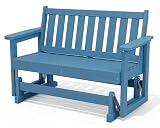
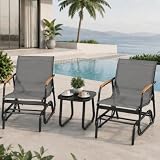

Best patio glider by patio situation
Best for a small balcony: compact metal single glider
A single glider with a 19- to 21-inch seat width is the easiest option when floor space is limited. It generally takes up less room than a loveseat and leaves space for a small table or planter. Choose a model with a relatively shallow frame and a front-to-back gliding path rather than a wide rocking arc.
Measure the balcony from the wall to the railing, then subtract at least 8 inches from the available depth. For example, a 40-inch-deep balcony should generally accommodate a chair no deeper than about 32 inches, leaving room for movement and access. Avoid placing a glider where the seat can strike the railing or a sliding door.
Best for long, frequent use: wide cushioned glider
For daily reading, conversation, or extended outdoor sitting, a 22- to 25-inch seat is more forgiving than a narrow chair. A wider seat also makes it easier to change position without feeling confined. Look for a seat depth of approximately 19 to 22 inches and a back cushion at least 20 inches high.
Cushion thickness matters, but foam quality matters more. A 4-inch cushion made from resilient outdoor foam can remain comfortable longer than a softer 5-inch cushion that compresses quickly. Removable covers, drainage mesh on the underside, and solution-dyed acrylic or polyester fabric are valuable features for regular use.
Best for full sun and rain: poly lumber glider
Poly lumber, commonly made from recycled high-density polyethylene, is a strong choice for patios without a roof. It does not absorb water like unfinished wood, and the color is integrated through much of the material rather than applied only as a thin surface coating. It is also less likely than steel to develop structural rust.
The trade-off is weight. A poly lumber glider may weigh 50 to 90 pounds, making it stable in wind but harder to reposition. The material can also become hot in dark colors under direct sun. Light gray, white, beige, and similar finishes are more comfortable for uncovered patios.
Best for a covered porch: wooden loveseat glider
A cedar or cypress loveseat creates a traditional porch appearance and can provide a generous 45- to 50-inch seat. It works best under a roof or in a location where the wood can dry thoroughly after rain. Wood requires more ownership attention than poly lumber or powder-coated aluminum: inspect joints, refresh the finish when it begins to fade, and keep standing water away from the feet.
Do not assume that “outdoor wood” is maintenance-free. A penetrating exterior oil or water-repellent finish may need renewal every one to three years, depending on sun, humidity, and the desired appearance. Leaving cushions on the seat during wet weather can accelerate staining and mildew.
Frame materials compared head-to-head
- Aluminum: Lightweight, naturally resistant to rust, and convenient when furniture must be moved seasonally. Thin tubing can flex, so inspect welds and connection points before buying.
- Powder-coated steel: Usually rigid and affordable. Scratches that expose bare steel can become rust points, particularly near the feet and moving hardware.
- Poly lumber: Very weather-resistant and heavy enough for windy locations. It needs little finish maintenance but costs more and can become warm in dark colors.
- Cedar or cypress: Attractive and repairable, with a warmer traditional appearance. Expect periodic sealing, sanding, or refinishing.
- Wrought iron or cast aluminum: Stable and decorative, but cast aluminum is lighter than iron and may be more practical for moving. Metal surfaces still need inspection for corrosion, especially around fasteners.
Gliding clearance is easy to underestimate
A glider’s published depth is not the same as the space it needs. The seat may travel several inches backward and forward, while the back cushion can extend beyond the frame. Allow the manufacturer’s stated clearance whenever it is provided; otherwise, use 5 to 8 inches behind a single glider and 6 to 10 inches behind a loveseat.
There should also be enough space in front for feet and leg movement. A practical arrangement usually leaves 18 to 24 inches between the front of the glider and a coffee table. If the patio is narrow, replace a deep rectangular table with a small round side table so the moving seat does not collide with a sharp corner.
Assembly: what to expect before delivery
Most gliders arrive partially assembled. A single chair commonly requires 20 to 45 minutes of assembly, while a loveseat may take 45 to 90 minutes. The main tasks are attaching the base, installing arms or back sections, and fitting pivot bolts or gliding brackets.
- Lay out every part first. Confirm that bolts, washers, spacers, and locknuts are present. A missing spacer can cause binding even when the frame appears assembled correctly.
- Keep bolts slightly loose during alignment. Tightening one side completely can pull the frame out of square and make the glider move unevenly.
- Check the moving path before final tightening. Push the seat gently through its full travel. It should not scrape the frame or twist from side to side.
- Use the supplied hardware and tools where specified. Substituting a longer bolt can interfere with the moving mechanism or create a sharp point.
- Retighten after several uses. New frames can settle slightly. Recheck fasteners after the first week and at the beginning of each season.
Weather resistance and the parts that wear first
The gliding mechanism is usually the first area to need attention. Nylon bushings, spacers, pivot bolts, and bearings experience repeated movement and can loosen or wear even when the frame still looks new. A squeak does not always mean the mechanism needs oil; some plastic bushings can swell or collect grit when exposed to petroleum-based lubricants. Follow the care instructions and use only a compatible dry lubricant if the manufacturer permits lubrication.
Fabric often wears before the frame. Look for fading on the top edge of the back cushion, abrasion where cushions contact the arms, and water retained beneath the seat cushion. Store cushions in a ventilated deck box or indoors during prolonged rain. Do not seal damp cushions in a plastic bag, because trapped moisture encourages mildew.
For routine care, brush away grit, clean spills promptly with mild soap and water, and rinse thoroughly. Avoid pressure-washing cushions or forcing water into bearings. Inspect metal feet for chipped coating and place protective caps or furniture glides on rough concrete.
How much comfort are you really buying?
Consider a $450 glider used four times a week for five years. That is approximately 1,040 uses, or about $0.43 per use before maintenance. A cheaper $220 chair used only once a week for the same period would total roughly 260 uses, or about $0.85 per use. The more expensive chair is not automatically better, but frequent use can justify wider dimensions, replaceable cushions, and a stronger mechanism.
For occasional seasonal use, prioritize weather resistance and easy storage instead of thick cushions or elaborate finishes. For daily use, spend more on seat width, cushion resilience, and replacement-part availability.
Final buying checklist
- Measure the usable patio depth, then add the required gliding clearance.
- Choose at least 22 inches of seat width for a roomy single chair.
- Select 3 to 5 inches of outdoor cushion for regular comfort.
- Prefer aluminum or poly lumber for exposed patios; use wood where maintenance is practical.
- Check whether covers, cushions, glides, bushings, and hardware are replaceable.
- Confirm the assembled weight and doorway clearance before delivery.
- Plan to inspect moving hardware at least once each season.
For most uncovered patios, a poly lumber or powder-coated aluminum glider with a 22- to 25-inch seat offers the best balance of comfort and weather resistance. For a sheltered porch, a wooden loveseat provides more seating and traditional style. On a tight balcony, the best patio glider is the one with the shallowest verified footprint that still leaves enough clearance for a smooth, unobstructed glide.