What's inside
As an Amazon Associate I earn from qualifying purchases. This post may contain affiliate links at no extra cost to you.
Open shelves make tools quick to see and grab. Enclosed cabinets keep dust off, contain clutter, and make a shop look tidier. Neither is automatically better: the right choice depends on what you store, how often you use it, and how well your dust collection works.
For most home workshops, a mix works best. Keep frequently used tools on open shelves or a wall rack, and put precision tools, supplies, and less-used gear behind doors. Before buying either, check the wall structure, available depth, and clearance around doors, machines, and walkways.
As an Amazon Associate we earn from qualifying purchases at no extra cost to you.

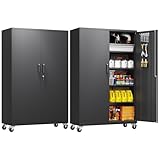


At a glance
| Factor | Open shelving | Enclosed cabinets |
|---|---|---|
| Access | Fast; contents are visible | Slower; doors or drawers must be opened |
| Dust protection | Limited | Good if doors and drawers fit reasonably well |
| Cost | Usually lower, especially for DIY shelves | Usually higher; hardware adds cost |
| Best for | Frequently used, durable tools and shop supplies | Measuring tools, abrasives, small parts, and items used less often |
| Main drawback | Dust buildup and visible clutter | Less immediate access; doors need clearance |
When open shelves work
Open shelving is a good fit for tools you reach for repeatedly: drills, sanders, glue bottles, clamps, or boxes of fasteners. Visibility helps you notice when something is missing, and there are no doors to swing into a bench or block a narrow aisle. A basic shelf made from 18 mm (¾-inch) plywood can be inexpensive and sturdy when its span and supports suit the load.
Its weak point is dust. Fine dust settles on tool cases, exposed accessories, and anything left uncovered. A shelf beside a sander or table saw can need frequent wiping even when the machine has dust collection. Dust collection reduces airborne debris but does not make an open shelf dustproof. Store sensitive items in their cases or closed bins, and avoid placing shelves where they sit directly in a machine’s dust plume.
Open shelves also encourage overloading. A long, unsupported shelf can sag, and heavy tools stored high are harder to lift safely. As a practical layout, put heavy items at waist height or lower, keep everyday tools within easy reach, and reserve high shelves for light, infrequently used stock. Anchor wall-mounted shelving into studs or suitable masonry; drywall anchors alone are not a safe support for a heavy tool load.
When cabinets make sense
Cabinets are worth considering for precision measuring tools, electronics, abrasives, spare blades, and small parts that become difficult to sort once dust coats them. Doors also hide visual clutter, which can make a compact shop feel calmer. A cabinet does not need to be airtight to help: a well-fitting door blocks much of the dust that would land on exposed contents.
Do not assume every cabinet protects delicate tools equally. Gaps around doors, open backs, and poorly fitted drawers still let dust in. If protection matters, choose a cabinet with close-fitting doors or store sensitive items in lidded cases inside it. A cabinet in a humid garage can also trap moisture; keep metal tools dry before storing them and consider a desiccant for vulnerable items.
Check the door swing before installation. A door that hits a bench, machine, or person makes the storage awkward enough that it may go unused. If the aisle is tight, drawers or sliding doors may be more practical, though they can cost more and still need room for full drawer extension. For a basic setup, wall-mounted workshop storage cabinets can keep tools off the bench, but verify the mounting method and rated load rather than judging by appearance.
Match storage to the tools
Sort by how often you use an item and how much dust or damage it can tolerate. Keep daily-use tools visible and accessible; protect items that are expensive, delicate, or used only occasionally. Small parts need their own system either way. Open bins are quick to scan but collect dust, while closed drawers protect contents but can become a jumble without dividers or labels.
A useful compromise is open shelves for durable cases and labeled bins, with closed cabinets for the items most affected by dust. If you already own sturdy shelves, lidded plastic bins may be a cheaper fix than replacing the whole setup. For smaller hardware, small-parts organizer cabinets are useful when drawers are labeled and sized for the fasteners you actually keep. Tiny drawers without labels can save floor space but slow down every repair.
Size and installation matter
Measure the tools and cases before choosing shelf depth. A 12-inch-deep shelf is often enough for hand tools and small cases, while larger tools may need 16 to 24 inches. Deeper shelves hold more but make items at the back harder to see and reach. Leave enough space above a shelf to lift out the tallest case without scraping knuckles or tipping the shelf.
For wall-mounted storage, locate studs and fasten through the cabinet’s mounting rail or structural back as the manufacturer specifies. Confirm the combined weight of the cabinet and its contents is within the hardware and wall’s capacity. A heavy cabinet mounted only to drywall can pull free, damaging tools and creating an injury hazard. Freestanding units should be level and secured against tipping, particularly where children or visitors may enter the shop.
Make the choice
Choose open shelves if low cost, visibility, and quick access matter most and you can tolerate regular dusting. Choose cabinets if keeping tools clean and containing clutter matters more than instant access, and you have room for doors or drawers. In a dusty shop, a mix is usually the practical answer: open storage for robust, frequently used gear; closed storage for precision tools, small parts, and supplies that suffer when coated in dust.
Start with one wall or work zone rather than buying storage for the entire shop at once. Use the setup for a few weeks, note what you reach for and what gets dusty, then add shelves or cabinets where the routine shows they are needed.