Key takeaways
- Compare five mortise chisels for hand-cut joinery, from Narex sets and a cryo-treated Richter to Japanese KAKURI and SUIZAN chisels, with sizing tips.
What's inside
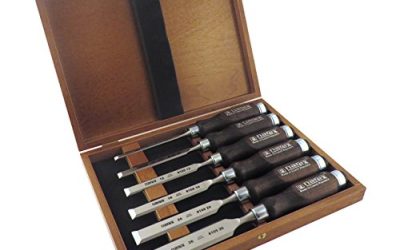
- 1. Narex 863600 Mortise Chisel Set, 4-Piece (4, 6, 10, 12 mm)
- 2. Narex Richter Mortise Chisel, 1/2 Inch
- 3. Narex Czech Steel Mortise Chisel Set, 3-Piece (6, 10, 12 mm)
- 4. KAKURI Japanese Wood Chisel Set, 3-Piece (9, 15, 24 mm)
- 5. SUIZAN Japanese Oire Nomi Chisel, 1/2 Inch
- How to Choose the Best Mortise Chisel
- Conclusion
As an Amazon Associate I earn from qualifying purchases. This post may contain affiliate links at no extra cost to you.
date: 2026-11-19
category: “Buying Guides”
A bench chisel can pare a tenon shoulder all day, but it is the wrong tool for chopping a deep mortise. Mortise chisels use a much thicker blade with near-parallel sides, so the tool registers against the walls of the cut, resists twisting when you lever out waste, and survives thousands of mallet blows. If you cut mortise-and-tenon joints by hand, a small set of dedicated mortise chisels in the widths you actually use will do more for your joinery than a large set of general-purpose chisels.
This guide compares five mortise chisels you can buy today: two Narex sets in the classic Czech pattern, a single premium Richter chisel for the most common furniture width, a Japanese oire nomi set from KAKURI, and a single SUIZAN chisel for woodworkers who only need one size. Each pick lists its sizes, steel, and handle construction so you can match the tool to your work.
This article contains affiliate links; as an Amazon Associate, jd-woodworks.com earns a commission from qualifying purchases at no extra cost to you.
1. Narex 863600 Mortise Chisel Set, 4-Piece (4, 6, 10, 12 mm)
The 863600 set is the easiest way to cover the mortise widths used in most furniture work. The four sizes — 4, 6, 10, and 12 mm — match the tenon thicknesses found in chair rails, table aprons, door frames, and cabinet work, so one box handles the majority of hand-cut joints without forcing you to chop a mortise in two passes with an undersized chisel.
The blades are chrome-manganese steel hardened to Rc 59, a hardness that balances edge retention against the toughness mortising demands; a harder, more brittle edge would chip when levered sideways in oak or ash. The stained beech handles are fitted with steel hoops so they can take repeated mallet strikes without splitting, and the blades arrive ground with a 25-degree primary bevel that needs only a quick hone before first use.
Specs:
- Sizes: 4, 6, 10, and 12 mm
- Blade material: Chrome-manganese steel, hardened to Rc 59
- Handles: Stained beech wood with steel striking hoops
- Bevel: 25-degree primary bevel
- Model: 863600
- Made in the Czech Republic
- ASIN: B00TU1PL54
- View on Amazon: https://www.amazon.com/dp/B00TU1PL54?tag=powertoolsdiy04-20
2. Narex Richter Mortise Chisel, 1/2 Inch
If you only buy one premium mortise chisel, the half-inch size is the one to get: it matches the tenons on table legs, bed rails, and workbench frames. The Richter is Narex’s flagship line, and the mortise version uses drop-forged chrome-vanadium steel that is cryogenically treated for toughness and wear resistance, a step up from the standard chrome-manganese line.
The handle end is built for abuse, with double solid stainless-steel ferrules, a pinned top ferrule, and a leather washer between blade and handle to absorb shock. The blade sides taper slightly so the chisel releases from a deep mortise instead of wedging itself in. Grind the 25-degree primary bevel and add a 30- to 35-degree secondary bevel for hardwoods, and the edge stands up to heavy chopping in white oak and hard maple.
Specs:
- Size: 1/2 inch (12.7 mm), sold individually
- Blade material: Chrome-vanadium steel, drop-forged and cryogenically treated
- Handle: European ash with double stainless-steel ferrules and leather washer
- Bevel: 25-degree primary bevel; 30- to 35-degree secondary bevel recommended for hardwood
- Part of the Narex Richter premium line
- Made in the Czech Republic
- ASIN: B0DGMFM2YN
- View on Amazon: https://www.amazon.com/dp/B0DGMFM2YN?tag=powertoolsdiy04-20
3. Narex Czech Steel Mortise Chisel Set, 3-Piece (6, 10, 12 mm)
This three-piece set trims the lineup down to the sizes most furniture makers reach for daily: 6 mm for drawer and box joinery, 10 mm for chair and frame work, and 12 mm for table and door construction. It is the same Profi-pattern chisel as the singles Narex sells, with thick, tall blades that fill the hand and register solidly in the cut.
The chrome-manganese blades are hardened to Rc 59 and precisely ground, and the stained European beech handles carry the steel ferrules and hoops that mortise handles need. Because the three sizes overlap so much of the four-piece set above, this is the better buy if your work rarely calls for a 4 mm mortise; if it does, individual Narex mortise chisels are sold separately in sizes from 4 to 16 mm, so you can fill the gap later.
Specs:
- Sizes: 6, 10, and 12 mm
- Blade material: Chrome-manganese steel, hardened to Rc 59
- Handles: Stained European beech wood with steel ferrules
- Bevel: 25-degree primary bevel
- Individual sizes also available from 4 to 16 mm
- Made in the Czech Republic
- ASIN: B01MU1VEJY
- View on Amazon: https://www.amazon.com/dp/B01MU1VEJY?tag=powertoolsdiy04-20
4. KAKURI Japanese Wood Chisel Set, 3-Piece (9, 15, 24 mm)
Japanese oire nomi take a different approach to the same job. Each KAKURI blade is laminated: a very hard Japanese carbon-steel edge forge-welded to a softer iron body, so the cutting edge can be honed finer than a Western chisel while the iron backing absorbs the shock of mallet work. The hollow-ground back (the ura) means only the perimeter of the back needs flattening, which speeds up preparation and maintenance on water stones.
The three sizes — 9, 15, and 24 mm — cover furniture mortises through to wider housing and frame joints. The white oak handles are fitted with steel hoops at the striking end, the traditional detail that lets a Japanese chisel be driven with a hammer or mallet. At 215 mm overall, these are shorter and more compact than Western mortise chisels, which many woodworkers find easier to control for fine work. They are made in Sanjo, Japan, a city with centuries of edge-tool forging behind it.
Specs:
- Sizes: 9, 15, and 24 mm
- Blade material: Laminated Japanese carbon steel over a soft iron body
- Handles: Japanese white oak with steel striking hoops
- Overall length: 215 mm
- Back: Hollow-ground (ura) for faster flattening
- Model: C-215-1
- Made in Sanjo, Japan
- ASIN: B07S5L2DMZ
- View on Amazon: https://www.amazon.com/dp/B07S5L2DMZ?tag=powertoolsdiy04-20
5. SUIZAN Japanese Oire Nomi Chisel, 1/2 Inch
SUIZAN sells its chisels individually, and the 1/2-inch (12 mm) oire nomi is the size to start with if you want to try the Japanese pattern without committing to a set. It follows the same laminated construction as the KAKURI tools — a hard steel edge on a softer body with a hollow-ground back — and arrives hand-sharpened, so it cuts cleanly in end grain with very little preparation beyond seating the handle hoop.
At 225 mm overall, it is a compact tool that encourages a controlled, two-handed grip: one hand steering the blade, the other working the mallet. The white oak handle and steel hoop handle mallet strikes well, and the slim profile makes it a good choice for hinge mortises, lock recesses, and face-frame joinery as well as furniture mortises. Narrower and wider SUIZAN sizes are sold on the same listing pattern, so you can build a set one width at a time as projects demand.
Specs:
- Size: 1/2 inch (12 mm), sold individually
- Blade material: Laminated Japanese steel with hollow-ground back
- Handle: Japanese white oak with steel striking hoop
- Overall length: 225 mm (8.86 inches)
- Hand-sharpened before shipping
- Made in Japan
- ASIN: B0CNTGCGN7
- View on Amazon: https://www.amazon.com/dp/B0CNTGCGN7?tag=powertoolsdiy04-20
How to Choose the Best Mortise Chisel
Start with sizes, not sets. Mortise width follows tenon thickness, and the usual rule is a tenon about one-third the thickness of the stock. For 3/4-inch furniture parts that means 1/4-inch mortises; for 1-1/2-inch legs and rails, 1/2 inch. List the joints you actually build and buy those widths first — a 6 mm and a 12 mm chisel will cover most furniture work.
Check the blade cross-section. A true mortise chisel is almost as thick as it is wide, with square, near-parallel sides. That geometry keeps the chisel tracking straight down the mortise walls and gives you a lever that will not twist or snap when you pry out waste. Thin bevel-edge bench chisels flex under the same treatment and their edges roll or chip.
Look at the handle reinforcement. Mortise chisels are struck thousands of times. Wooden handles need a steel hoop or a leather washer plus ferrule at the top to keep from splitting and mushrooming. If a chisel has a plain, unreinforced wooden handle, it is a paring tool, not a mortising tool.
Plan the bevel for the wood. A 25-degree primary bevel with a 30- to 35-degree secondary bevel is the standard setup for hardwood mortising. Softer secondary angles cut faster in pine and poplar but fold over in oak; steeper angles survive hardwoods at the cost of a little extra mallet work.
Match the sharpening system to the steel. Western chrome-manganese and chrome-vanadium chisels sharpen happily on oil stones, diamond plates, or water stones. Japanese laminated chisels belong on water stones: the soft iron layer wears differently from the hard edge, and coarse diamond plates can undercut it.
Conclusion
For most woodworkers, the Narex 863600 four-piece set is the simplest route to a working mortise kit: four useful widths, tough Rc 59 steel, and handles built for mallet work. If you already own bench chisels and only need the one width you reach for constantly, the Richter 1/2-inch is the premium single to buy, while the Narex three-piece set trims the cost for anyone who never cuts a 4 mm mortise. Woodworkers who prefer the Japanese pattern — or already sharpen on water stones — should look at the KAKURI set for full coverage or the SUIZAN 1/2-inch to test the style with a single tool. Whichever route you take, buy the widths your joinery actually uses, hone before the first cut, and let the thick blade do the work it was designed for.
Related guides
More from Amazon
Programs that pair well with the guide above. Offers and eligibility are set by Amazon and may change.
A free business account with business pricing and bulk-buying tools for work, shop or home office.
Create a business accountFree shipping on eligible items, Prime Video and more. Eligible new members can start with a free trial.
Start a Prime free trialAudiobooks and podcasts to listen to on the go. Eligible new members can start with a free trial.
Try Audible freeAd-free music streaming. Eligible new subscribers can start with a free trial.
Try Music Unlimited freeAs an Amazon Associate we earn from qualifying purchases.