3 Best Cyclone Dust Collectors for Shops (November 2026)
Compare the best cyclone dust collectors for weekend woodworking projects, with airflow, drum size and filter ratings from each listing to pick the right fit.
FoxAlien 800W Desktop Dust Collector HFS-800 with Cyclone Dust Separator for CNC Cutting Woodworking, Air Filtration System with HEPA and Carbon Filter, Airflow Adjustable (110V)
Best for: CNC carving, engraving and benchtop work where a full-size collector is oversized.
Motor: 800W, airflow adjustable
Separation: cyclone dust separator
Filtration: HEPA filter and carbon filter, as listed in the title
Included components: dust collector, dust separator, air hoses
FoxAlien 800W Desktop Dust Collector HFS-800 with Cyclone Dust Separator for CNC Cutting Woodworking, Air Filtration System with HEPA and Carbon Filter, Airflow Adjustable (110V)
Best for: CNC carving, engraving and benchtop work where a full-size collector is oversized.
Motor: 800W, airflow adjustable
Separation: cyclone dust separator
Filtration: HEPA filter and carbon filter, as listed in the title
Compare the best cyclone dust collectors for weekend woodworking projects, with airflow, drum size and filter ratings from each listing to pick the right fit.
As an Amazon Associate I earn from qualifying purchases. This post may contain affiliate links at no extra cost to you.
The decision a cyclone asks you to make is different from a bag collector: you are paying for separation, so the filter stays clean and suction feels the same in hour three as in minute three. For weekend projects that means judging drum size against your planer, and deciding whether a full-size machine or a separator on a vacuum you already own fits the shop.
OUR TOP PICK
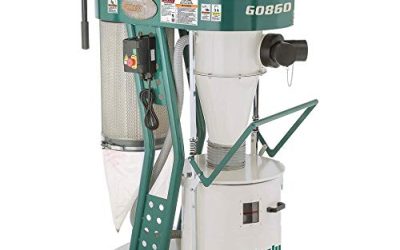
Grizzly Industrial G0860-1-1/2 HP Portable Cyclone Dust Collector
FoxAlien 800W Desktop Dust Collector HFS-800 with Cyclone Dust Separator for CNC Cutting Woodworking, Air Filtration System with HEPA and Carbon Filter, Airflow Adjustable (110V)
This guide is for hobby woodworkers who build in bursts on Saturdays and Sundays and are tired of shaking out clogged bags. It covers one full-size portable cyclone for machine work, a powered benchtop cyclone unit for CNC and small tools, and a complete separator system that turns an existing shop vacuum into a two-stage setup, all specified from their Amazon listings.
Quick Picks
As an Amazon Associate we earn from qualifying purchases.
Product
Best for
Key spec from title
Grizzly Industrial G0860
Full-size cyclone power for stationary machines
1-1/2 HP portable cyclone
FoxAlien HFS-800
Benchtop and CNC dust control in a small shop
800W desktop, cyclone separator with HEPA filter
Mullet High-Speed Cyclone Dust Collector
Adding cyclone separation to a shop vac you own
5-gallon dump bin, for shop vacuums
How to Choose
Understand What the Cyclone Actually Buys You
In a single-stage collector, every chip and all the fine dust slam into one filter bag, and suction fades as that bag cakes. A cyclone spins the airstream first, dropping the heavy fraction into a drum so only fine dust reaches the filter. The practical result for weekend work is consistency: a planer session that starts strong finishes strong, and filter cleaning becomes an occasional job instead of a weekly one. Judge listings by whether separation happens before the filter, and be wary of cone inserts in ordinary bag machines being described as full cyclones.
Size the Drum to Your Chip-Heaviest Tool
Separation only helps if the drum keeps up. A thickness planer or jointer produces chips at a rate that embarrasses small bins, and stopping mid-project to dump a drum is exactly the friction a cyclone was meant to remove. A 20-gallon drum, like the one on the Grizzly below, handles a serious planing session; a 5-gallon bin suits sanders, routers and CNC work where the waste is mostly fine dust. Match the vessel to the tool that makes the bulkiest waste in your shop, not the one you use most often.
Empty the Drum Without Breathing the Fine Fraction
The dust that reaches the bottom of a cyclone drum is concentrated and fine, so emptying is the exposure moment. Tip the drum into a bag outdoors or at an open door, wear a fitted dust mask for the job, and avoid the instinct to shake or blow out the filter with compressed air inside the shop, which simply relaunches the finest particles. Ground metal ducting and keep hose runs bonded where the listing or manual calls for it, because fast-moving chips in dry air build static that can give you a startling snap at the port.
Check the Circuit and the Footprint Before the CFM
Full-size cyclones are heavy, tall machines that draw real current. A 1-1/2 HP motor on a household circuit wants a breaker that is not already sharing load with the table saw, so read the amp figure in the listing and plan the outlet layout honestly. Footprint matters the same way: these machines live in a corner and get visited by a hose, so measure height against your ceiling and shelves. At the other end of the scale, a benchtop unit trades airflow for a footprint that fits beside a CNC router on the same bench.
The 3 Best Options
Grizzly Industrial G0860-1-1/2 HP Portable Cyclone Dust Collector
Top Pick
Grizzly Industrial G0860-1-1/2 HP Portable Cyclone Dust Collector
Best for: Weekend shops running a planer, jointer or table saw that want steady suction all session.
Motor: 1-1/2 HP
Airflow: 868 CFM at 1.8 in. static pressure, as listed
This is the genuine article for a weekend shop built around stationary machines: a two-stage portable cyclone whose 1-1/2 HP motor is rated at 868 CFM at 1.8 inches of static pressure, a figure quoted at a working resistance rather than in free air. Chips and shavings spin down into the collection drum while the canister filter handles the fine fraction at 1-micron filtration, so suction holds through long planing runs. Casters let you park it in a corner and roll it to whichever machine is working. It is a heavy, permanent-resident machine, but for one-tool-at-a-time weekend builds it ends the clogged-bag routine entirely.
FoxAlien 800W Desktop Dust Collector HFS-800 with Cyclone Dust Separator for CNC Cutting Woodworking, Air Filtration System with HEPA and Carbon Filter, Airflow Adjustable (110V)
Runner-Up
FoxAlien 800W Desktop Dust Collector HFS-800 with Cyclone Dust Separator for CNC Cutting Woodworking, Air Filtration System with HEPA and Carbon Filter, Airflow Adjustable (110V)
Best for: CNC carving, engraving and benchtop work where a full-size collector is oversized.
Motor: 800W, airflow adjustable
Separation: cyclone dust separator
Filtration: HEPA filter and carbon filter, as listed in the title
Included components: dust collector, dust separator, air hoses
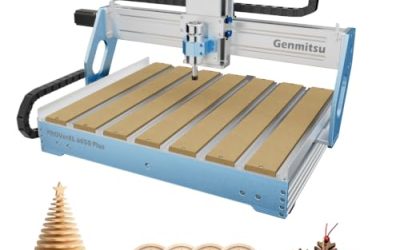
Not every weekend project needs a 4-inch hose. If your Saturdays revolve around a desktop CNC router, carving and engraving work, this compact powered unit puts cyclone separation right on the bench: its own 800W motor provides the suction, a cyclone separator drops debris before the air reaches the filter stage, and the listing specifies both HEPA and carbon filtration. Airflow is adjustable, which suits small tools that need a gentler draw than a full-size collector delivers. It arrives as a complete working system with hoses included, so there is no separate vacuum to buy or plumb.
Mullet High-Speed Cyclone Dust Collector for Shop Vacuum – Sawdust Separator, Dust Collectors for Woodworking, Garage, Hobbyist Debris Extraction
Mullet High-Speed Cyclone Dust Collector for Shop Vacuum – Sawdust Separator, Dust Collectors for Woodworking, Garage, Hobbyist Debris Extraction
Best for: Woodworkers who already own a decent shop vacuum and want two-stage separation without a second motor.
Type: cyclone separator for shop vacuums and dust extractors
Capacity: 5-gallon dump bin
Filter type: cyclonic, no filter element of its own
Power source: shop vac or dust extractor, as listed
The Mullet takes a different route: instead of a motor of its own, it is a one-piece parabolic cyclone with an integrated 5-gallon dump bin that connects rigidly to a shop vacuum you already own, and the listing states it pre-separates 99 percent of debris before the air reaches the vac. That keeps the vacuum’s filter clean and its suction steady through a weekend of routing and sanding, at a footprint of roughly one square foot. The cut-to-fit PVC connection and included hose adapters fit most wet and dry vacuums. It is a separator, not a standalone collector, and judged on those terms it is a complete kit.
Which One Fits Your Situation
Your Planer Fills Bags and Kills Suction
Buy the Grizzly G0860. The point of a cyclone in a weekend shop is a planing session that ends with the same pull it started with, and the 868 CFM rating at a stated static pressure is the kind of figure to trust. The drum swallows chips that would choke a bag machine, and the 1-micron canister keeps the fine fraction out of the room. Park it once, run one hose, and stop planning projects around filter cleaning.
Your Weekend Work Is a Desktop CNC
The FoxAlien HFS-800 matches the scale of the work. A full-size cyclone would be absurd beside a benchtop router, both in footprint and in draw, while this unit’s adjustable airflow and bench-sized body fit the tool it serves. The listed HEPA stage also suits the very fine dust CNC carving produces. Confirm the voltage variant at checkout, set it beside the machine, and the dust problem shrinks to emptying one small collector.
You Already Own a Strong Shop Vacuum
Add the Mullet and keep your money in the vacuum you have. Weekend routing, sanding and cleanup all run through a shop vac anyway, and the Mullet’s separation keeps that vac breathing freely instead of choking on its own filter by Sunday. The rigid connection means the pair moves around the shop as one unit. Just be honest about the bin size: for chip-heavy planer work, this is the wrong tool, and the Grizzly is the right one.
The Shop Is One Bay of a Shared Garage
Think about where the machine lives Monday to Friday. The Grizzly needs a permanent corner and earns it only if machine work dominates your weekends. The Mullet and a vacuum stack into the smallest footprint and can tuck under a bench between sessions. The FoxAlien sits on the bench it serves and stores on a shelf. Choose by the space you can surrender permanently, not the space you can borrow on Saturday morning.
Common Mistakes
Buying a separator lid and expecting it to work without a vacuum or collector to power it.
Judging cyclones by free-air CFM claims instead of airflow quoted at a static pressure.
Emptying the drum indoors without a mask, releasing the finest dust the system worked to capture.
Feeding a 5-gallon separator bin with a thickness planer and spending the session dumping it.
Ignoring static: ungrounded plastic hose runs in dry winter air can build up a real charge.
Frequently Asked Questions
Does a cyclone collector still need a good filter?
Yes. The cyclone removes chips and most dust by weight, but the lightest fraction travels on to the filter, and that fraction is the one that matters for your lungs. This is why the Grizzly’s 1-micron canister rating is worth checking in the listing rather than assuming the cyclone does everything. A cyclone with a coarse filter is only half a system.
Can a separator like the Mullet replace a real dust collector?
For shop-vac-scale tools, it gets you much of the benefit: steady suction and a clean filter across a weekend. It cannot replace a full collector behind a planer or jointer, because the vacuum’s airflow and the small bin are both limiting. Match the separator to sanders, routers and cleanup work, and step up to a powered cyclone when stationary machines enter the picture.
Why is airflow quoted at a static pressure on the Grizzly?
Because free-air figures describe a machine pulling against nothing, which never happens once hose and tool are attached. A rating of 868 CFM at 1.8 inches of static pressure tells you what the collector delivers against realistic resistance, so it compares more honestly against other machines quoted the same way. When two listings use different methods, the one hiding its method is usually the weaker performer.
How often will I empty the drum or bin?
It depends entirely on the tool. Sanding and CNC work produce fine dust slowly, so a 5-gallon bin can last several sessions. Surfacing rough lumber is the opposite: a 20-gallon drum can fill in one long planing afternoon. The useful habit is checking the vessel at the start of each project day, because a cyclone that overfills starts sending debris to the filter it was meant to protect.
J
JD's Woodworks Editorial Team
We compare specs, warranty terms, long-term owner feedback and street pricing before anything earns a spot. Rankings are never paid.
Affiliate disclosure. As an Amazon Associate we earn from qualifying purchases at no extra cost to you. Prices accurate as of the date shown.
Compare the best two stage dust collectors for weekend woodworking projects, with cyclone separation, canister filters, drum sizes and inlet specs compared.
Compare the best cyclone dust collectors for experienced DIY woodworkers, with airflow, canister filtration, remote control and drum capacity compared.
Compare the best wall mounted dust collectors for weekend woodworking projects, with CFM, bag size and filtration from each listing to size one machine right.
Stationary thickness planers that ship with a dust hood, compared for home shops: 15, 20 and 22 inch helical floor models with listing specs and ASINs.
True open-sided thickness planers are rare on Amazon. See the verified open-end pick with a dust connection, its listing specs, safety notes and buying checks.
Floor standing band saws for garage workshops compared on resaw height, throat, motor power and dust ports, with setup and safety checks before buying.