Key takeaways
- Compare the best froes for splitting green wood, from a hand forged 10 inch blade to 15 inch shingle froes and a USA made set that includes the mallet.
What's inside
As an Amazon Associate I earn from qualifying purchases. This post may contain affiliate links at no extra cost to you.
A froe looks simple, just a straight blade with a handle set at a right angle, but the wrong one makes riving frustrating: a blade that is too short cannot span wide bolts, a thin edge rolls or wanders off the grain line, and a loose eye lets the handle work free mid-split. The real decision is matching blade length, blade build, and handle fit to the stock you plan to split, whether that is cedar bolts for shakes, oak for chair parts, or short billets for kindling.
This guide covers four buyer situations: splitting full-size shingle bolts, riving green blanks for chairs and stools, working smaller stock where a long blade is clumsy, and starting from nothing with a set that includes the striking mallet. Every pick below was chosen from the product names and specifications published on its Amazon page, so the dimensions quoted here are the ones the sellers themselves list.
Quick Picks
As an Amazon Associate we earn from qualifying purchases.
| Product | Best for | Key spec from title |
|---|---|---|
| Redneck Convent Shingle Froe | Shakes, shingles, and general riving | 15in premium forged blade |
| Timber Tuff TMW-62 Shingle Froe | Wide bolts on a mid-range budget | 15 inch blade, 3.08 lb |
| Lehman’s Wood Froe and Mallet Set | Starting with froe and mallet together | Case hardened 15 inch blade, set |
| Sharky Hand Forged Splitting Froe | Small stock and chair parts | Hand forged 10 in blade |
How to Choose
Blade Length Against Your Stock
Blade length decides the widest bolt you can open in one placement, because the edge has to span the end grain before you start levering. Fifteen-inch blades are the standard for shingle and shake work, where bolts are often cut wide and the split must run the full face. A ten-inch blade gives up that span but gains control on narrow stock such as chair rungs, spoon blanks, and kindling billets, where a long blade bridges across the piece and wastes effort. Measure your typical bolt width first, then pick the shortest blade that still covers it with a little to spare.
Blade Build and Edge Profile
A froe blade is a wedge, not a knife, so thickness and grind matter more than sharpness. The blade should be thick enough to open a split without flexing, with a bevel that enters end grain cleanly instead of crushing fibers. Forged blades, whether produced in a factory or by hand, tend to carry a tapered profile that thickens toward the spine, which helps the split run straight. Case hardened steel adds surface durability for repeated mallet strikes on the spine. Check the listing for blade dimensions rather than relying on photos, since two froes with the same length can differ a lot in depth and thickness.
Handle Length, Fit, and the Eye
The handle is your lever, and its length sets how much prying force you can apply once the blade is seated. Handles around sixteen to eighteen inches suit most riving, giving leverage without forcing you to stand far from the work. Just as important is how the handle seats in the eye: tapered handles that wedge tighter as they are driven stay put, while a loose fit will creep out during a session. Hardwood handles in hickory, ash, or similar species absorb shock from mallet blows. Before ordering, confirm whether the handle ships fitted or needs seating, and whether replacements are available.
What You Strike It With
A froe is only half of the tool pair. The blade spine is struck with a wooden mallet or club, never a steel hammer, because steel on steel can chip the spine and mushroom the edge over time. If you already own a heavy wooden mallet or a froe club, a bare froe is enough. If you are starting from scratch, a set that bundles a matched mallet saves a second purchase and guarantees a striker of sensible weight for the blade. Either way, plan the pair together, and check the listing so you know exactly what arrives in the box.
The 4 Best Options
Redneck Convent Shingle Froe
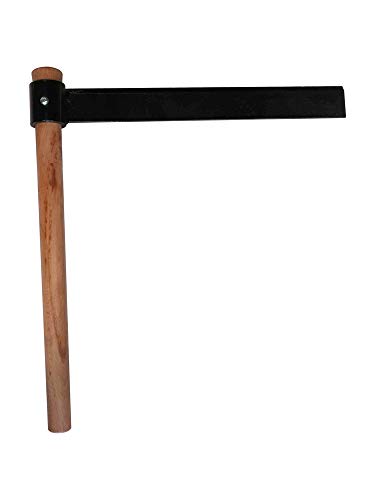
This is the straightforward general-purpose pick for anyone riving shakes, shingles, and turning blanks at home. The fifteen-inch forged blade spans typical cedar and pine bolts in one placement, and the listing describes a hardened steel blade paired with a solid hardwood handle, a combination aimed at repeated mallet work rather than occasional use. The tapered handle design is a practical detail: the handle graduates in size so the blade jams firmly in place and resists working loose as you lever splits open, which is exactly where bargain froes tend to disappoint.
Specs
- Blade length: 15 in
- Blade dimensions: 15 x 0.25 x 1.9 in
- Blade material: hardened steel
- Handle: 18 in solid hardwood, tapered fit
- Weight: not stated
Best for: Splitting shakes, shingles, and turning blanks with one all-round froe.
Watch out for: No mallet is included, so budget for a wooden striker if you do not own one.
ASIN: B089MC9PRC
Timber Tuff TMW-62 Shingle Froe

The TMW-62 covers the same fifteen-inch shingle class as the Redneck Convent but publishes a fuller spec sheet, which makes it easier to buy with confidence. Its blade runs two inches deep, giving the wedge more body as a split opens, and the whole tool weighs just over three pounds, light enough to reposition quickly between billets without feeling flimsy. Timber Tuff positions it beyond roofing work, naming furniture making, log cabins, and kindling among its uses, and the anodized blade finish is meant to shrug off the moisture that green wood constantly throws at bare steel.
Specs
- Model: TMW-62
- Blade length: 15 in
- Blade depth: 2 in
- Blade material: anodized steel
- Handle: hardwood
- Weight: 3.08 lb
- Warranty: 1 year limited manufacturer parts warranty
Best for: Wide bolts and mixed riving jobs where a published weight and warranty matter.
Watch out for: The listing does not state handle length, so check the product page if leverage is a priority.
ASIN: B01LZ56XIS
Lehman’s Wood Froe and Mallet Set

Lehman’s bundles its long-running wood-splitting froe with the hardwood striking mallet made to drive it, which removes the guesswork of pairing a striker to a blade. The froe itself uses a case hardened steel blade, a treatment Lehman’s describes as making the blade stronger and longer lasting than the plain version it replaced, on a sixteen-inch hickory handle. The design brief is traditional work on already-split lumber and small logs: kindling, shingles, furniture parts, and basket stock rather than breaking down big rounds. Being made in the USA by an Amish supplier is part of the appeal here.
Specs
- Includes: froe and hardwood striking mallet
- Blade length: 15 in
- Blade material: case hardened steel
- Handle: 16 in hickory
- Froe weight: 4 lb
- Origin: USA made
Best for: Beginners who want a matched froe and mallet from one purchase.
Watch out for: The maker is explicit that this froe is not meant for splitting large logs, so size your bolts accordingly.
ASIN: B0CPT88JWL
Sharky Hand Forged Splitting Froe

Where the fifteen-inch tools are built for roofing bolts, this hand forged froe shrinks the format down to a ten-inch blade for controlled work on smaller pieces. The shorter edge suits chair spindles, spoon and utensil blanks, bow staves, and kindling billets, where a full-size shingle froe feels oversized and harder to steer. Each blade is forged rather than cut from flat stock, and the handle is ash, a species chosen for the same shock resistance that makes it common in striking-tool handles. For green woodworkers who rive parts rather than shingles, this is the proportion that matches the work.
Specs
- Blade length: 10 in (25.5 cm)
- Construction: hand forged
- Blade material: steel
- Handle: ash wood
- Steel grade: not stated
- Weight: not stated
Best for: Riving small green stock such as chair parts, spoon blanks, and kindling.
Watch out for: The ten-inch blade cannot span wide shingle bolts, so it complements rather than replaces a full-size froe.
ASIN: B0FRY429YQ
Which One Fits Your Situation
You Are Splitting Cedar Bolts for Shakes and Shingles
Start with one of the fifteen-inch tools, since shingle bolts are the widest stock most home riving involves. The Redneck Convent is the direct pick for this work, with a tapered handle fit designed to stay seated through long sessions. The Timber Tuff TMW-62 is the alternative if you prefer a published weight and a stated warranty behind the tool.
You Are Riving Green Blanks for Chairs and Stools
Chair parts are narrow, so control beats span. The Sharky hand forged froe, with its ten-inch blade, lets you start and steer splits on rung and spindle stock without the overhang of a shingle blade. If your chair work also includes wide seat blanks, pair it with a fifteen-inch froe rather than forcing one tool to cover both jobs.
You Own Nothing Yet and Want the Complete Setup
The Lehman’s set is the only pick here that arrives ready to work, because the matched hardwood mallet is in the box with the froe. That matters more than it sounds: a steel hammer should never strike a froe spine, and a too-light mallet makes seating the blade a chore. Buy the set, add eye protection, and you can start on small bolts the day it lands.
You Split Mostly Kindling and Short Billets
Short stock does not need a long blade, and the Sharky’s ten-inch edge is easier to place precisely on small end grain. For slightly larger firewood billets, the Lehman’s froe is sized by its maker for small logs and already-split lumber, which is exactly the kindling workflow. Avoid driving any of these into large rounds; that is splitting-wedge territory, not froe work.
Common Mistakes
- Striking the froe spine with a steel hammer or sledge, which chips and mushrooms the blade; use a wooden mallet or club.
- Choosing a blade shorter than the bolts you split, forcing off-center placements that make splits run out through the face.
- Trying to split large rounds with a froe instead of wedges first; froes refine bolts and billets, they do not break down logs.
- Ignoring a loose handle until it slips mid-split; check the eye fit before every session and reseat a creeping handle.
- Forcing a wandering split with more leverage instead of backing the blade out and restarting from the other end.
Frequently Asked Questions
What size froe should a beginner buy first?
A fifteen-inch blade is the safest first purchase because it covers the widest range of home riving, from shingle bolts to turning blanks. Most traditional shingle froes cluster at that length for a reason. Add a shorter ten-inch froe later only if you find yourself riving a lot of narrow chair or utensil stock, where the extra span becomes a hindrance.
Can a froe split firewood logs?
Only in a limited sense. A froe works on bolts and already-split lumber, opening pieces along the grain with control, and makers such as Lehman’s state plainly that their froe is not meant for large logs. Break rounds down with wedges or a maul first, then use the froe to size billets and kindling. Using a froe as a log splitter risks bending the blade or tearing out the eye.
What should I strike a froe with?
Use a wooden mallet, a froe club, or a hardwood striking mallet matched to the blade. Wood-on-steel contact drives the blade without chipping its spine, and a mallet of sensible weight seats the edge in a few controlled blows. Never use a steel hammer or sledgehammer, which can crack the spine and send fragments flying. Sets such as the Lehman’s bundle exist precisely to guarantee a suitable striker.
How do I keep a split running straight?
Seat the blade fully across the end grain, then lever the handle toward the thicker side of the developing split to steer it back toward center. Work with straight-grained, knot-free bolts whenever possible, because grain runout, not technique, causes most wandering splits. If a split dives badly, withdraw the blade and restart from the opposite end rather than forcing it through.
Related guides
More from Amazon
Programs that pair well with the guide above. Offers and eligibility are set by Amazon and may change.
A free business account with business pricing and bulk-buying tools for work, shop or home office.
Create a business accountFree shipping on eligible items, Prime Video and more. Eligible new members can start with a free trial.
Start a Prime free trialAudiobooks and podcasts to listen to on the go. Eligible new members can start with a free trial.
Try Audible freeAd-free music streaming. Eligible new subscribers can start with a free trial.
Try Music Unlimited freeAs an Amazon Associate we earn from qualifying purchases.