
What's inside
As an Amazon Associate I earn from qualifying purchases. This post may contain affiliate links at no extra cost to you.
When your check engine light comes on, you have three options: pay a shop a diagnostic fee, guess which sensor failed and hope for the best, or spend under $50 on a code reader that tells you exactly what is wrong. The best automotive code reader removes the guesswork from a problem that used to require a trip to the dealership. Modern OBD2 scanners read the same error codes a mechanic’s computer reads, clear the light, and in some cases stream live sensor data so you can see exactly what a component is doing while the engine runs.
Not all code readers deliver the same experience, though. Cheap units may fail to interpret manufacturer-specific codes, freeze up mid-scan, or leave you with a cryptic code number and no context for what it means. The difference between a $16 scanner and a $90 scanner often comes down to live data capability, code explanations, vehicle coverage breadth, and whether the tool supports bidirectional commands that let you actuate components during diagnosis. Owner reviews consistently flag reliability and clarity of output as the factors that separate a tool you reach for again from one that ends up in a drawer.
As an Amazon Associate we earn from qualifying purchases at no extra cost to you.




Quick Picks
| Product | Best for | Price |
|---|---|---|
| ANCEL AD310 Classic | DIY beginners who need basic code reading | $29.99 |
| FOXWELL NT301 | Live data and enhanced diagnostics on a budget | $55.95 |
| ANCEL AD410 | Broader vehicle compatibility and clearer reports | $38.96 |
| MOTOPOWER MP69033 | Lowest price for reliable basic scanning | $15.96 |
| Innova 5210 | Smartphone integration and app-based guidance | $89.99 |
| VDIAGTOOL VD10 | Quick CEL checks and I/M readiness | $18.99 |
| Innova 5610 | Serious home mechanics wanting bidirectional control | $268.98 |
| FOXWELL NT604 Elite | Multi-system coverage (ABS, SRS, transmission) | $139.99 |
How We Picked
We compared every tool on four criteria that owner feedback and published specifications consistently highlight as decisive: protocol coverage (does it read all OBD2 modes relevant to your vehicle), diagnostic depth (basic code retrieval versus live data, freeze frames, and multi-system access), usability (screen clarity, menu logic, and whether codes come with plain-language descriptions), and value (how the price maps to features versus competing options in its tier). A scanner that reads fewer systems but costs less can outperform a feature-rich unit with a confusing interface, so we weighted real-world owner satisfaction heavily alongside spec sheets.
The 8 Best Automotive Code Reader in 2026
ANCEL AD310 Classic
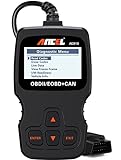
The AD310 Classic is the entry point most DIYers should consider first. It reads and clears engine fault codes on any OBD2-compliant vehicle from 1996 onward, provides freeze frame data for the last recorded fault, and displays I/M readiness status—useful before an emissions test. Owner reviews praise its simple two-button interface and the clarity of its code descriptions, which eliminate the need to look up numbers online. The build quality is utilitarian but reliable, and it draws power directly from the vehicle’s port with no batteries required. The main limitation is that it sticks to powertrain codes only; you will not see ABS, airbag, or transmission data. Skip it if you need anything beyond engine diagnostics.
FOXWELL NT301
The NT301 occupies a sweet spot between basic code reading and professional-adjacent functionality. It streams live sensor data in graph and gauge formats, displays SRT (similar relevant trouble code) suggestions, and includes a built-in DTC library with hundreds of code definitions. Owners highlight the color display as a significant upgrade over monochrome units at this price. The red/yellow/green emissions readiness indicator is a practical touch for pre-inspection checks. Some users note that the menu structure takes a few sessions to memorize, and the cable is short, which can be awkward in larger vehicles. Skip it if you primarily want a plug-and-read tool and find live data unnecessary.
ANCEL AD410
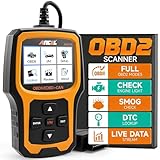
The AD410 builds on the AD310 platform with a larger screen, color-coded fault indicators, and a slightly broader protocol footprint. It adds a diagnostic report feature that formats results for sharing—useful if you want to send findings to a mechanic before paying for a shop visit. Owners appreciate the one-click updates and the improved readability compared to its sibling. The trade-off is a modest price bump over the AD310 for what is still fundamentally a powertrain-only reader. If you do not need the reporting or color display, the savings from the AD310 matter more than these incremental upgrades.
MOTOPOWER MP69033
At under $16, the MP69033 is the most affordable code reader that earns consistent owner satisfaction. It reads and clears engine codes, shows live data for a limited sensor set, and supports enhanced OBD2 protocols including CAN. The display is small and monochrome, and the code descriptions are shorter than what you get from pricier units. What it lacks in polish it makes up in reliability—owners report years of use without failure, and the tool handles the core job of turning off a check engine light after a repair without drama. Skip it if you need freeze frame data, I/M readiness, or any diagnostic context beyond a code number and brief description.
Innova 5210
The 5210 pairs a hardware scanner with Bluetooth connectivity to the CarMate app, which translates codes into guided repair suggestions and estimated fix costs. This bridge between raw data and actionable advice is what makes it distinct. It also includes a battery health test and an oil reset function—features rarely found at this price point. Owners on forums frequently call out the app’s code explanations as the reason they kept using it after buying more expensive tools. The app requires a smartphone, which is not ideal in a shop environment, and the subscription component (if any) may not appeal to everyone. Skip it if you prefer a standalone device with no phone dependency.
VDIAGTOOL VD10
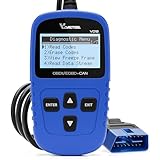
The VD10 delivers freeze frame data, I/M readiness monitoring, and a built-in DTC lookup library at a price that undercuts most competitors. It is a straightforward plug-and-play unit designed for the driver who wants to confirm a problem, clear the light, and check emissions readiness without navigating complex menus. Owners note the screen is bright and legible even in daylight, and the button response is snappy. The code descriptions are functional but brief, and the unit does not stream live data continuously. Skip it if you want to watch sensor readings in real time while diagnosing intermittent faults.
Innova 5610
The 5610 is a bidirectional scan tool that lets you command vehicle systems—cycle components, run adaptations, and monitor responses—rather than merely reading data. It covers powertrain, ABS, airbag, and transmission systems, and includes service functions like oil reset and battery registration. The included software updates and US-based technical support add long-term value for owners who want the tool to keep working as vehicle technology evolves. The price places it in a different conversation from the readers above. Expect a learning curve, and note that bidirectional commands carry a small risk if misused on unfamiliar systems. Skip it if your needs are limited to reading and clearing check engine light codes.
FOXWELL NT604 Elite
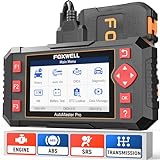
The NT604 Elite expands diagnostics beyond the engine to cover ABS, SRS (airbag), and transmission systems—the four core areas where fault codes appear most frequently. It reads and clears codes in all four systems, provides live data streaming, and includes service functions like oil reset and EPB. Owners consistently mention the screen size and the quality of its system-specific code translations as standout features. It does not match a $268 bidirectional tool in command capability, but it covers far more ground than any of the powertrain-only readers here. Skip it if you will never need to pull an ABS or airbag code, or if the extra price over the NT301 is not justified by your repair work.
Buying Guide
Protocol Coverage and Vehicle Compatibility
Every OBD2 tool must support the protocols your vehicle uses: OBD-II, CAN, ISO9141, KWP2000, and J1850 VPW/IPC. Most scanners built after 2010 handle all five, but budget units sometimes omit J1850 support, which older Ford and Chrysler vehicles require. Before purchasing, confirm the listed protocol set matches your vehicle’s year and manufacturer. A scanner that “works on all cars 1996 and newer” in marketing copy may still struggle with a specific protocol implementation if the firmware is incomplete.
Diagnostic Depth: Codes, Live Data, and System Access
Basic readers pull generic powertrain codes (P0xxx). Enhanced units add manufacturer-specific codes (P1xxx), freeze frame data that captures sensor states at the moment a fault triggered, and live data streams that let you watch RPM, coolant temperature, fuel trim, and dozens of other parameters in real time. Multi-system tools extend access to ABS, SRS, and transmission modules. Decide which tier you need before shopping—a live data scanner costs meaningfully more than a code reader, and a four-system tool costs more again, so you should not pay for features you will never use.
Usability and Update Support
A scanner with great specs but a confusing interface will collect dust. Look for models where owner reviews specifically praise menu logic, screen readability, and whether codes arrive with plain-language explanations rather than bare alphanumeric strings. Update support matters for longevity: if a tool’s code database goes stale or firmware becomes incompatible with newer vehicle modules, its usefulness drops sharply. Tools that offer free or low-cost updates and maintain active manufacturer support tend to hold their value over a decade of ownership.
Our Verdict
The ANCEL AD310 Classic is the top pick for most owners who need a best automotive code reader that solves the immediate problem—identifying what triggered the check engine light and clearing it after repair—at a price that makes ownership a non-issue. For the tightest budget, the MOTOPOWER MP69033 delivers reliable basic scanning for under $16 with no meaningful compromise on its core function. If you need live data, multi-system coverage, or bidirectional commands, the FOXWELL NT604 Elite or Innova 5610 respectively justify their higher prices by eliminating the need for a shop visit on more complex diagnoses.
FAQ
Do OBD2 code readers work on every car?
All vehicles sold in the United States from 1996 onward are required to use the OBD2 standard, so any compliant scanner will communicate with them. However, older vehicles may use protocols like J1850 that some newer budget scanners have dropped support for, and a few hybrid or EV models use manufacturer-specific systems that generic OBD2 tools cannot access. Always verify the protocol list matches your vehicle before purchasing.
Can a code reader permanently turn off a check engine light?
A code reader clears the stored fault code, which turns off the light. If the underlying problem persists, the vehicle’s computer will detect it again after a short drive cycle and the light will return. Clearing a code without fixing the fault also resets your emissions readiness monitors, which can cause a failed inspection until they complete their cycle.
What is the difference between a code reader and a scan tool?
A code reader retrieves and clears fault codes and may show freeze frame data. A scan tool adds live data streaming, graphing, readiness monitoring, and on higher-end models, access to multiple vehicle systems (ABS, airbag, transmission). Bidirectional scan tools go further by allowing you to send commands to the vehicle’s computers, such as running a component test or performing an adaptation reset.
Do I need a Bluetooth or app-based code reader?
App-based readers like the Innova 5210 offer richer code explanations and repair guidance that a standalone unit’s small screen cannot display. The trade-off is dependency on a charged phone and sometimes a subscription. If you work in a garage or want to scan without reaching for a device, a standalone unit with a clear display remains the more practical choice.