As an Amazon Associate I earn from qualifying purchases. This post may contain affiliate links at no extra cost to you.
A benchtop router earns its place in a prototype workshop only if its spindle speed can follow the work. Desktop machines get asked to engrave a maker’s mark with a tiny V-bit in the morning and profile an acrylic enclosure after lunch, and those two jobs want very different revs. A spindle with no stated speed range leaves you guessing, and the guess usually shows up as melted plastic, torn grain or a snapped cutter. What decides it is an RPM range you can set, enough travel for parts, and a frame that stays square.
Every machine below is a genuine benchtop frame, sized to live on a workbench rather than a stand, and every one was picked from its Amazon listing because the listing states how spindle speed is controlled: a digital display router, a GRBL-driven spindle with a published range, or software-set speed on a machine built for upgrades. All three share roughly the same footprint, so the choice turns on spindle style, Z clearance and rigidity.
Quick Picks
As an Amazon Associate we earn from qualifying purchases.
Product
Best for
Key spec from title
Genmitsu 4040-PRO MAX
Hardwood and acrylic cutting with a real trim router
710W trimmer with linear rail drive
FoxAlien 4040-XE
Guided first machine with a published spindle range
300W spindle, working area 400 x 400mm
Genmitsu 4040-PRO
Upgrade path on a steel-frame desktop machine
GRBL control, working area 400 x 400 x 78mm
How to Choose
One safety point deserves emphasis on open benchtop frames. There is no enclosure between you and the cutter, so wear eye protection on every job and hearing protection on long ones. Test the emergency stop before the first cut, not during the first problem, and run extraction or a dust shoe whenever you cut MDF, because the fine dust settles on rails and lead screws as well as in the air. Keep hands clear of the gantry while the machine homes.
Work Area and Z Clearance on a Bench
Benchtop machines cluster around a 400 mm square bed, which covers enclosures, small signs, jigs and most electronic housings. The dimension that separates them is Z clearance: a few extra millimetres decide whether a thick hardwood blank or a tall clamp fits under the gantry. Measure your tallest typical workpiece, add the spoilboard and fixture height, and compare that stack against the listed travel. Also measure the bench itself, because the machine’s overall footprint is much larger than its cutting area once the gantry overhangs at full travel.
How the Spindle Speed Is Set
Three mechanisms appear at this size, and they suit different habits. A trim router with a digital display puts the speed control on the tool itself, with router torque behind it; it is the strongest cutting option and the loudest. A DC spindle with a published range, set through the controller, is quieter and integrates with the program, so repeat jobs run identically. A small included spindle on an upgradeable frame is the third pattern: acceptable for engraving and light cuts, with a larger mount ready when the work outgrows it.
Controller, Software and Offline Running
All three picks run GRBL firmware, which keeps your options open: Candle and UGS as senders, and toolpaths from Fusion 360, Carveco or VCarve. For a prototype bench, two details matter more than brand. The first is offline running, where the controller works from a card or its own interface while your design computer stays free. The second is connectivity for extras, such as the wireless module and fourth-axis support listed for one pick here. Confirm that limit switches, a Z probe and an emergency stop are in the box rather than on an options list.
Rigidity and Where Desktop Machines Save Money
Desktop frames flex at the gantry first, so look for linear rails on the X and Z axes, lead screws instead of belts, and a bed with real support under the spoilboard. Steel tube frames and aluminium extrusion both work when the joints are tight; acrylic side plates and unsupported rods are the usual corner cutting, and they show up as chatter on hardwood edges. Weight is a rough proxy: a benchtop machine that is too easy to carry is usually too light to cut aggressively, so plan a fixed home for it.
The 3 Best Options
Genmitsu 4040-PRO MAX
Top Pick
Genmitsu 4040-PRO MAX
Best for: Prototype benches cutting hardwood, acrylic and light aluminium parts that need router power and settable speed.
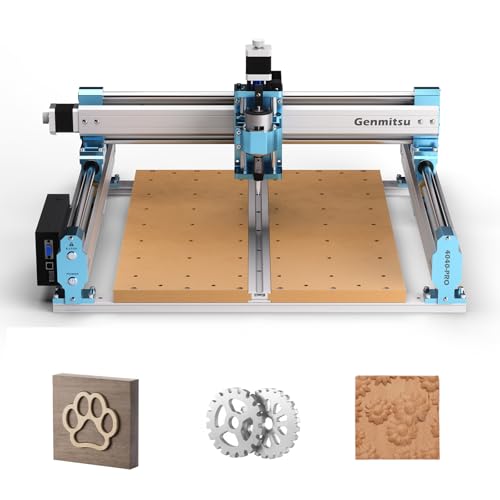
Working area: 410 x 405 x 77mm
Spindle: 710W trimmer router with digital display speed control
Drive: linear rail driven X and Z axes
Control: GRBL control; upgraded mainboard with wireless support (Wi-Fi module listed as a separate ASIN option)
The PRO MAX is the benchtop pick for shops whose prototypes are cut, not just engraved. Instead of a small DC spindle it carries a 710W compact trim router with a digital display, so speed is set on the router itself and there is real router torque behind the setting. X and Z axes run on linear guideways, the frame is all metal, and the upgraded mainboard supports a fourth-axis rotary module and an optional wireless module for app control. With 410 by 405 mm of travel and 77 mm of Z, it handles thicker stock than most desktop rivals.
FoxAlien 4040-XE
Runner-Up
FoxAlien 4040-XE
Best for: Prototype workshops wanting a documented spindle range, NEMA23 motors and offline running on a 400 mm desktop frame.
Working area: 400 x 400 x 55mm (15.75 x 15.75 x 2.16 in)
Spindle: 300W spindle, speed range 0 to 10,000 RPM
Motors: NEMA23 stepper motors
Control: GRBL firmware (Grblcontrol/Candle and other GRBL software), offline working supported
The 4040-XE is the straightforward benchtop option: a 300W spindle whose manual and listing publish a speed range of 0 to 10,000 RPM, set through the GRBL controller, with NEMA23 motors that are a size up from the NEMA17s on smaller desktops. The working area is a full 400 by 400 mm, the kit includes limit switches on all axes, a Z probe and an emergency stop, and it supports offline working once set up. Assembly is mostly a matter of joining pre-assembled modules. For a prototype bench that values predictable, documented behaviour over raw power, this is the calm choice.
Genmitsu 4040-PRO
Genmitsu 4040-PRO
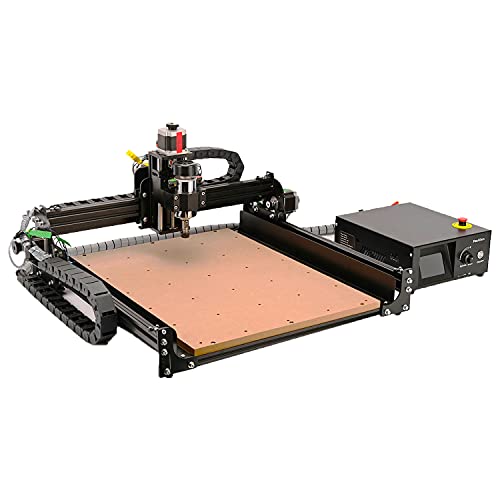
Best for: Benches that plan to upgrade the spindle over time and want the most rigid desktop frame to build on.
Working area: 400 x 400 x 78mm (15.7 x 15.7 x 3.1 in)
Frame: steel HSS frame with 16mm steel HSS linear tubes
Drive: lead screw motion drivers on each axis, dual Y-axis rails
Control: GRBL control with offline controller support
Benches that plan to upgrade the spindle over time and want the most rigid desktop frame to build on.
Watch out for
The included spindle is the limiting part of the package, so factor a spindle upgrade into the plan if your prototypes involve sustained cutting in hardwood.
The 4040-PRO is the frame-first buy. Its steel HSS frame runs on 16mm steel linear tubes with lead screw drive on each axis and dual Y-axis rails, which is a sturdier skeleton than most extrusion desktops, and the T-track bed makes clamping prototype stock quick. The honest weakness is the included spindle: it is a light unit meant for engraving and gentle cuts, with speed set through the GRBL controller. Buy this machine for its chassis and its upgrade path, including fourth-axis support and a spindle mount that accepts a stronger spindle later, rather than for the cutter it ships with.
Which One Fits Your Situation
Cutting Hardwood Parts and Acrylic Enclosures
Choose the Genmitsu 4040-PRO MAX. It is the only machine here with router-class power, and the digital display makes repeat speed settings for a given material simple to reproduce. The linear rails keep edges cleaner when the router is working hard, and the Z clearance takes thicker blanks than the FoxAlien allows. If your prototype queue is mostly profiling and pocketing rather than fine engraving, this is where the money belongs.
A Shared Bench for a Small Product Team
Choose the FoxAlien 4040-XE. Shared machines suffer when behaviour depends on who set them up, and the XE’s published spindle range, limit switches and offline running make its operation the most predictable of the three. NEMA23 motors and a full 400 mm bed cover the team’s mixed work, and the emergency stop and Z probe reduce the cost of a beginner’s mistake. It is the machine least likely to surprise a colleague picking up someone else’s job.
Starting Light and Upgrading Over a Year
Choose the Genmitsu 4040-PRO. Its frame, rails and lead screws will still be appropriate after the spindle is replaced, which is rarely true of the cheapest desktops. Start with engraving, signage and light profiling while you learn feeds and speeds, then spend on a stronger spindle and the fourth-axis module when projects demand them. The risk to manage is patience: until that upgrade, deep cuts in dense hardwood will be slow going.
Fine Engraving and Small Detailed Parts
Choose the FoxAlien 4040-XE for detail work in wood and acrylic, where its controlled low-speed behaviour and probe-assisted setup matter more than wattage. Small cutters reward a spindle that can be set precisely and a machine that homes repeatably against limit switches. The PRO MAX is the fallback if those same parts are cut from thicker stock, because its extra Z clearance and router torque handle depth that would stall the smaller spindle.
Common Mistakes
Choosing a benchtop machine by bed size alone and forgetting that Z clearance, not X and Y travel, decides whether thick stock fits.
Treating a trim router’s speed dial as set-and-forget, then running a job at the speed left over from the previous material.
Skipping the spoilboard surfacing step, so every prototype inherits the bench’s tilt as a taper.
Running MDF without extraction because the machine is small, then chasing accuracy problems caused by dust packed onto rails and screws.
Buying the upgradeable frame and the upgraded spindle in the wrong order, leaving a powerful spindle waiting on a machine you have not learned yet.
Frequently Asked Questions
How much work area does a prototype bench actually need?
For enclosures, brackets, jigs and small signs, a 400 mm square bed covers most prototype work, and all three machines here sit in that class. What changes between them is Z clearance and spindle style, not the headline area. If your parts regularly exceed the bed, the answer is a larger machine rather than tiling small parts, because repositioning adds alignment error where a prototype should prove the design.
Is a trim router spindle better than a DC spindle on a desktop machine?
It is stronger, not automatically better. A 710W trim router like the PRO MAX’s cuts hardwood and acrylic with more authority, and its digital display makes speed settings repeatable. A DC spindle is quieter, lighter on the gantry and controlled from the program, which suits engraving and unattended runs. Pick by the work: profiling and pocketing favour the router, fine detail and quiet shops favour the DC spindle.
Can a benchtop router handle aluminium prototype parts?
Light aluminium work is realistic on the stiffer machines, using shallow passes, sharp cutters and firm workholding. The PRO MAX’s rails and router power and the 4040-XE’s NEMA23 motors cope best. What benchtop frames cannot do is treat aluminium like a milling machine would, with deep slotting and aggressive feeds. Keep metal jobs occasional and conservative, and move to a mill if aluminium becomes the primary material.
What should I check before the first cut on a new benchtop machine?
Surface the spoilboard so the cutting plane matches the machine’s motion, then test the emergency stop with the spindle running. Confirm the limit switches trigger, set the Z probe on scrap, and run a shallow test square in soft material to check for lost steps or taper. Finally verify the speed setting itself: read the router’s display, or check the value in your sender, before the job starts.
J
JD's Woodworks Editorial Team
We compare specs, warranty terms, long-term owner feedback and street pricing before anything earns a spot. Rankings are never paid.
Affiliate disclosure. As an Amazon Associate we earn from qualifying purchases at no extra cost to you. Prices accurate as of the date shown.
Compare the best two stage dust collectors for weekend woodworking projects, with cyclone separation, canister filters, drum sizes and inlet specs compared.
Compare the best cyclone dust collectors for experienced DIY woodworkers, with airflow, canister filtration, remote control and drum capacity compared.
Compare the best wall mounted dust collectors for weekend woodworking projects, with CFM, bag size and filtration from each listing to size one machine right.
Stationary thickness planers that ship with a dust hood, compared for home shops: 15, 20 and 22 inch helical floor models with listing specs and ASINs.
True open-sided thickness planers are rare on Amazon. See the verified open-end pick with a dust connection, its listing specs, safety notes and buying checks.
Floor standing band saws for garage workshops compared on resaw height, throat, motor power and dust ports, with setup and safety checks before buying.


 SainSmart Genmitsu 4040-PRO MAX CNC Router with 710W15.7 x 15.7 x 3.1 inches52.9 PoundsCheck on Amazon