
What's inside
As an Amazon Associate I earn from qualifying purchases. This post may contain affiliate links at no extra cost to you.
Best Cleaners for TV Screens: Top Picks by Screen Type and Cleaning Need
The best cleaner for most TVs is distilled water applied sparingly with a clean, soft microfiber cloth; for fingerprints that water cannot lift, choose a screen-specific cleaner labeled safe for your display, such as WHOOSH! Screen Shine or EVEO Screen Cleaner. Avoid household glass cleaner, paper towels, and spraying liquid directly on the panel—especially on OLED screens.
Modern TVs often have delicate anti-glare or anti-reflective coatings, and “QLED,” “OLED,” and “LED” describe display technologies rather than permission to use stronger chemicals. Check your TV’s manual first: if it says to use a dry cloth only, follow that instruction. The picks below differ most in how much cleaning power they offer, how likely they are to leave residue, and whether the cloth and bottle make careful application easy.
As an Amazon Associate we earn from qualifying purchases at no extra cost to you.


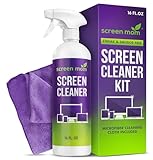
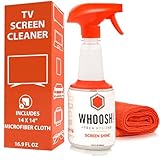
Quick comparison
| Pick | Best for | Cleaner format | Cloth and kit details | Practical trade-off |
|---|---|---|---|---|
| Distilled water | Routine dust and light smudges | Use a few drops on a cloth; no additives | Pair with a clean, lint-free microfiber cloth | Lowest residue risk; may not remove oily fingerprints quickly |
| WHOOSH! Screen Shine | Regular cleaning of fingerprints and light grime | Ready-to-use screen cleaner; kit sizes vary | Some kits include a microfiber cloth; check the package | Convenient, but still requires a light application and a separate dry buff |
| EVEO Screen Cleaner | People who want a bundled bottle-and-cloth kit | Ready-to-use screen cleaner; bottle sizes vary by kit | Cloth is included in some bundles; dimensions vary | Useful all-in-one format, though kit specifications are not uniform |
| Screen-safe cleaning wipes | Occasional spot cleaning away from home | Pre-moistened, single-use wipe | Wipe itself is the applicator; no reusable cloth included | Portable, but wipes can dry out and may leave streaks if used on a warm panel |
Product kits and sizes change, so check the current package for bottle capacity, cloth dimensions, and compatibility wording. A cloth’s feel and weave matter more than a large bundled accessory count: avoid rough seams, lint, and labels that could drag across the screen.
Best choice for your TV and cleaning habits
- Mostly dust, low budget: Use a dedicated, clean microfiber cloth dry, or lightly dampen it with distilled water if the manual permits. This is usually enough for weekly or occasional upkeep.
- Frequent fingerprints: WHOOSH! Screen Shine is a convenient screen-specific option. Use a small amount on the cloth, then buff with a dry section rather than adding more cleaner when streaks appear.
- Want the cloth included: EVEO’s bundled screen-cleaner kits can simplify setup. Confirm the cloth’s size and care instructions before choosing a package.
- Need a portable option: Screen-safe wipes are handy for a quick spot clean, but use them only if their label allows TV screens and the TV manufacturer does not prohibit wet cleaning.
- Premium OLED or coated display: Start with dry microfiber and follow the manufacturer’s instructions exactly. Use liquid only when permitted, and avoid repeated rubbing over one spot.
What separates a good screen cleaner from a streaky one?
Residue and streaking
More liquid is not more effective. Excess fluid takes longer to evaporate, can leave visible streaks, and may run into the bezel. A clean, dry buffing cloth often fixes light streaking; if the mark remains, stop and check the cleaning instructions instead of escalating to a stronger household product.
Cloth quality
Choose a soft, lint-free microfiber cloth with no abrasive trim or rough stitched edge. Keep a separate cloth for screens rather than reusing one that has collected furniture polish, dust, or laundry softener. Wash reusable cloths without fabric softener, which can leave a film, and let them air-dry or follow the cloth label. Replace one that becomes gritty, develops a rough edge, or will not rinse clean.
Ingredient safety
Prefer distilled water or a cleaner explicitly labeled for screens and approved by your TV’s manufacturer. Avoid ammonia, acetone, alcohol, bleach, abrasive powders, and ordinary window cleaner unless the TV maker specifically says otherwise. These ingredients or products may damage anti-glare coatings. A “natural” or “streak-free” claim alone does not establish compatibility.
Application method
Apply liquid to the cloth—not the screen. A pump or fine-mist bottle can help control the dose, but do not spray toward the TV. Do not press hard: OLED pixels do not need pressure to release dirt, and force can stress a thin panel. Clean when the screen is off and cool, so smudges are easier to see and liquid does not dry unevenly.
A safer cleaning routine for OLED, QLED, and LED TVs
- Check the manual. Manufacturer directions take priority, particularly for anti-glare finishes and specialty coatings.
- Turn the TV off and let it cool. Unplug it if the manufacturer recommends doing so. A dark, cool screen makes dust and fingerprints easier to inspect.
- Remove loose dust first. Use a clean, dry microfiber cloth with light strokes. Do not use a paper towel, tissue, or rough shirt fabric.
- For a remaining smudge, dampen the cloth slightly. Use distilled water or a compatible screen cleaner only if permitted. The cloth should feel barely damp, not wet.
- Wipe gently, then buff. Use broad, light strokes without pushing into the panel. Finish with a second dry area of the cloth and check for residue before repeating.
- Let the screen dry fully. Do not turn it back on while moisture remains near the edges or bezel.
Cost and upkeep: when a cleaning kit is worth it
A bottle-and-cloth kit costs more than distilled water and a suitable cloth, but it can be worthwhile if fingerprints are frequent or you want a dedicated, clearly labeled product. To compare value, divide the kit’s general purchase price by the number of cleanings you expect from it. For example, a $12 kit that lasts 60 cleanings costs about 20 cents per cleaning; a reusable cloth and distilled water may cost less over time, but the cloth must be washed and kept free of grit and softener.
Most ownership problems come from the accessories, not an empty bottle: a dirty cloth can scratch or spread oils, and an over-wet cloth can send fluid toward the frame. Store the cloth in a clean bag or covered drawer, and replace it when washing no longer restores a smooth, lint-free surface. For an entire TV, one lightly damp cloth is generally preferable to repeated sprays or several wipes.
Bottom line
For everyday dust, choose a dedicated microfiber cloth and distilled water when needed. For persistent fingerprints, WHOOSH! Screen Shine is a convenient screen-specific pick; EVEO is a reasonable alternative when its bundled cloth suits your needs. Wipes are best for occasional portability. Whatever you choose, the safest combination is a cool screen, a barely damp cloth, gentle pressure, and the TV maker’s instructions.