What's inside
As an Amazon Associate I earn from qualifying purchases. This post may contain affiliate links at no extra cost to you.
Storage areas are often the darkest part of a workshop. Cabinets block overhead light, shelving creates shadows, and a full-size fixture may be unnecessary for a space used for only a few seconds at a time. A motion-sensor light can solve that problem without leaving lights running all day, but the wrong unit will trigger constantly, fail in cold conditions, or shut off while you are sorting hardware.
For most shop storage, the best choice is a rechargeable or hardwired LED light with a wide beam, a manual-on option, and an adjustable timeout. Battery-powered stick-on lights are inexpensive and easy to install, while wired fixtures are brighter and more reliable for tall shelving, lumber racks, and frequently used tool storage.
As an Amazon Associate we earn from qualifying purchases at no extra cost to you.


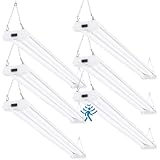

What to Look For in a Workshop Storage Light
Start with brightness. Small bins and shallow cabinets usually need 100 to 300 lumens. A deep pantry-style cabinet or a 6-foot-wide shelving bay is easier to use with 300 to 800 lumens. More light is not automatically better: a bare high-output LED mounted at eye level can produce glare on white labels and polished tools.
Look for a beam spread of roughly 100 degrees or more when lighting a shelf or cabinet interior. Narrow spot beams leave the front of one shelf bright while the back remains dark. A frosted diffuser spreads light more evenly and reduces harsh reflections.
The motion sensor should detect movement at the distance where you will actually reach for tools. Passive infrared (PIR) sensors are common and use little power, but they detect body movement better than a slow hand. Microwave sensors detect through some thin materials and can be overly sensitive in a crowded shop. For a cabinet or short aisle, PIR is usually the safer choice.
A useful timeout range is 30 seconds to 5 minutes. Thirty seconds saves battery power but becomes irritating when you are reading labels or organizing fasteners. Two minutes is a practical starting point. Choose a unit with a manual-on mode if you may spend several minutes working inside a cabinet without much movement.
Best Light Types by Storage Location
| Storage location | Best light type | Useful output | Main trade-off |
|---|---|---|---|
| Small cabinet or drawer bank | Rechargeable LED bar or puck | 100–300 lumens | Needs regular charging |
| Open shelving | Motion-sensing LED bar | 300–800 lumens | Sensor may trigger from nearby activity |
| Tall tool cabinet | Magnetic or adhesive LED strips | 200–500 lumens per level | Multiple lights and wires may be needed |
| Lumber rack or utility aisle | Hardwired LED shop light with sensor | 800–2,000 lumens | More installation work |
| Dusty or cold storage area | Sealed, hardwired LED fixture | 800 lumens or more | Higher purchase cost |
The Best Options for Most Workshops
For a cabinet, begin with a rechargeable motion-sensor LED light bar. Mount it near the front edge of the cabinet ceiling, not against the back wall. That position lights labels and your hands instead of casting a shadow across the contents. Magnetic mounting is convenient on steel cabinets, but adhesive-backed metal plates are useful for wood shelving.
Rechargeable bars are a good value when the light is used for a few minutes per day. Expect charging intervals to vary widely: a small 500 mAh battery may last weeks in a lightly used cabinet, while a high-output bar used dozens of times daily may need charging every few days. Battery runtime claims are usually based on short activations at low brightness.
For open shelves, compare motion-sensor LED shop light bars with a wide diffuser. Put one light under each major shelf level rather than relying on one fixture above the entire rack. This costs more, but it prevents the upper shelf from blocking light from the lower shelf.
If the storage aisle is used constantly, a hardwired fixture is usually better than a collection of rechargeable lights. A ceiling-mounted LED strip or shop light can illuminate both the storage and the walking path. Select a fixture rated for the temperature and dust conditions in the space, and use a properly grounded connection. If you are extending branch-circuit wiring, follow local electrical rules or hire an electrician.
Installation Details That Prevent Annoyance
Mount the sensor where it sees the approach to the storage, not where it only sees movement after the door is open. For a cabinet, place the sensor near the opening and angle it toward the user. For a rack aisle, aim it across the path rather than straight down the aisle. PIR sensors generally respond better to movement across their field of view than movement directly toward them.
Keep the light away from dust-collection blast gates, abrasive wheels, and areas where chips strike the fixture. Fine dust can coat the diffuser and reduce brightness. In a woodworking shop, wipe the lens occasionally and avoid placing a vented light directly in the dust stream. A sealed fixture is worth considering near a sander or router table.
Do not rely on a motion light as the only illumination for stairs, exits, or areas where a dropped tool could create a trip hazard. Storage lights are task aids, not emergency lighting. Maintain normal overhead lighting so the shop remains safe if a battery is dead or a sensor fails.
Common Failure Modes
False triggering is the most common complaint. A sensor may react to a swinging cabinet door, vibration, a nearby heating vent, or movement in an adjacent aisle. Reduce the detection angle, move the fixture, or use a unit with adjustable sensitivity. If the light stays on continuously, check whether the sensor is seeing a reflective surface or a moving object.
Short battery life often comes from a timeout set too long or brightness set to maximum. A five-minute timeout can use ten times as much energy as a 30-second setting during frequent brief visits. Set the light to two minutes first, then increase it only if it shuts off while you work.
Adhesive failures are common on dusty plywood and unfinished lumber. Clean the surface with isopropyl alcohol, let it dry, and use screws or a mechanical bracket for heavy fixtures. Do not trust adhesive alone above a bench where a falling light could damage tools or injure someone.
What I Would Buy
For one or two cabinet interiors, a rechargeable LED bar is the sensible low-cost choice. For a complete wall of shelving, use multiple plug-in or hardwired bars with adjustable sensors; the higher initial cost pays back in consistent light and less charging. For a dusty, cold, or heavily used storage aisle, choose a sealed hardwired LED fixture and put its switch where it can be reached even if the sensor fails.
Also consider rechargeable magnetic closet lights for temporary storage, rental spaces, or cabinets that may be rearranged. They are not as durable as wired fixtures, but the cheaper option is fine when the light runs for only a few minutes a week and easy relocation matters more than maximum brightness.