
What's inside
As an Amazon Associate I earn from qualifying purchases. This post may contain affiliate links at no extra cost to you.
Most people who buy a sewing machine are not fashion designers. They are mending a hem, patching a pair of jeans, or helping a child finish a school project. The problem is that the market is flooded with machines priced for professionals, loaded with features those buyers never touch. A simple sewing machine should do one thing well: run a straight stitch and a basic zigzag without frustration.
What separates the best simple sewing machines from the rest is not stitch count. It is thread tension reliability, the quality of the included accessories, and whether the machine can be threaded by someone who has never seen a bobbin case before. We compared published specifications, list prices, and recurring owner feedback across these eight models to identify which ones actually deliver on the basics. In 2026, the gap between a good beginner machine and a disappointing one is still measurable in how quickly a new sewer gives up.
As an Amazon Associate we earn from qualifying purchases at no extra cost to you.



Quick Picks
| Product | Best for | Price |
|---|---|---|
| Brother XM2701 | Best overall balance of features and reliability | $149 |
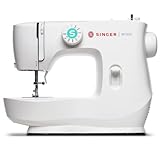
| SINGER M1500 | Lightweight portability with brand trust | $119.99 |
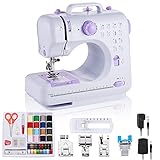
| Rxmeili Portable | Lowest price with a full starter kit | $49.99 |
| Compact 12-Stitch Portable | Families with multiple young users | $39.99 |
| Eco-Friendly Mini | Gift buyers prioritizing sustainable materials | $45.99 |
| 12-Stitch Starter Kit | Complete kit at the lowest bundle price | $43.99 |
| Dual Speed Mini | Kids and adults sharing one machine | $42.99 |
| Brother FB1757X | Those who want mechanical simplicity without gimmicks | $119.99 |
How We Picked
We filtered this category on four criteria: ease of threading (the single biggest complaint driver in owner reviews for beginner machines), included accessory completeness relative to price, whether the stitch selection is genuinely useful versus padding a spec sheet, and physical portability for people with limited workspace. A machine that wins on specs but frustrates a first-time sewer fails the one test that matters most in this segment.
The 8 Best Simple Sewing Machines in 2026
Brother XM2701
This model earns the top spot because it bridges the gap between toy-grade machines and full-size workhorses. With 27 built-in stitches, it covers mending, crafts, and light garment projects without requiring the user to upgrade within a year. The automatic needle threader is a genuine quality-of-life feature that owners consistently praise in long-term reviews. The dual-speed capability lets beginners go slow on curves and speed up on straight seams.
- Pro: Automatic needle threader removes the most common beginner frustration
- Pro: 27 stitches provide enough variety to avoid a premature upgrade
- Con: Heaviest in this lineup, which limits true portability
Skip this if you need a machine you can store in a drawer or carry to a class. The weight and footprint are closer to a full-size machine than a portable one.
SINGER M1500
Singer has over a century of brand recognition in home sewing, and the M1500 leverages that trust with a genuinely lightweight build. At under eight pounds, it is one of the easiest machines to move between rooms. The included accessory kit is more comprehensive than competitors at similar prices, covering bobbins, needles, and presser feet. Owners frequently note that the machine handles denim layers better than expected for its size.
- Pro: Exceptionally light for a branded machine with this stitch range
- Pro: Accessory kit includes multiple presser feet not standard on rivals
- Con: Fewer built-in stitches than the Brother XM2701
Skip this if you plan to sew anything thicker than quilting cotton regularly. The motor is adequate but not powerful enough for sustained heavy fabric work.
Rxmeili Portable
At under fifty dollars, this is the cheapest entry point that still includes a functional 42-piece kit. The 12-stitch selection covers straight, zigzag, and a handful of decorative patterns sufficient for craft projects and basic repairs. The dual-speed switch is unusual at this price point and gives parents confidence when letting children operate the machine. Owner feedback centers on value rather than performance, and the machine earns that reputation honestly.
- Pro: Best price-to-accessory ratio in the entire lineup
- Pro: Dual-speed control is rare below the fifty-dollar threshold
- Con: Thread tension mechanism is less consistent than branded alternatives
Skip this if you have zero sewing experience and need reliable threading without adjustment. The tension system requires a learning curve that a first-timer may not expect.
Compact 12-Stitch Portable
This machine targets households where multiple people need access to a single sewing setup. The 32-color thread kit is oversized relative to the machine itself, making it practical for classroom or family craft use. The extension table adds a stable work surface that compensates for the small footprint. LED lighting on the needle area is a feature typically reserved for machines twice this price.
- Pro: Extension table and LED light make the workspace feel more complete
- Pro: Thread variety in the kit eliminates a common early purchase
- Con: Reverse sewing function is noted by some owners as less precise than forward stitching
Skip this if you are the only user and prefer a minimal kit. The bulk of extra thread colors and accessories adds clutter you will not use.
Eco-Friendly Mini
For gift buyers who want a machine that aligns with sustainability values, this model stands out for its eco-friendly material construction. The dual-speed control and extension table bring it in line with similarly priced competitors on functionality. The marketing leans heavily into the gift angle, and the packaging reflects that positioning. Owners report that the machine performs comparably to non-eco alternatives at the same tier, so sustainability does not come at a functional cost.
- Pro: Material choice is a differentiator no other machine in this list offers
- Pro: Gift-ready presentation reduces extra wrapping or box purchases
- Con: Brand recognition is minimal, which can affect long-term support expectations
Skip this if you prioritize a known brand with a parts supply chain. Eco-credentials are a bonus, not a substitute for service availability.
12-Stitch Starter Kit
This model is the most explicit attempt at a complete beginner bundle. Twelve built-in stitches, an extension table, assorted needles, and a thread kit all ship in one package. The age-range callout (adults and kids eight to twelve) signals that the machine is tuned for light, short sessions rather than extended projects. The included kit content is generous enough that a buyer rarely needs to shop for supplies immediately after unboxing.
- Pro: Truly complete out-of-box experience with no immediate add-on purchases
- Pro: Extension table is sturdier than the thin plastic ones on budget rivals
- Con: Stitch quality on dense fabrics is the first thing owners complain about
Skip this if your project list includes anything beyond craft felt, light cotton, or felted wool. The motor and feed mechanism are tuned for thin materials only.
Dual Speed Mini
The foot pedal inclusion at this price is the headline feature. Most machines under forty-five dollars rely on a hand-operated speed control, which is awkward for anyone who has used a traditional pedal before. The dual-speed toggle plus full kit makes this a practical shared machine for a parent and child. The extension table rounds out a workspace that is usable without extra furniture.
- Pro: Foot pedal operation mirrors what users expect from larger machines
- Pro: Full kit plus pedal at this price undercuts most competitors
- Con: Build quality is visibly lighter than machines above fifty dollars
Skip this if you plan to sew more than twice a week. The construction suggests a lifespan suited to occasional use rather than regular practice.
Brother FB1757X
This mechanical model strips away digital features and returns to a direct-drive stitch selection dial. For buyers who distrust electronics in small appliances or want a machine that will not fail due to a firmware issue, this is the answer. Brother’s mechanical reputation is built on fewer moving parts and straightforward repair. The trade-off is that stitch variety is limited compared to the XM2701, and there is no automatic needle threader.
- Pro: Mechanical simplicity means fewer failure points over years of use
- Pro: Backed by Brother’s parts network and long service history
- Con: Manual needle threading adds friction for absolute beginners
Skip this if you want modern conveniences like automatic threading or a large stitch library. This machine rewards users who value reliability over features.
Buying Guide
Thread Tension and Bobbin Systems
The bobbin is the component that frustrates new sewers more than anything else. Drop-in front-loading bobbins are easier to insert and check than rear-loading cases. Look for a machine that includes a spare bobbin set in its kit. Inconsistent top-and-bottom thread lock creates bird-nesting under the fabric, which is the primary reason beginners abandon a cheap machine within a month.
Stitch Count Versus Stitch Quality
A machine with 27 decorative stitches is not objectively better than one with twelve if the twelve are clean and repeatable. Prioritize models where the straight stitch and zigzag are the defaults rather than buried in a selection dial. Owners of budget machines with high stitch counts frequently report that decorative patterns require tension re-adjustment every time they switch, which defeats the purpose of variety.
Kit Completeness and Hidden Costs
A thirty-dollar machine that requires twenty dollars of accessories is a fifty-dollar machine with worse reviews. Compare the total kit content: bobbins (count), needle variety (sizes and types), thread colors, and whether a seam ripper is included. The machines in this list that bundle 40-plus piece kits consistently earn better long-term owner sentiment than bare-bones alternatives sold at similar prices.
Our Verdict
Top pick: The Brother XM2701 is the best simple sewing machine for most buyers who want one device that grows with them without jumping to a professional tier. Budget pick: The Rxmeili Portable at $49.99 delivers the most complete beginner experience per dollar spent. Condition where another wins: If you only sew with children under twelve and need a foot pedal, the Dual Speed Mini at $42.99 is the better purchase despite lower build quality, because the pedal fundamentally changes how a child operates the machine.
FAQ
Can a simple sewing machine handle denim or upholstery fabric?
Occasional layers of denim are manageable on most machines in this list, but sustained sewing on upholstery-weight fabric will strain the motor and skip stitches. A dedicated heavy-duty machine is the right tool for that job.
How many stitches does a beginner actually need?
Three: straight, zigzag, and one decorative option for buttonholes or light embellishment. Everything beyond that is a convenience, not a requirement, and rarely used in the first year of ownership.
Are these machines safe for children to use alone?
Machines with a speed limiter or a maximum speed cap are safer for supervised young users, but no sewing machine should be used without adult oversight by a child under ten. The dual-speed models in this list give parents more control over initial sessions.
What is the realistic lifespan of a budget portable sewing machine?
With occasional use (a few hours per month), owners of these models commonly report three to five years before tension or feed issues arise. Daily use shortens that window significantly.