Key takeaways
- Table saws with flesh-sensing cut protection: how the brake system works, what it does not replace, and the compact and cabinet saws that offer it.
What's inside
As an Amazon Associate I earn from qualifying purchases. This post may contain affiliate links at no extra cost to you.
Cut protection here means one thing: an active system that senses skin contact with the spinning blade and stops the blade before the contact becomes a serious injury. That is a hard criterion, and it deliberately excludes the passive guards every table saw carries — blade guards, riving knives and anti-kickback pawls reduce risk but neither detect contact nor stop the blade. The buying decision is whether that active layer is worth organising your purchase around, and which saw class beneath it fits your work.

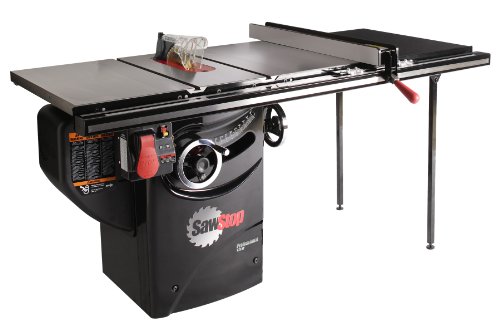
Only one technology family currently meets that criterion among table saws sold on Amazon US: the flesh-sensing brake system built into every SawStop saw, which the listings describe as stopping and retracting the blade on skin contact. Rival systems from other brands are discontinued or not currently verifiable as Amazon US listings, so this guide accepts a short pool rather than loosening the criterion. Both picks state the safety system on their listings; what separates them is size, power and fence.
Quick Picks
As an Amazon Associate we earn from qualifying purchases.
| Product | Best for | Key spec from title |
|---|---|---|
| SawStop CTS-120A60 Compact Table Saw | Small shops and teaching spaces wanting active protection | 10 in. compact saw, 15 Amp, flesh-sensing brake |
| SawStop PCS175-TGP236 Professional Cabinet Saw | Full-time cabinet work with active protection | 1.75 HP cabinet saw, 36 in. T-Glide fence |
How to Choose
What Counts as Cut Protection
Start by separating active protection from ordinary guarding. An active system monitors the blade for the electrical signal of skin contact and fires a brake that stops the blade and drops it below the table in milliseconds; the listing for the cabinet saw below states the blade stops on contact in under 5 milliseconds. A blade guard, riving knife and pawls are passive: essential, but they rely on you using them correctly every time. When you compare saws, ask one question — does the listing describe a contact-sensing brake? If it only lists a guard assembly, the saw does not meet this guide’s criterion.
What Happens After the Brake Fires
The brake works by driving an aluminium block into the blade, which destroys the blade and the brake cartridge in the process of saving your hand. That means every activation, including a false one triggered by very wet or conductive material, costs you a replacement cartridge and blade before the saw cuts again. Factor a spare cartridge into the purchase, and learn the system’s bypass mode, which lets you test questionable material and cut conductive stock with the sensing temporarily disabled. Neither cost is a reason to avoid the technology, but both belong in an honest buying decision.
Saw Class Still Decides Daily Usefulness
The protection system is identical in principle across the range, so your daily satisfaction comes from the saw underneath it. The compact model here is a 79 lb portable machine with a 24-1/2 in. rip capacity and a rack-and-pinion fence, suited to small shops and site work. The cabinet model is a stationary 1.75 HP machine with a 36 in. T-Glide fence, gas-piston blade elevation and the flatness and mass that fine furniture work rewards. Choose the class by the work you actually do: protection does not make a compact saw rip like a cabinet saw, or a cabinet saw portable.
Protection Supplements Guarding; It Never Replaces It
A flesh-sensing brake is the last line of defence, not the first. Both listings here include the conventional equipment — blade guard with spreader, anti-kickback pawls, riving knife and push stick — and that equipment should stay fitted and used, because the brake only acts after contact has already happened. Keep push sticks at the saw, keep the guard on for every cut it fits, and treat the brake as insurance for the one moment attention slips. Shops teaching beginners benefit most from this layered view: the technology forgives a mistake, but the habits are what prevent it.
The 2 Best Options
SawStop CTS-120A60 Compact Table Saw
The CTS-120A60 puts the flesh-sensing brake into a compact, 79 lb saw that one person can move and store, which makes active cut protection realistic for garage shops, school workshops and small professional spaces that could never house a cabinet saw. It rips 24-1/2 in. to the right of the blade, uses a rack-and-pinion fence for repeatable settings, and arrives with the brake cartridge installed alongside the full guard assembly. If protection is your priority and floor space is your constraint, this is the saw that resolves the conflict.
Specs
- Blade: 10 in., alloy steel
- Power: 15 Amp, 120V, 60Hz
- Weight: 79 lbs
- Rip capacity: 24-1/2 in.
- Fence: rack-and-pinion
- Included: 24-tooth ripping blade (installed), blade guard with spreader and anti-kickback pawls, brake cartridge (installed), miter gauge, push stick, riving knife (installed), table saw insert (installed), 2 blade wrenches
- UPC: 857555005581
Best for: Small shops, teaching workshops and home woodworkers who want active cut protection in a portable saw.
Watch out for: The brake cartridge and blade are single-use in an activation, so budget for a spare cartridge from day one.
ASIN: B0B2TJFH24
SawStop PCS175-TGP236 Professional Cabinet Saw
The PCS175-TGP236 is the full cabinet-saw expression of the same protection: a 1.75 HP motor running on 110V, a heavy 36 in. T-Glide fence system, and a table machined to furniture-making tolerances, with the flesh-sensing brake watching the blade throughout. It suits shops where the saw is the centre of daily production and an injury would be both a human and a business catastrophe. The 110V supply keeps it within reach of shops without 220V wiring, and the fence and trunnion quality are what you feel in every cut long after the safety decision is made.
Specs
- Motor: 1.75 HP
- Power: 110V, 14 Amp (configurable to 220V)
- Blade: 10 in.
- Arbor speed: 4,000 RPM
- Fence: 36 in. Professional T-Glide fence system
- Safety system: patented brake stops the blade on skin contact in under 5 milliseconds
- Assembled dimensions: 69-1/8 in. W x 33 in. D x 34 in. H
Best for: Professional and serious amateur cabinet shops that want cabinet-saw capacity with active cut protection.
Watch out for: This variant carries the 36 in. fence; a 52 in. version exists under a different listing, so confirm the TGP236 configuration before ordering. It is also a heavy freight delivery sold through third-party sellers on Amazon.
ASIN: B009C7NF0Y
Which One Fits Your Situation
You Run a Small Shop or Teach Beginners
Choose the SawStop CTS-120A60. Teaching environments and shared shops are exactly where attention varies most, so the brake earns its keep, and the compact body stores out of the way between sessions. Its 24-1/2 in. rip capacity handles typical class and hobby projects, and the rack-and-pinion fence keeps setup simple for less experienced users.
You Make Furniture or Cabinets Full-Time
Choose the SawStop PCS175-TGP236. The T-Glide fence, cabinet mass and 1.75 HP motor are production equipment, and the brake protects the hands your business depends on. The 110V supply suits shops without heavier wiring, and the 36 in. fence covers carcass work without the floor space the wider variant demands. This is the long-term, buy-once version of the protection decision.
You Cut Wet or Conductive Material Regularly
Either saw’s bypass mode matters to you, because the sensing system can interpret very wet lumber or conductive material as skin contact. Learn the test procedure before the first suspect board: make a test cut in bypass, check the system’s feedback, then decide how to proceed. Between the two, the cabinet saw’s workflow suits a shop that does this often, while occasional users are well served by the compact model.
You Want Protection but Your Budget Is Firm
Start with the CTS-120A60 rather than skipping protection altogether. It carries the same sensing principle as the cabinet saw in a machine that costs a fraction as much to buy, ship and house, and its capacity covers the majority of home and small-shop work. You can move to a cabinet saw later knowing the safety habit — and the spare-cartridge routine — is already established in your shop.
Common Mistakes
- Assuming any saw with a good blade guard has “cut protection” in the active, contact-sensing sense used here, when the listing describes nothing more than the standard guard assembly every saw ships with.
- Removing the guard and riving knife because the brake exists; the brake acts only after contact has already happened, while the guard and knife are what prevent that contact in the first place.
- Forgetting that an activation consumes the brake cartridge and the blade, and having no spare on the shelf when a project is mid-cut and the nearest replacement is days away.
- Cutting soaking-wet or conductive stock without using bypass test mode first, then blaming the saw for a false activation that a thirty-second test cut would have predicted and prevented.
- Buying the cabinet saw for a space it cannot fit, or the compact saw for production ripping it was not built to sustain.
Frequently Asked Questions
Does Cut Protection Mean I Can Remove the Blade Guard?
No. The brake reacts after skin reaches the blade, while the guard exists to keep skin from reaching it at all. Both listings here include a full guard assembly, spreader and riving knife, and they should stay fitted for every cut they accommodate. The brake is insurance for a lapse, not a substitute for the guarding that prevents the lapse from mattering.
What Happens When the Brake Triggers by Mistake?
Very wet wood, foil-faced materials and other conductive stock can trigger the system. The saw stops and the cartridge and blade are spent, exactly as in a genuine activation. The bypass mode exists for this: it lets you test a suspect material with sensing paused and read the system’s response before committing to the cut, which turns most false activations into a quick check instead of a ruined blade.
Does the Safety System Work With Dado Blades?
A wider dado stack needs its own matching brake cartridge, which SawStop sells as a separate accessory, because the standard cartridge is sized for a single blade. Swap the cartridge when you swap to the dado set, and swap back afterwards. Forgetting the change leaves the system unable to stop the wider stack correctly, so treat the cartridge as part of the blade change, not an optional extra.
Can the Protection System Be Switched Off?
Yes, through the bypass mode intended for testing and cutting conductive materials. In bypass, the saw runs without contact sensing for that session, so it should be a deliberate, per-task choice rather than a habit. Used properly — test first, cut second — bypass is part of how the system handles real workshop materials without false stops.
Related guides
More from Amazon
Programs that pair well with the guide above. Offers and eligibility are set by Amazon and may change.
A free business account with business pricing and bulk-buying tools for work, shop or home office.
Create a business accountFree shipping on eligible items, Prime Video and more. Eligible new members can start with a free trial.
Start a Prime free trialAudiobooks and podcasts to listen to on the go. Eligible new members can start with a free trial.
Try Audible freeAd-free music streaming. Eligible new subscribers can start with a free trial.
Try Music Unlimited freeAs an Amazon Associate we earn from qualifying purchases.