
What's inside
- CNC router vs mill: the key differences
- Cutting materials: where each machine is comfortable
- Spindle power is not the same as cutting ability
- Rigidity, accuracy, and realistic tolerances
- Work envelope and workshop space
- Tooling and ownership costs
- Decision matrix: which machine fits your situation?
- Durability and maintenance realities
- Final recommendation
- Related Guides
As an Amazon Associate I earn from qualifying purchases. This post may contain affiliate links at no extra cost to you.
Choose a CNC router for large wood, plastic, sheet-goods, and occasional aluminum work; choose a CNC mill when metal accuracy, rigidity, and repeatable small-part production matter more than cutting area.
The choice in a cnc router vs mill comparison is less about which machine is “better” and more about the forces, materials, tolerances, and job sizes your workshop must handle. Both use computer-controlled toolpaths, but they are designed around different priorities: routers emphasize speed and work-envelope size, while mills emphasize stiffness, controlled cutting, and accuracy.
As an Amazon Associate we earn from qualifying purchases at no extra cost to you.
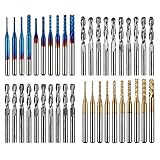

CNC router vs mill: the key differences
| Characteristic | CNC router | CNC mill |
|---|---|---|
| Typical work envelope | 600 × 400 mm to 1,300 × 800 mm; larger machines are available | 200 × 150 mm to 760 × 400 mm on common benchtop and compact models |
| Typical spindle power | 0.75–3.0 kW; compact trim-router systems may be 0.7–1.5 kW | 0.75–5.6 kW on benchtop and compact machines |
| Typical spindle speed | 8,000–24,000 rpm | 1,000–10,000 rpm, often with more torque at low speed |
| Frame and guide style | Aluminum extrusion or welded frame; gantry moves across the work | Cast-iron or heavily braced frame; shorter, more constrained tool path |
| Best materials | Wood, plywood, MDF, plastics, foam, composites, and light aluminum | Aluminum, steel, brass, stainless steel, plastics, and small wood parts |
| Typical practical accuracy | About ±0.05–0.20 mm after careful setup, depending on frame and material | About ±0.01–0.05 mm on a properly maintained compact machine |
| Approximate machine price | About $1,000–$8,000 for hobby and prosumer machines, before accessories | About $2,500–$15,000 for compact and benchtop machines, before tooling |
These are useful buying ranges rather than guarantees. A rigid, well-calibrated router can outperform a poorly assembled mill, and actual accuracy depends on backlash, thermal changes, workholding, cutters, feeds, and operator setup.
Cutting materials: where each machine is comfortable
Wood, plywood, and sheet goods
A CNC router is the natural choice for cabinet parts, signs, guitar templates, joinery, carving, nested plywood components, and furniture panels. Its open bed and long X-axis can accept a full or partial 4 × 8-foot sheet, depending on the model. High spindle speeds also suit carbide router bits and the relatively high feed rates used in wood.
A mill can cut wood, but its smaller table, enclosed layout, and lower-speed tooling make it inefficient for large panels. It is better suited to small wooden components, prototype parts, or mixed-material work where metal is the primary concern.
Aluminum and nonferrous metals
Both machines can cut aluminum, but the difference is rigidity. A router may produce good results in thin aluminum plate when using a sharp single-flute cutter, shallow stepdowns, firm workholding, and conservative feeds. Expect more noise, burrs, and dimensional variation if the gantry flexes.
A mill is the stronger choice for pockets, threaded holes, precision fits, and repeated aluminum parts. Its shorter tool overhang, heavier frame, and more constrained axes resist cutting forces more effectively.
Steel and stainless steel
For regular steel cutting, choose a mill. A typical woodworking router is not designed to absorb the lateral forces or heat generated by steel machining. A router may engrave coated steel or perform very light operations with specialized equipment, but it should not be treated as a general steel machine.
Spindle power is not the same as cutting ability
Router specifications often show higher rpm and substantial wattage, but spindle power alone does not determine performance. A 2.2 kW router spindle may remove wood quickly because wood allows high feed rates, yet still struggle with a deep aluminum pocket if the frame vibrates.
Mills usually deliver their advantage through rigidity and torque rather than headline rpm. The machine holds the cutter more steadily, so a smaller cutter can maintain a predictable engagement with the material. This improves surface finish, hole size, and tool life.
For woodworking, a 1.5–2.2 kW spindle is ample for many hobby and small-shop jobs. For metalworking, prioritize a rigid frame, low-speed torque, controlled acceleration, coolant or chip management, and a proper tool-holding system before paying extra for maximum spindle power.
Rigidity, accuracy, and realistic tolerances
Router gantries are long by design. That makes them productive for broad surfaces but more sensitive to twisting, uneven spoilboards, loose V-wheels or linear bearings, and tool deflection. Cutting near the center of a large gantry can produce a different result from cutting near the side if the structure is not well braced.
Mills generally have less moving structure between the cutter and the work. Cast iron, box ways, ball screws, and a compact Z-axis help them maintain dimensions during heavier cuts. That does not make a mill automatically accurate: backlash, worn bearings, poor squaring, and incorrect tool offsets can still ruin a part.
As a practical rule, a router is usually the better fit when your dimensions can tolerate roughly a tenth of a millimeter or more and the part is large. A mill is worth the added cost when holes, pockets, press fits, bearing seats, or mating parts must remain consistent within a few hundredths of a millimeter.
Work envelope and workshop space
Measure the material you actually use, not just the machine’s advertised travel. A 600 × 400 mm router may be ideal for signs and small furniture parts but unsuitable for cabinet sides. Leave room for the gantry, dust hose, controller, spoilboard access, and safe loading around the machine.
A mill may occupy less floor area, but its weight can be substantial. A compact metal-cutting mill weighing 300–1,000 kg may require a reinforced stand or workshop floor, while a hobby router may weigh 25–150 kg. Enclosures, chip trays, coolant systems, and a rigid bench can significantly increase the space requirement.
Tooling and ownership costs
Router tooling is comparatively inexpensive. Carbide end mills and compression bits commonly cost about $15–$60 each, and a small wood-focused starter set may cost $100–$250. Dust extraction is essential for MDF and helpful for nearly every woodworking job.
Mill tooling can cost more because you may need collets, an end-mill holder, drills, boring tools, chamfer tools, edge finders, workholding, and measuring equipment. A realistic initial tooling budget is often $300–$1,500, excluding premium automatic tool changers. Metal cutting may also require flood or mist coolant, chip control, and more frequent cleaning.
Consider a simple cost-per-use calculation. If a router costs $3,000, accessories cost $700, and you complete 100 jobs in three years, the equipment portion is $37 per job before bits, electricity, and maintenance. If a mill costs $7,000 with $1,500 in tooling but completes only 40 precision jobs, the equivalent is $212.50 per job. The mill may still be the right purchase if outsourcing those jobs costs more or if accuracy creates business value.
Decision matrix: which machine fits your situation?
| Your situation | Better starting choice | Why |
|---|---|---|
| Mostly signs, cabinetry, carving, or plywood | CNC router | Large bed, fast wood cutting, lower tooling cost |
| Small aluminum brackets and occasional metal prototypes | Rigid CNC router or light mill | Choose based on tolerance, not material alone |
| Steel parts, bearing fits, or threaded production holes | CNC mill | Rigidity and controlled metal-cutting forces are decisive |
| Limited budget and beginner experience | Small CNC router | Simpler workholding and less expensive mistakes |
| Frequent production of large panels | Large CNC router | Sheet capacity and nesting efficiency matter most |
| Very limited floor space but precision is essential | Compact CNC mill | Smaller envelope with better control of cutting forces |
| Occasional weekend use with varied materials | Router first, outsource difficult metalwork | Lower ownership burden and broader woodworking usefulness |
Durability and maintenance realities
On a router, spoilboards wear first. Replace or resurface them when they are no longer flat, and periodically check gantry squareness, belt tension, lead screws, linear bearings, and spindle runout. Dust packed into bearings or electronics can cause problems long before the motor itself fails.
On a mill, chips and coolant are the persistent enemies. Clean ways and ball screws after use, lubricate according to the manufacturer’s schedule, inspect wipers, and keep chips away from encoders and switches. Cutting tools dull faster when feeds are too slow, the cutter rubs instead of cutting, or chips are recut in a pocket.
Common mistakes on both machines include using excessive tool stick-out, clamping thin work inadequately, skipping a spoilboard surfacing pass, ignoring workholding vibration, and assuming a programmed dimension equals a finished dimension. Make test cuts, measure them, and apply tool or axis compensation before committing expensive material.
Final recommendation
For most woodworking workshops, start with a CNC router: it offers the useful combination of large capacity, affordable tooling, fast cutting, and approachable operation. Select a CNC mill instead when your central work involves metal, tight fits, repeatable small parts, or tolerances that a flexible gantry cannot reliably hold.
The answer to cnc mill vs router is therefore practical: buy the machine that matches your hardest recurring job, not the machine with the most impressive specification sheet. If your projects split evenly between large woodwork and precision metalwork, choose based on which task would be most expensive or impossible to outsource later.