What's inside
As an Amazon Associate I earn from qualifying purchases. This post may contain affiliate links at no extra cost to you.
Matching a stain, clear coat or repair patch depends on seeing color accurately. A board can look like a close match under one shop light and turn orange, gray or green when it reaches a customer’s room. High-CRI lighting can reduce that surprise, but it does not make every color judgment reliable. Light color, brightness, fixture placement and the finish itself all matter.
For finish work, a sensible setup is high-CRI light at the bench plus a check under the lighting where the piece will live. Standard LED fixtures remain useful for general shop tasks and can be the right choice if you rarely match colors.
As an Amazon Associate we earn from qualifying purchases at no extra cost to you.

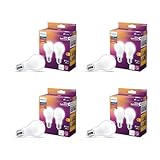


What CRI measures—and what it misses
CRI, or Color Rendering Index, rates how a light source renders a set of test colors compared with a reference source. The scale tops out at 100. A standard shop LED may be rated around CRI 80; high-CRI options commonly reach 90 or higher. That higher rating generally means colors look more natural and distinctions between similar hues are easier to judge.
CRI is not a guarantee that a lamp will show every wood tone correctly. The common CRI score averages a limited set of colors and does not fully describe how a source renders deep reds, which can matter when evaluating cherry, mahogany and some stains. If the manufacturer publishes an R9 value, a higher positive value is useful for color-critical work. Treat these numbers as selection clues, not a substitute for checking a sample under the actual light.
Color temperature is a separate specification. It describes whether a light appears warm or cool, measured in kelvins (K). A 5000K lamp can have high CRI, but it is not automatically more accurate than a 3000K lamp. For a workshop, 4000K to 5000K is a practical range: neutral enough for inspection without the strongly warm appearance of lower-temperature light. Consistency between fixtures matters more than choosing one exact number.
High-CRI and standard LEDs compared
| Factor | High-CRI LED | Standard LED |
|---|---|---|
| Typical CRI | 90 or higher | About 80 |
| Color judgment | Usually better for comparing stain and finish samples | Fine for general work; close shades may be harder to separate |
| Cost and availability | Often costs more; check specifications before buying | Usually inexpensive and widely available |
| Best use | Finishing bench, sample checks, color-critical inspection | Storage areas, rough work, general illumination |
| Main limitation | Still cannot predict how a finish will look under every room light | May conceal or distort subtle color differences |
Where high CRI earns its cost
High-CRI lighting is most useful when you compare adjacent colors: two oak stains, a new finish beside aged wood, or a repair patch against the original surface. It also helps when applying a clear finish that changes the wood’s appearance. Oil-based finishes often deepen and warm color; water-based products may change it less, but can still alter how grain and tone look.
Put the better light where you make those decisions, not necessarily throughout the shop. A high-CRI task light over a finish bench can be a more economical upgrade than replacing every ceiling fixture. Compare a high-CRI LED shop light or high-CRI workbench light by checking CRI, color temperature, brightness and whether the stated rating applies to the complete fixture.
For ceilings, brightness still matters. As a starting point, aim for roughly 500 lux at the bench for general work and 750 to 1,000 lux for close inspection. Lux measures light reaching the surface; lumen output on a product box does not tell you the lux at the workpiece. Distance, beam spread, fixture angle and shadows all affect it. A light meter app can give a rough reading, but a dedicated meter is more dependable.
Set up light for a fair comparison
Use broad, even illumination rather than relying on a single bright bulb directly overhead. Hard, directional light can create glare on varnish and make one part of a board appear lighter than another. Position a task light at an angle that reveals grain without reflecting straight into your eyes. If a finish sample looks different as you move it, glare may be influencing the comparison.
Check samples on the same wood species and, when possible, from the same board. Sand them to the same grit—often 180 or 220, depending on the product instructions—and apply the same number of coats. A stain applied to rougher or more absorbent wood can look darker, even if the color and lighting are identical. Label samples, allow finishes to dry or cure as directed, and compare them side by side rather than relying on memory.
Do not mix several lamp types over the bench if accurate comparison is the goal. A 3000K ceiling lamp and a 5000K task lamp can make the same sample look different at once, a problem called mixed lighting. Keep the fixtures similar in color temperature and rendering quality in the finishing area. Also avoid judging color under a dirty diffuser or a lamp that has noticeably shifted with age.
When standard LEDs are the better buy
For sawing, assembly, sanding and finding tools in storage, standard CRI 80 LEDs are usually adequate. They cost less, are easy to find in common shop-light formats, and provide plenty of usable illumination. If you rarely stain wood or match repairs, spending extra on high CRI across the entire shop may not deliver much value.
Even for finishing, standard lighting can be workable if you keep a portable high-CRI lamp for sample checks or take the piece to a room with representative lighting. The trade-off is convenience: carrying samples around takes time, and a room’s daylight changes through the day. A standard 4000K LED shop light is a reasonable general-purpose choice when color matching is occasional rather than routine.
Verify before finishing the whole piece
Make a test board and inspect it under your bench light, then under the intended room light and natural daylight if the furniture will sit near a window. A match that works only under one lamp is not a dependable match. If the colors disagree, adjust the stain or finish on the sample—not on the finished piece—and repeat the check.
High CRI improves the information your eyes receive; it cannot account for different wood grain, absorption, gloss or viewing conditions. Use it where color decisions happen, keep your samples consistent, and reserve cheaper standard LEDs for the rest of the shop. That targeted approach usually gives better matching without turning the lighting budget into a full-shop replacement project.