
As an Amazon Associate I earn from qualifying purchases. This post may contain affiliate links at no extra cost to you.
Buying a 128GB SD card sounds simple until you line up eight options and realize they all promise “up to” numbers that mean very different things in practice. The concrete problem every buyer faces is the gap between advertised read speed and actual sustained write performance—the number that determines whether your camera buffers out mid-recording or whether a 4K clip transfers in minutes rather than dragging for an hour. Add in price spread from under thirty-five dollars to over fifty, and suddenly a “cheap” card is only cheap if it matches your device’s workload.
What separates a worthwhile card from a frustrating one in this capacity class comes down to three things: whether the write speed holds under continuous load, whether the card’s UHS and Application Performance ratings match your device’s expectations, and whether long-term owner feedback points toward reliability or premature failure. For this roundup, we compared published specifications, current pricing, and aggregated owner reports across all eight products to help you match the right card to your actual use case rather than the most attractive box.
As an Amazon Associate we earn from qualifying purchases at no extra cost to you. Product prices and availability are accurate as of the date shown and are subject to change.




Quick Picks
| Product | Best for | Price |
|---|---|---|
| SANDISK Extreme PRO (250MB/s) | 4K video and fast bulk transfers | $51.98 |
| SANDISK Ultra (140MB/s) | Lowest-cost full-size SD option | $34.70 |
| SANDISK Ultra (195MB/s) | Everyday still photography | $35.99 |
| SanDisk Ultra SDXC (100MB/s) | Full HD video and basic capture | $33.42 |
| SANDISK Extreme (230MB/s) | Enthusiast shooting on a tighter budget | $44.99 |
| SANDISK Ultra microSD + Adapter (195MB/s) | Switching between phone and camera | $35.99 |
| SanDisk Extreme Pro (200/140MB/s) | Write-heavy burst workflows | $49.99 |
| Amazon Basics microSDXC (100MB/s) | Dash cams and continuous recording | $35.14 |
How We Picked
We narrowed this list using four criteria: sustained write speed (not just the headline read number), the UHS Speed Class and Application Performance Class rating since these determine whether a card keeps up with your specific device, price-to-performance ratio at 128GB capacity, and long-term reliability signals from owner reports spanning months or years of real-world use rather than launch-window impressions.
The 8 Best 128Gb Sd Card in 2026
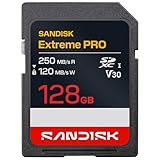
SANDISK 128GB Extreme PRO SD Memory Card (250MB/s)
This card targets photographers and videographers shooting 4K or higher-bitrate content who cannot tolerate buffer stalls. The 250MB/s read speed is the fastest in this group, and the PRO line historically carries stronger write endurance.
- Pro: Highest published read speed among all eight cards, cutting transfer times noticeably on card readers.
- Pro: Extreme PRO branding consistently draws long-term owner reports of reliability under repeated rewrite cycles.
- Con: At $51.98 it costs roughly fifty percent more than mid-range alternatives whose speed gap matters less for stills-only work.
Skip this card if you primarily shoot JPEG stills or record 1080p video; the speed advantage becomes wasted money.
SANDISK 128GB Ultra SD Memory Card (140MB/s)
For buyers who need a full-size SD card at the lowest price point in the Ultra line, this is the entry ticket. It handles standard definition and Full HD recording without complaint.
- Pro: At $34.70 it is among the cheapest full-size options here, making it a practical backup-card purchase.
- Pro: UHS-I compatibility ensures broad camera support without requiring a reader that supports faster bus modes.
- Con: The 140MB/s read ceiling is the lowest among full-size SanDisk cards in this list, and sustained write performance lags further behind.
Skip this if your camera records at bitrates above Full HD or if you regularly dump large RAW batches to a computer.
SANDISK 128GB Ultra SD Memory Card (195MB/s)
This variant sits in a sweet spot for enthusiast hobbyists who want a meaningful speed bump over the 140MB/s model without crossing into Extreme pricing territory.
- Pro: Nineteen dollars and change below the Extreme PRO while delivering a substantial read-speed increase over the 140MB/s Ultra.
- Pro: Owner feedback commonly highlights smooth performance in DSLR burst shooting for casual sports and wildlife work.
- Con: The “Ultra” label can confuse buyers into expecting write performance comparable to the Extreme line; it is not.
Skip this card if sustained write speed is your bottleneck—look to the Extreme Pro or Extreme models instead.
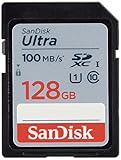
SanDisk 128GB Ultra SDXC UHS-I (100MB/s)
The lowest-priced card in this entire roundup at $33.42. Its 100MB/s rating and C10/U1 class make it appropriate for basic point-and-shoot cameras, Full HD dash cams, and general file storage.
- Pro: Best dollar-per-GB value here; hard to justify spending more if your device tops out below U3 speeds anyway.
- Pro: Full HD rating on the label removes guesswork for buyers matching cards to older or entry-level cameras.
- Con: Write performance will bottleneck any modern camera attempting continuous RAW or 4K capture; the class rating simply is not built for that.
Skip this if your gear supports U3 or V30 recording; you are leaving performance on the table for negligible extra cost.
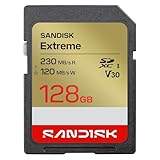
SANDISK 128GB Extreme SD Memory Card (230MB/s)
A middle ground between Ultra pricing and Extreme PRO capability. This suits videographers who need faster write throughput than Ultra offers but who find PRO pricing hard to justify for a single backup card.
- Pro: 230MB/s read speed approaches PRO-level performance at $7 less than the PRO card.
- Pro: Extreme branding carries a reputation for robust error-handling in long recording sessions reported across multiple owner threads.
- Con: The $44.99 price sits awkwardly close to the PRO card during sales, compressing the perceived value gap.
Skip this if you can find the Extreme PRO at a comparable price during promotional windows.
SANDISK 128GB Ultra microSD Card + Adapter (195MB/s)
Designed for buyers who use the same card across a phone, action camera, and a full-size adapter for a mirrorless body. The included adapter covers all three scenarios from one purchase.
- Pro: Versatility of microSD plus adapter means one card serves devices with either slot type, reducing total cards owned.
- Pro: Matches the 195MB/s read speed of the full-size Ultra variant at the same $35.99 price.
- Con: The adapter is a physical point of failure; a bent or damaged adapter renders the card temporarily unusable in full-size slots.
Skip this if your primary device only has a full-size SD slot; the microSD form factor adds an unnecessary adapter dependency.
SanDisk SDSDXXD 128GB Extreme Pro (200/140MB/s RW)
This older Extreme Pro SKU lists separate read (200MB/s) and write (140MB/s) numbers, which is rarer and more transparent than single-number marketing. The write figure is what matters for sustained recording.
- Pro: Published write speed of 140MB/s means fewer buffering surprises during long-form video compared to cards that only advertise read.
- Pro: C10 and UHS ratings combined with Extreme PRO branding signal a card built for repeated professional use cycles.
- Con: At $49.99 it costs nearly as much as the newer 250MB/s PRO variant while offering lower peak read throughput.
Skip this if you want the fastest possible transfer-to-computer times; the newer PRO reads faster at a similar price.
Amazon Basics 128GB microSDXC Card (100MB/s)
The only non-SanDisk option here, and the only one carrying an A2 Application Performance Class rating. That makes it uniquely suited to devices that run apps from the card or record continuously without rest.
- Pro: A2 and U3 ratings together suit dash cams, trail cameras, and phone-based recording where sustained small-file writes matter more than peak read.
- Pro: At $35.14 it undercuts several SanDisk cards with comparable or faster stated performance.
- Con: Amazon Basics lacks the multi-year owner-report track record that the SanDisk Extreme and PRO lines carry; long-term reliability data is thinner.
Skip this if your camera or reader supports the fastest bus modes and you want maximum transfer speed; 100MB/s read is the floor here.
Buying Guide
Read Speed vs. Write Speed: Why the Headline Number Misleads
Every card in this list advertises a “up to” number that almost always refers to read speed—the rate at which files leave the card and enter your computer. The number that determines whether your camera stalls, drops frames, or fills a buffer is write speed, and most manufacturers do not publish it. When you see a card like the SDSDXXD listing both 200MB/s read and 140MB/s write, that transparency is the exception. Always assume the write figure is meaningfully lower than the advertised number unless stated otherwise.
UHS Speed Class and Application Performance Class Explained
UHS Speed Class (U1 or U3) guarantees a minimum sequential write rate: U1 means at least 10MB/s, U3 means at least 30MB/s. For video this maps to resolution—U3 cards handle 4K, U1 handles 1080p. Application Performance Class (A1 or A2) measures random read and write IOPS, which matters when a device stores apps, runs dash-cam loops, or handles many small-file operations. The Amazon Basics card here is the only A2-rated option, making it the strongest pick for always-on recording devices.
Form Factor, Adapters, and Device Fit
Full-size SD and microSD are physically different; most cameras accept only full-size, while phones and action cameras often use microSD. Buying a microSD card with an adapter gives flexibility at the cost of one more component that can fail or get lost. If your workflow involves swapping between a mirrorless camera and a phone, the adapter route saves money. If the card lives permanently in one device, buy the native form factor and avoid the adapter dependency entirely.
Our Verdict
The SANDISK Extreme PRO at 250MB/s is the top pick for anyone whose device supports that speed class and whose work benefits from fast transfers—professional photographers, 4K videographers, and users who offload large sessions regularly. The budget pick is the SanDisk Ultra SDXC at $33.42, which covers Full HD and stills adequately for under thirty-five dollars. However, if your primary use case is continuous recording in a dash cam or trail camera, the Amazon Basics microSDXC wins because its A2 rating addresses the random-write endurance that loop recording demands, something no SanDisk card in this list explicitly matches at a similar price.
FAQ
Is 128GB enough for a camera card?
For still photography, 128GB holds thousands of RAW files and is sufficient for extended trips without swapping cards. For 4K video at high bitrates, expect roughly one to two hours of recording before the card fills, so carry a backup if shooting longer sessions.
Why do two Ultra cards here have different speeds but similar prices?
SanDisk revises its Ultra line periodically, and the 195MB/s version is a newer or faster-binned SKU. When the price gap between them is under two dollars, choose the faster read variant unless your device cannot exceed the slower card’s throughput.
Can I use a microSD card in a camera that requires full-size SD?
Yes, via an adapter—the SANDISK Ultra microSD + Adapter includes one. However, cameras that support the fastest bus modes may throttle speed through the adapter connection, so a native full-size card is preferable when maximum performance matters.
How do I know if my card is failing before losing footage?
Warning signs include transfer errors, files that open with corruption notices, and increasing time to format the card. Owner reports commonly flag sudden failure after a year or two of heavy rewriting. Running a surface-scan utility periodically and replacing cards that show any bad sectors is standard practice for professionals who cannot afford data loss.