
What's inside
As an Amazon Associate I earn from qualifying purchases. This post may contain affiliate links at no extra cost to you.
A device that refuses to read your card almost always traces back to file-system mismatch. Windows will not natively format a card larger than 32 GB to FAT32, and many dash cams, trail cameras, and security recorders still require that older system to write loop footage without errors. The practical question is not how to click a format button but which card to buy that arrives pre-formatted or formats cleanly without third-party utilities.
What separates a worthwhile purchase from a frustration is capacity sweet-spot, rated speed class, and whether the manufacturer ships the card in the file system your device expects. Below, each pick was evaluated against published specs, street pricing, and aggregated owner feedback across hundreds of listings to identify cards that match FAT32 workflows out of the box.
As an Amazon Associate we earn from qualifying purchases at no extra cost to you. Product prices and availability are accurate as of the date shown and are subject to change.



Quick Picks
| Product | Best for | Price |
|---|---|---|
| SanDisk 32GB Ultra 100MB/s SDHC | Digital cameras needing reliable FAT32 | $20.38 |
| SECUEYE 128GB TF Class 10 FAT32 | 4K dash cams with pre-formatted capacity | $28.99 |
| SECULINK 32GB TF FAT32 | Budget security camera upgrades | $14.99 |
| SECULINK 2-Pack 32GB TF FAT32 | Multi-camera installations at low per-unit cost | $24.89 |
| SECULINK 128GB TF FAT32 | Long recording windows on surveillance rigs | $26.99 |
| GIGASTONE 32GB SD 2-Pack | Photographers who want backup cards in the field | $38.98 |
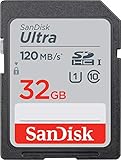
| SANDISK 32GB Ultra 120MB/s | Faster burst shooting on UHS-I bodies | $19.99 |
| SANDISK 32GB Extreme 100MB/s | Video-centric use requiring sustained write speed | $23.94 |
How We Picked
We narrowed candidates on four criteria: factory file system (cards listed explicitly as FAT32 pre-formatted reduce setup friction for 24/7 recorders), stated read/write throughput relative to the card’s intended workload, cost per gigabyte for owners who deploy multiple units, and the volume of owner reports confirming the card was recognized by common dash cams and security systems without reformatting.
The 8 Best How To Format Sd Card To Fat32 in 2026
SanDisk 32GB Ultra 100MB/s SDHC
This card is for photographers and videographers whose bodies default to FAT32 and who want a name with a long track record in consumer imaging. The 100 MB/s read rating keeps transfer-to-computer time short, and SanDisk’s Ultra line remains one of the most universally recognized formats for digital cameras.
- Widely compatible with mirrorless and DSLR bodies out of the box
- Strong resale recognition if you later upgrade and sell
- 32 GB ceiling may fill quickly on high-megapixel RAW sequences
Skip this if your camera accepts SDXC and you need more than 32 GB in a single slot.
SECUEYE 128GB TF Class 10 FAT32
SECUEYE targets dash cam and security-camera owners who want large storage without fighting the FAT32 formatting limitation that plagues 128 GB cards in Windows. Shipping pre-formatted to FAT32 is its defining advantage.
- 128 GB capacity suits multi-hour loop recordings on 4K dash cams
- Arrives FAT32-formatted, eliminating the need for third-party tools
- TF form factor requires an adapter for full-size SD slots
Skip this if your device demands UHS-II or V30 sustained-write grades.
SECULINK 32GB TF FAT32
The lowest-cost entry here suits anyone swapping a failed card in a trail camera or basic security recorder that maxes out at SDHC capacity.
- Under $15 per card makes replacement painless
- Factory FAT32 formatting guarantees plug-and-play recognition on older devices
- Class 10 speed floor may bottleneck continuous 4K recording
Skip this for high-bitrate dash cams where write speed is critical.
SECULINK 2-Pack 32GB TF FAT32
Homeowners with two or more fixed cameras save per-unit cost by buying the twin pack instead of singles.
- Bundled pricing beats purchasing individual cards
- Both cards arrive FAT32-formatted, so installation is identical to single packs
- Only 32 GB per card, so recording windows stay short
Skip this if your system supports larger capacities and you prefer fewer swap cycles.
SECULINK 128GB TF FAT32
For surveillance rigs that overwrite footage every 24 to 48 hours, 128 GB gives a meaningful buffer while keeping the file system compatible.
- Pre-formatted FAT32 at 128 GB is uncommon and removes a real headache
- Read and write speeds support 24/7 recording without frame drops on mid-range cameras
- Class 10 rating means it is not built for sustained high-bitrate action cams
Skip this if you record 5.3K or higher and need U3 or V30 guarantees.
GIGASTONE 32GB SD Card 2-Pack with Cases
Photographers who shoot events or wildlife appreciate the bundled mini cases, which protect bare SD cards in a bag alongside lenses and filters.
- Included cases add tangible field value without a separate purchase
- 100 MB/s UHS-I U1 rating handles Full HD video smoothly
- Higher total cost than buying two SECULINK singles
Skip this if you work primarily with TF cards or need a single high-capacity card.
SANDISK 32GB Ultra 120MB/s
The read-speed bump over the 100 MB/s model makes offloading bursts faster, a small but real quality-of-life gain for wedding or sports shooters on a budget.
- 120 MB/s read is the highest in this roundup
- Lowest per-card price among full-size SD options
- Read speed does not translate to write speed, so burst depth is unchanged
Skip this if your priority is sustained write performance for video.
SANDISK 32GB Extreme 100MB/s
Extreme sits above Ultra in SanDisk’s hierarchy and is built around sustained-write consistency, which matters more to 4K video shooters than raw read numbers.
- Write-oriented tuning reduces dropped frames in extended clips
- Proven durability in SanDisk’s Extreme line backs the higher price
- Costs more than the Ultra with a nominally lower read spec
Skip this if you only shoot stills and want the cheapest reliable card.
Buying Guide
Capacity and the FAT32 Threshold
Windows will not format cards above 32 GB to FAT32 without tools like Rufus or SD Memory Card Formatter. If your recorder requires FAT32, the simplest path is a card that ships already formatted—every SECUEYE and SECULINK model listed here does exactly that. For full-size SD users, 32 GB SDHC cards are formatted FAT32 by default, so the problem disappears below that ceiling.
Speed Class Relative to Workload
Class 10 guarantees a minimum 10 MB/s sequential write, sufficient for 1080p loops but marginal for 4K at high bitrates. If you record above 50 Mbps, look for U3 or V30 ratings and a card designed for continuous write endurance rather than burst stills.
Form Factor and Adapter Overhead
TF (microSD) cards are dominant in dash cams and compact security units. Full-size SD remains standard in cameras. When a roundup mixes both, confirm your device’s slot before purchasing; an adapter introduces a small failure point and can void the waterproof rating of sealed recorder housings.
Our Verdict
The SECULINK 128GB TF FAT32 is the top pick for anyone formatting a card to FAT32 because it eliminates the entire formatting step by shipping ready-made at a capacity that still supports multi-day recordings. The budget pick is the SECULINK 32GB TF FAT32 at $14.99—unbeatable for simple swaps. If you shoot Full HD video on a DSLR or mirrorless body and want the fastest file offloads, the SANDISK 32GB Ultra at 120 MB/s read wins that niche.
FAQ
Why can’t Windows format a 128 GB card to FAT32?
Microsoft’s built-in Format utility artificially caps FAT32 support at 32 GB on volumes it detects as removable media. The FAT32 specification itself supports larger volumes, so the restriction is a design choice, not a technical limit.
Do I need to reformat a card labeled “FAT32 pre-formatted”?
In most cases, no. Manufacturers like SECUEYE and SECULINK ship cards with the correct partition table and file system already in place, so inserting them into a compatible dash cam or recorder triggers immediate writing.
Will a UHS-I card work in a camera that supports UHS-II?
Yes. UHS-II slots are backward-compatible and will run UHS-I cards at the lower speed tier. You lose the extra performance but gain full functionality.
How do I confirm the file system before buying?
Check the product listing for explicit mentions of FAT32 or exFAT, and cross-reference with owner Q&A sections where buyers often state which file system the card arrived in.