What's inside
As an Amazon Associate I earn from qualifying purchases. This post may contain affiliate links at no extra cost to you.
Dust is not just a housekeeping problem in a workshop. Fine sanding dust can work into bearings, switches, drawer slides, and power-tool vents. The storage you choose affects how quickly tools get dirty, how easily you can find them, and whether cleanup takes five minutes or an hour. Open shelving is cheaper and faster to access; closed cabinets provide better protection but cost more, occupy more floor space, and can hide a disorganized mess.
As an Amazon Associate we earn from qualifying purchases at no extra cost to you.

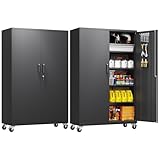


The main trade-off
Open shelves work well for bulky, frequently used items: clamps, boxes of fasteners, sanding discs, routers, and jigs. You can see everything immediately and put tools away with one hand. That matters when you are switching between operations at a workbench.
The drawback is exposure. Even with a good dust collector, some airborne dust remains. A shelf with a 1/2-inch layer of dust is not unusual after several months of sanding or routing. The dust settles on tool handles, inside open cases, and on horizontal surfaces where it becomes a cleanup task.
Closed cabinets reduce that exposure, but they are not automatically dustproof. Gaps around doors, cable holes, and poorly fitted backs still admit fine dust. A cabinet with ordinary hinged doors is best described as dust-resistant. Sealed doors with overlapping edges and weatherstripping do a better job, but they cost more and may need ventilation if storing finishes, batteries, or solvent-based products.
| Factor | Open shelving | Closed cabinets |
|---|---|---|
| Purchase cost | Low to moderate | Moderate to high |
| Tool access | Fast; contents visible | Slower; doors must be opened |
| Dust protection | Poor unless covered | Good, especially with sealed doors |
| Cleaning | Frequent shelf and tool cleaning | Less frequent, but cabinets need occasional cleaning |
| Best use | Large, often-used items | Precision tools, electronics, and clean supplies |
When open shelves make sense
Choose open shelving when speed, visibility, and price matter more than maximum dust control. It is often the better choice for a garage shop where tools are used weekly rather than stored for months. A sturdy steel rack or plywood shelf can hold heavy cases and consumables without the cost of cabinet doors.
Use shelves at least 12 inches deep for most tool cases, and leave 2 to 3 inches of clearance above each item. Overloading a shelf encourages stacking, which defeats the advantage of visibility and makes tools more likely to fall. For heavy equipment, check the shelf rating with a safety margin. A shelf expected to carry 150 pounds should not be loaded to its stated 150-pound limit; aim for roughly 75 percent of the rating.
Open shelving is also useful near a dust-producing machine if it holds only items used at that station. For example, a shelf beside a table saw can hold push sticks, blades in cases, featherboards, and measuring tools. Keep it out of the direct discharge path from the saw or sander, however. A shelf placed beside an unconnected planer will become a dust collector of its own.
If open shelving is the economical choice, add removable covers rather than replacing the whole system. A simple fabric cover, plastic tote, or lidded bin protects less frequently used tools. For general-purpose shelving, compare heavy-duty garage storage shelves by load rating, shelf depth, and adjustability—not just the number of tiers.
Where closed cabinets pay off
Closed storage earns its floor space when the contents are expensive, sensitive, or troublesome to clean. Use it for measuring instruments, cordless-tool batteries, routers, sanders, electrical testers, and clean finishing supplies. Dust inside a battery charger or a tool’s cooling vents can shorten its useful life, while dust on precision measuring surfaces can affect accuracy.
Cabinets are especially worthwhile in a mixed-use garage. If the shop also stores a car, lawn equipment, or household items, doors keep wood dust and metal filings from spreading as easily. They also prevent small parts from being knocked off shelves and reduce the chance that a child or visitor can reach sharp blades.
Look for adjustable shelves, a rigid back, and doors that do not sag when loaded. A cabinet made from thin sheet metal may look substantial but flex under weight. For hand tools, drawers are often better than a tall cupboard because you can see the entire tool layout. For boxed tools and supplies, doors with shelves are more space-efficient.
Do not seal chemicals casually. Paint thinner, fuel, aerosol cans, and many finishes need storage that follows local fire and ventilation rules. A general workshop cabinet is not a substitute for an approved flammable-liquid cabinet. Batteries should be kept dry and away from heat, with damaged or swollen packs removed from service.
Dust control matters more than doors
A cabinet cannot compensate for poor collection at the machine. Capture dust at the source with a properly sized collector, keep duct runs short where possible, and inspect filters before airflow drops. For sanding and routing, a shop vacuum with a fine-dust filter and a separator is often more useful than an undersized dust collector.
Place storage so it does not block duct access, machine guards, or the path to the electrical panel. Keep shelving at least 36 inches away from a panel and maintain the clearance required by local code. Do not store boxes directly on the floor; raise them 4 to 6 inches to protect contents from minor leaks and make sweeping easier.
For a low-cost dust barrier, use clear vinyl zipper dust barriers around the sanding or finishing area. They will not replace extraction, but they reduce the amount of dust reaching nearby storage while preserving visibility and access.
A practical hybrid layout
Most workshops benefit from both types. Put open shelving beside the main workbench for tools used every session. Install closed cabinets on the clean side of the shop for precision tools, batteries, abrasives, and replacement parts. Store blades and router bits in closed drawers or cases, with protective covers in place.
Label cabinet doors and shelf bins, but do not rely on labels to fix poor organization. Keep one category per bin, leave a visible gap between groups, and return tools to the same location. A monthly five-minute inspection is enough to find dust buildup, loose fasteners, overloaded shelves, or cabinets that have started to sag.
If you are building storage from plywood, 3/4-inch panels are a reliable choice for cabinet sides and shelves. Add a solid front edge to long shelves to reduce sagging. For inexpensive bins, clear plastic parts storage bins provide visibility without leaving small hardware exposed to the air.
Choose open shelving for accessible, bulky, frequently used gear. Choose closed cabinets for tools that are costly, delicate, or difficult to clean. In a dusty shop, the best arrangement is usually not all one or the other: open storage at the point of use, protected storage for everything that needs to stay clean.