What's inside
As an Amazon Associate I earn from qualifying purchases. This post may contain affiliate links at no extra cost to you.
Choosing Storage for Measuring Squares in a Workshop
Measuring squares are easy to overlook when planning workshop storage. They are not as bulky as clamps or power tools, but they are precision references. A framing square, combination square, speed square, or machinist’s square can be knocked out of alignment, buried under stock, or damaged by rust if it is stored carelessly.
The main choice is between a drawer and a wall rack. Drawers protect squares better from dust and impact. Wall racks make them faster to grab and easier to see. Neither is automatically best; the right choice depends on how often you use each square, how dusty your shop gets, and whether you need to preserve accuracy over many years.
As an Amazon Associate we earn from qualifying purchases at no extra cost to you.


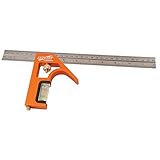

When Drawer Storage Makes More Sense
A drawer is the safer option for precision squares and tools with delicate edges. A full-extension drawer lets you store squares flat, separated from hammers, drill bits, and other tools that can dent or twist them. It also keeps abrasive dust off the working edges.
Drawer depth matters. A typical 12-inch framing square needs a drawer at least 14 inches wide and roughly 2 to 3 inches high if it is stored flat. Larger 16-inch or 24-inch squares may need a 20- to 26-inch-wide drawer. Measure the actual tools before building the cabinet; nominal drawer dimensions are often smaller than the outside cabinet width.
Use a thin liner made from closed-cell foam, rubber shelf liner, or felt. The liner should stop the square from sliding without raising it so high that the drawer will not close. Dividers are useful, but avoid tight wooden slots that force a square into place. A drop or a hurried insertion can bend a thin steel rule against a hard divider.
Drawer storage is particularly valuable in a woodworking shop with a dust collector that does not capture everything. Fine sanding dust can settle into sliding mechanisms and combine with light oil to form abrasive sludge. A drawer will not make the shop clean, but it reduces exposure compared with an open wall rack.
The main failure mode is poor organization. A deep drawer becomes a pile if every square is thrown in together. Keep the most-used square at the front, or divide the drawer by size. If you need to open the drawer and move three tools before finding a square, the protection advantage has become a usability problem.
When a Wall Rack Is the Better Choice
A wall rack is fast, visible, and inexpensive. It works well for squares used several times during a build, especially framing squares and speed squares that are grabbed while laying out sheet goods or cutting lumber. Seeing the tool also makes it less likely to be left on a workbench where it can be buried or knocked to the floor.
For many shops, a simple rack made from plywood strips is enough. Leave at least 1 inch of clearance between slots for thicker handles and coated tools. Set the bottom ledge high enough to keep the square from touching the bench or floor, and add a shallow front lip so vibration cannot shake it out.
Mount the rack where it will not interfere with long stock, cabinet doors, or the swing of a workbench. A rack 48 to 60 inches above the floor is usually comfortable for standing use, but the best height depends on the people using the shop. Fasten it to studs or use appropriate wall anchors; a rack loaded with steel squares can weigh more than it looks.
Open storage has two important weaknesses. First, a square can be hit by a board, clamp, or sheet of plywood. Second, a wall rack near a grinder or sanding station collects abrasive particles. Store precision squares away from those stations, and wipe them down occasionally. A light coat of rust preventative on bare steel helps, but keep oil off surfaces used for marking until it has been wiped nearly dry.
Drawer Storage vs. Wall Rack
| Factor | Drawer | Wall rack |
|---|---|---|
| Protection from dust | Good, especially with a closed cabinet | Limited; depends on shop cleanliness |
| Speed of access | Good if organized, slower if overcrowded | Excellent; tools are visible |
| Risk of impact damage | Low | Moderate to high near active work areas |
| Cost | Higher, particularly with full-extension slides | Low; plywood and fasteners are often sufficient |
| Best use | Machinist’s, combination, and precision squares | Frequently used framing and speed squares |
The Most Practical Setup
Many workshops benefit from using both systems. Put everyday layout tools on a wall rack and reserve a shallow drawer for precision squares, spare blades, and tools that are used less often. This avoids making the rack large enough to hold every tool while keeping the most valuable pieces protected.
A drawer organizer designed for hand tools can work, but check the internal measurements before buying. Search for workshop tool drawer organizers with foam if you want ready-made compartments. For a budget setup, 1/4-inch plywood dividers secured with glue or small screws are adequate.
For wall storage, a wood tool storage wall rack or a shop-made rack is usually cheaper than a metal storage system. The cheaper option is fine when the rack is mounted securely, kept away from grinding dust, and used for rugged squares rather than expensive precision tools.
Protecting Square Accuracy
Storage cannot fix a square that has already been bent. Check critical squares occasionally by placing them against a straight reference and making a line, then flipping the square and checking whether the second line matches. A noticeable gap indicates a problem, not necessarily a storage failure.
Do not store a square leaning on one corner for months. The pressure may be small, but repeated loading and accidental knocks can distort thin rules. Keep combination-square blades from rubbing against loose screws, drill bits, or other steel parts. For a machinist’s square, use a fitted sleeve or separate compartment rather than an open bin.
If your shop is humid, add a small desiccant container to a closed drawer and inspect the tools every few months. Do not put loose desiccant packets where they can tear and spill crystals into drawer slides. A basic rust-preventive paper for tool storage can also help protect bare steel.
Which Should You Buy?
Choose a wall rack if your squares are rugged, used constantly, and stored in a reasonably clean part of the shop. It is the lowest-cost solution and usually improves workflow more than a drawer.
Choose drawers if you own precision squares, work around heavy dust, or routinely find tools damaged on the bench. If you are building a new workbench, planning one shallow drawer for measuring tools and one visible rack for daily-use squares gives you protection without sacrificing access.