What's inside
As an Amazon Associate I earn from qualifying purchases. This post may contain affiliate links at no extra cost to you.
Why Separate Workshop Zones
A workshop barrier is not just a way to keep people out. It should control dust, contain sparks and chips, protect walkways, and make it obvious where a machine’s operating area begins. A good barrier also helps you arrange the shop around real hazards: a table saw needs clearance for stock, a grinder throws sparks, and a sanding station produces fine dust that should not drift toward clean assembly work.
Start by marking the floor with tape for a week before buying anything. Include the machine footprint, the longest material you handle, and the space needed to stand safely behind the tool. A practical minimum walkway is 36 inches; 42 to 48 inches is more comfortable around machines where you carry sheet goods or long boards. Do not use a barrier to make an aisle narrower than your local code or normal escape route allows.
As an Amazon Associate we earn from qualifying purchases at no extra cost to you.


Choose the Right Barrier Type
The best barrier depends on the hazard. A lightweight screen may be enough to separate a woodworking bench from a passage, while a grinder or welding area needs a material that will not melt or ignite.
| Barrier type | Best use | Strengths | Limitations |
|---|---|---|---|
| Portable stanchions with belt or chain | Walkways and temporary exclusion zones | Fast to move, inexpensive, highly visible | Does not stop dust, sparks, noise, or determined access |
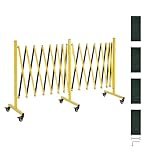
| Folding mesh or wire-panel screen | Separating benches, storage, and machine areas | Good visibility, ventilation, reusable, stable when weighted | Small chips and dust pass through; panels can tip |
| Clear PVC strip curtain | Dustier or noisier zones with frequent traffic | Contains airborne debris while allowing access | Strips collect dust and become cloudy or brittle over time |
| Welding or spark curtain | Grinding, welding, and metal cutting | Controls sparks and arc flash when properly rated | Costs more and still needs a noncombustible surrounding area |
| Fixed framed partition | Permanent dust or finishing room | Most effective separation and easiest to seal | Expensive, reduces flexibility, and may affect ventilation or fire egress |
Portable Barriers for Flexible Shops
For a garage or multipurpose shop, folding panels are usually the most useful starting point. Look for panels around 6 feet high, feet that extend at least 12 inches from the panel, and locking hinges. A 6-foot screen blocks much of the line of sight and deflects flying debris without making the shop feel boxed in. Taller panels can be useful around a grinder, but they are more vulnerable to tipping.
Wire mesh is a sensible low-cost choice when your main goal is defining a work zone. It also lets light and air pass through, which matters in a small shop. Use weighted bases or anchor the end panel to a wall. A screen that falls when a board bumps it is a new hazard, not a safety improvement. Search for folding workshop safety barrier panels if you need a movable setup.
Retractable belt barriers are better for controlling people than controlling machines. They clearly mark a temporary no-entry area during blade changes, maintenance, or finishing, but they will not contain sawdust or sparks. Avoid relying on them beside an operating saw where a child or visitor could simply walk underneath or around the belt.
Dust and Chip Control
A barrier does not replace dust collection. Fine dust will travel over, under, and through most screens, and negative pressure from a dust collector can pull contaminated air into adjacent areas if the layout is poor. Put the dust-producing tool as close as practical to the collector, keep hoses short, and leave enough clearance to remove the filter and empty the bin.
For sanding or routing areas, a ceiling-hung plastic curtain can reduce spread when paired with source capture. Use heavy-duty clear PVC strips rather than thin painter’s plastic. Thin plastic tears, folds into the cutter path, and can become statically charged. Leave a gap at the bottom only if you need airflow; otherwise, a 1- to 2-inch clearance is enough to prevent dragging and still limits drafts.
Do not enclose a gasoline engine, heater, or other combustion appliance with a plastic curtain. Dust buildup on a hot surface is a fire risk, and restricted airflow can create carbon monoxide hazards. A clear PVC strip curtain for a workshop is appropriate only when its material rating and location fit the job.
Spark and Welding Barriers
Grinding and welding need a different standard. Use a purpose-made welding screen or curtain with a stated fire-retardant rating. Clear welding curtains are not ordinary clear vinyl; they are designed to filter harmful ultraviolet and infrared radiation. Opaque or tinted panels also prevent bystanders from staring at an arc.
Keep combustible lumber, cardboard, sawdust, solvents, and fabric well away from the spark zone. A curtain can catch sparks and reduce line-of-sight exposure, but it cannot make a wood floor fireproof. Place a suitable fire extinguisher within immediate reach, inspect the area after hot work, and check again at least 30 minutes later for smoldering debris. Search for fire-retardant welding screen curtains rather than adapting a shower curtain or tarp.
Installation and Layout Details
Anchor fixed barriers to studs or masonry, not just drywall. For a freestanding run, connect panels so one impact cannot fold the entire line. Keep the barrier at least several inches outside the machine’s moving parts and never place a post where it interferes with the operator’s stance, stock path, or emergency stop.
Make entrances at least 30 inches wide, with 36 inches preferable if you carry sheet goods or large assemblies. Avoid creating dead-end pockets where someone could be trapped between a barrier and a machine. Doors and gates should open toward a clear area, not into a narrow aisle. Mark the floor around the work zone with high-visibility tape, and add task lighting so the barrier itself does not create a dark corner.
What to Buy and What to Skip
Buy the cheapest barrier that controls the actual hazard. A chain barrier is fine for a temporary maintenance area. A used wire-panel screen is often a better value than a new decorative room divider, provided it is stable and has no sharp exposed ends. Spend more on welding curtains, spark-resistant materials, weighted bases, and hardware that will survive repeated movement.
Skip freestanding fabric room dividers near grinders, saws, or heaters. They tip easily, absorb dust, and can ignite. Also avoid sealing a dusty room so tightly that air has nowhere to go. The most reliable setup combines a stable visual barrier, effective source dust collection, adequate ventilation, and a clear route to the emergency stop and exit.