What's inside
As an Amazon Associate I earn from qualifying purchases. This post may contain affiliate links at no extra cost to you.
Workshop air filtration units are simple machines: a fan pulls dusty air through a prefilter and a finer final filter, then returns the cleaned air to the shop. The replacement filter determines how well that system works, how loudly it runs, and how quickly the motor wears out. The right choice is not always the filter with the highest rating. It must fit the unit, handle the dust load, and provide enough airflow for the fan.
As an Amazon Associate we earn from qualifying purchases at no extra cost to you.

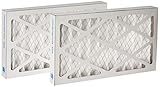

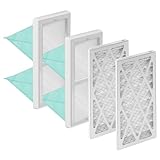
Match the Filter to the Unit
Start by removing the old filter and recording its exact dimensions. Measure length, width, and thickness to the nearest 1/8 inch. A filter listed as 20 by 20 by 1 inch may actually measure slightly less than those nominal dimensions, but a replacement that is even 1 inch too large usually will not fit the frame.
Also note the airflow direction, the filter’s pleat depth, and whether it has a cardboard, plastic, or metal frame. Some workshop units use a washable metal mesh prefilter and a pleated final filter. Others use a disposable first-stage filter followed by a deeper pocket filter. Check the manufacturer’s manual or search by the unit’s brand and filter dimensions using workshop air filtration replacement filters.
Do not assume a furnace filter is a suitable substitute. It may fit physically but have too much resistance for the unit’s fan. That can reduce air movement, increase noise, and raise motor temperature. A filter with a gasket or snug frame is important because air will take the path of least resistance around a poorly sealed filter.
Filter Types Compared
| Filter type | Best use | Advantages | Limitations |
|---|---|---|---|
| Washable mesh prefilter | Capturing chips, hair, and coarse dust | Reusable and inexpensive over time | Does not capture fine airborne dust; must dry fully before reuse |
| Pleated MERV 8-11 filter | General woodworking and hobby shops | Good airflow, affordable, easy to find | Not a substitute for source dust collection or a respirator |
| Pleated MERV 12-13 filter | Fine dust and heavier shop use | Captures more small particles than basic filters | Higher airflow resistance; may reduce the unit’s effective performance |
| HEPA filter | Maximum fine-particle filtration | Very high removal efficiency for appropriately sized particles | Expensive and restrictive; requires a fan designed for it |
Choosing MERV and HEPA Ratings
For many small woodworking shops, a pleated MERV 8 to MERV 11 filter is the sensible replacement. It provides useful fine-dust filtration without loading the fan as quickly as a high-efficiency filter. A MERV 8 filter is often adequate when the air cleaner runs continuously and a separate collector is connected to the table saw, planer, router, and sander.
MERV 12 or MERV 13 filters make sense when sanding produces a lot of fine dust, the shop is used frequently, or occupants are sensitive to airborne particles. The trade-off is pressure drop. As the filter loads, airflow falls further. If your unit has a low-power fan, moving from MERV 8 to MERV 13 can result in less total filtered air even though each pass is cleaner.
HEPA is not automatically the best choice. A true HEPA filter is typically rated to capture 99.97 percent of particles at 0.3 microns, but the unit must be designed to push air through it. Installing a restrictive HEPA cartridge in a basic ceiling-mounted air cleaner can make the fan move very little air. Buy HEPA replacement filters for workshop air cleaners only when the manufacturer specifies that filter type.
Use a Prefilter to Protect the Main Filter
A prefilter is one of the cheapest ways to extend the life of the expensive final filter. It catches large particles before they clog the pleats. In a dusty shop, inspect it after every few work sessions and clean or replace it when the surface is visibly covered.
Disposable 1-inch furnace-style prefilters are cheap and convenient. They are fine for a hobby shop with intermittent use. A washable electrostatic or metal-mesh prefilter costs more initially but can be worthwhile in a shop that runs the air cleaner every day. Wash it outdoors or in a utility sink, and let it dry completely before reinstalling it. A damp filter can restrict airflow and encourage odor or mold problems.
Do not use compressed air indoors to clean a dirty filter. That simply puts the captured dust back into the room. If the filter is disposable, place it in a bag before carrying it through the shop.
When to Replace the Filter
Replace filters based on condition, not just the calendar. A lightly used unit may go six months or longer, while a sander-heavy shop may clog a filter in four to eight weeks. Common warning signs include noticeably weaker airflow, a change in fan pitch, dust accumulating on the clean side, or a filter that bows inward while the unit runs.
Some filters have a pressure-drop indicator. If yours does not, mark the installation date on the frame and compare airflow with a clean filter. Never wait until the filter is completely gray. Loaded filters force the motor to work against higher resistance and reduce the amount of shop air passing through the cleaner.
Installation and Shop Safety
Unplug the unit before opening the filter compartment. Confirm the arrow on the filter points toward the fan or clean-air side, as marked on the housing. A reversed filter can still appear to work, but its frame may not seal correctly and its media may not be supported as designed.
After installation, inspect the perimeter for gaps. Foam weather stripping can close a small leak, but do not cover a large opening with tape and assume the problem is solved. A badly fitting replacement indicates the wrong filter size or an incompatible design.
Air filtration is a finishing step, not primary dust control. Connect tools to a properly sized dust collector, keep the collector hose short and clear, and use a well-fitting respirator when cutting or sanding materials that create hazardous dust. The air cleaner should run during dusty work and for at least 30 minutes afterward. For a filter purchase, compare both the replacement cost and the unit’s stated airflow before choosing between a basic pleated filter and a MERV 13 pleated replacement filter.