
What's inside
As an Amazon Associate I earn from qualifying purchases. This post may contain affiliate links at no extra cost to you.
Best Makita Hand Planer: The Quick Verdict
The Makita KP0810 is the best all-round choice if you want a corded planer with a wide cut and strong motor for regular shop or site work. Choose the lighter DKP180Z for cordless convenience on site, and the compact 1902 when its narrower 82 mm cut suits your work and you find a well-supported unit. These models are not interchangeable: the deciding factors are power source, cut width, and how much weight you want to control over a long day.
Makita model availability and included accessories can vary by country. In particular, the DKP180Z is a bare-tool cordless model, so its battery and charger are typically purchased separately. Check the exact regional specification before buying.
As an Amazon Associate we earn from qualifying purchases at no extra cost to you.
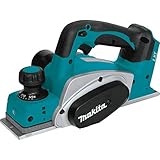


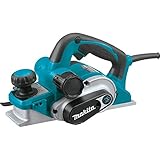
Head-to-Head Specifications
| Model | Power source | Planing width | Maximum cut depth | No-load speed | Approx. tool weight |
|---|---|---|---|---|---|
| Makita KP0810 | 820 W corded | 82 mm | 4 mm | 16,000 rpm | 3.3 kg |
| Makita 1902 | 580 W corded | 82 mm | 1 mm | 16,000 rpm | 2.5 kg |
| Makita DKP180Z | 18 V cordless | 82 mm | 2 mm | 14,000 rpm | About 3.4 kg with battery |
Weights are approximate and can differ by market or measurement convention. The cordless figure includes a battery; the battery’s capacity affects the final weight. The three planers share an 82 mm cutting width, so the practical difference is not how much board each covers per pass, but how deeply and continuously each can remove material.
What the Numbers Mean in Use
KP0810: the power and depth pick
At 820 W with a maximum 4 mm cut, the KP0810 has the most headroom here for removing material quickly. That depth is a maximum setting, not a recommendation for every pass: on hard timber, wide boards, or a finish-critical face, shallower passes are easier to control and put less strain on the blades. Its cord is the trade-off. It makes the planer suitable for sustained shop work, but you need an outlet and must keep the cable clear of the cut and workpiece.
1902: light, simple, and more limited
The 1902’s lower 580 W rating and 1 mm maximum cut make it better suited to light trimming and controlled stock adjustment than aggressive stock removal. Its approximately 2.5 kg weight is a real advantage when handling the tool for repeated short passes. It is an older model, so consider blade availability, service support, and the condition of any used example before choosing it over a current alternative.
DKP180Z: portability without a cord
The DKP180Z’s 18 V platform makes it convenient for door fitting, edge work, and repairs where moving an extension lead is awkward. Its maximum 2 mm cut is between the other two, and its 14,000 rpm no-load speed is lower than the corded models’ 16,000 rpm. It is not automatically the lightest option once a battery is fitted. For frequent or extended work, account for spare batteries and charging time as part of the purchase, not as an afterthought.
Choose by Work Situation
| Your situation | Best fit | Why |
|---|---|---|
| Regular shop work with an outlet nearby | KP0810 | Strongest motor and greatest maximum cut depth for efficient stock removal. |
| Site jobs with frequent moves between locations | DKP180Z | No cord to manage; most useful when you already own compatible batteries. |
| Light trimming and a preference for a lighter tool | 1902, if support and blades are available | Lowest listed tool weight, though it has the smallest maximum cut. |
| New buyer choosing one planer for mixed, demanding work | KP0810 | A sensible default when portability is secondary to continuous power and capacity. |
| Occasional cordless use, with no Makita batteries owned | Compare total kit costs first | The DKP180Z’s bare-tool price does not include the battery and charger typically needed to use it. |
Blade Width, Finish, and Real-World Productivity
Because all three models plane an 82 mm-wide strip, none has a coverage advantage on a standard-width board. The KP0810’s productivity edge comes from its higher power and deeper maximum cut, not a wider blade. For example, a 1 m-long edge that needs 2 mm removed would require at least two passes with the 1902, which is limited to 1 mm per pass. The KP0810 can remove that amount in one pass on paper, but splitting it into lighter passes may produce better control and a cleaner finish. This is a capacity comparison, not a guarantee of a particular finish or working speed.
Actual results depend on timber species, grain direction, blade sharpness, and how evenly you feed the tool. A deep cut can leave ridges or tear-out, especially where the grain changes direction. Take test cuts on scrap, keep the front shoe flat as you begin, and avoid tipping the planer at the end of a pass.
Ownership: Blades, Dust, and Setup
- Blades are the main consumable. Dull or nicked blades can leave a rough surface and make the motor work harder. Confirm the correct blade type and replacement availability for your exact model and region.
- Set blades evenly. If the two blade edges are not aligned, the planer can cut more on one side and leave a step. Follow the manual’s adjustment method, disconnect power or remove the battery first, and verify the setting on scrap.
- Clear chips regularly. Packed shavings can obstruct ejection and contribute to uneven feeding. Unplug a corded tool or remove its battery before clearing a blockage; do not reach into the cutter area while it is powered.
- Use modest cuts for finish work. A smaller depth setting reduces the amount removed per pass and can make the planer easier to control. It also helps preserve blade life when working on hard or knotty stock.
- Plan for dust collection. A planer produces a substantial volume of shavings. Keep the outlet clear and use a suitable collection setup where practical; inspect it if chips begin to back up.
For the KP0810, check that your work area has a safe cable route. For the DKP180Z, include battery capacity and charging arrangements in your job plan. In either case, secure the workpiece and wear appropriate eye and hearing protection.
Bottom Line
For most buyers seeking one Makita hand planer for dependable, higher-capacity work, the KP0810 is the strongest pick: it combines an 82 mm width with an 820 W motor and a 4 mm maximum cut. The DKP180Z makes more sense when cordless mobility is worth the battery cost and added weight. The 1902 is the lightest option for modest jobs, but its 1 mm cut and older-model support considerations make it a more specialized choice rather than the default recommendation.