
What's inside
- Wood planer blades compared at a glance
- HSS blades: the best balance for most owners
- Carbide inserts: longest life, but not always the smoothest finish
- Disposable knives: lowest commitment and fastest changes
- Decision matrix: which blade fits your situation?
- Compatibility matters more than blade material
- Worked cost calculation: when does carbide pay?
- How to get cleaner, longer-lasting cuts
- Final buying advice
- Related Guides
As an Amazon Associate I earn from qualifying purchases. This post may contain affiliate links at no extra cost to you.
For the cleanest all-around results, choose reversible HSS wood planer blades for occasional or mixed-species work, carbide inserts for frequent hardwood planing and maximum edge life, and disposable HSS knives when low upfront cost and quick replacement matter most.
The right blade is determined less by the word “premium” on the package than by four practical questions: what cutterhead your planer uses, how often you work, which woods you plane, and whether you are willing to sharpen. A well-matched blade can produce a smooth surface; an incompatible blade can damage the cutterhead, leave ridges, or fail to clamp safely.
As an Amazon Associate we earn from qualifying purchases at no extra cost to you.


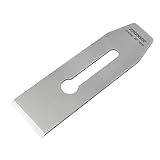
Wood planer blades compared at a glance
| Blade type | Typical material | Common thickness | Best use | Typical edge life* | Sharpening | Typical replacement cost |
|---|---|---|---|---|---|---|
| Reversible knife | HSS, usually 18% tungsten or similar alloy | 2.0–3.0 mm | Portable and benchtop planers; mixed projects | 20–60 board feet per edge | Usually replaced; some can be sharpened | $15–$45 per pair |
| Disposable straight knife | HSS or high-carbon steel | 1.0–2.5 mm | Planers designed for quick knife changes | 15–50 board feet per edge | Not normally economical | $10–$35 per pair |
| Carbide insert | Micrograin carbide | Commonly 10–15 mm square inserts | Hardwood, abrasive stock, high-volume work | 60–200+ board feet per insert edge | Rotate or replace; do not hand-sharpen conventionally | $30–$100 for a set of inserts |
| Premium sharpenable HSS | High-speed steel, often 2.5–3.0 mm thick | 2.5–3.0 mm | Stationary planers and jointer-planers | 30–100 board feet per edge | Yes, with a suitable grinding or honing setup | $30–$100 per pair |
*Edge-life figures are working estimates, not guarantees. Stock cleanliness, feed rate, cut depth, wood species, and cutterhead alignment can change them substantially.
HSS blades: the best balance for most owners
HSS knives are the default choice for many portable and benchtop planers because they combine a sharp edge, reasonable toughness, and broad compatibility. They cut pine, spruce, maple, oak, cherry, and similar woods cleanly when the knives are installed evenly and the depth of cut is sensible.
Reversible HSS knives are particularly convenient. When one edge becomes dull or nicked, you turn the pair around rather than immediately buying replacements. Many are sold in fixed lengths and hole patterns for specific planer families, so “reversible” does not mean universal. Match the exact length, thickness, hole spacing, and locating notches required by your cutterhead.
HSS is also more forgiving than carbide if you accidentally encounter a small knot or a minor staple. The trade-off is wear: dense hardwood, glue lines, and dirty reclaimed lumber can dull HSS considerably faster than clean softwood.
Carbide inserts: longest life, but not always the smoothest finish
Carbide is the strongest choice when the planer regularly processes hard maple, hickory, ipe, walnut, bamboo, painted stock, or wood with mineral contamination. Individual inserts are rotated when one corner is dull, giving several usable edges from one piece. A helical or spiral cutterhead using carbide inserts can also reduce tear-out by presenting a skewed cutting action to the wood.
There are two different decisions here: carbide blade material and cutterhead design. Replacing straight HSS knives with carbide inserts is not possible unless the cutterhead is designed for inserts. Conversely, a spiral cutterhead’s inserts may be proprietary in shape or screw size. Keep spare screws and the manufacturer’s specified torque information with the inserts; a loose insert can damage both the cutterhead and the workpiece.
Carbide edges are hard but relatively brittle. A nail, screw, or severe impact can chip an insert rather than merely dulling it. Carbide also costs more initially. It becomes economical when you use the planer frequently or spend significant time sharpening and changing HSS knives.
Disposable knives: lowest commitment and fastest changes
Disposable straight knives suit users who want a simple replacement rather than a sharpening routine. They are common in compact planers and some older machines. The thin knife is inexpensive, easy to store, and quick to replace, but it may not tolerate repeated hardwood work as well as a thicker premium HSS knife.
These knives make sense for occasional renovation, softwood projects, or a planer that sees only a few hours of work each month. They are less attractive for production work because several inexpensive sets can cost more than one sharpenable pair over a year. Thin knives can also amplify vibration or leave a noticeable ridge if the cutterhead clamps are dirty or the knife is not seated against the reference ledge.
Decision matrix: which blade fits your situation?
| Your situation | Recommended choice | Why | What to avoid |
|---|---|---|---|
| Beginner, occasional softwood projects | Correct-size disposable or reversible HSS | Low cost and simple installation | Buying a sharpening system before you know your usage |
| Small workshop, mixed softwood and hardwood | Reversible HSS | Good finish and two usable edges | Generic knives without verified dimensions |
| Frequent hardwood planing | Carbide insert cutterhead | Longer edge life and quick corner rotation | Forcing carbide inserts into a non-compatible head |
| Large stationary planer or jointer-planer | Thick sharpenable HSS or the specified carbide system | Better long-term cost when knife length and usage are high | Thin portable-planer knives in a heavy cutterhead |
| Reclaimed or dirty lumber | Inexpensive HSS, plus a metal detector and cleaning routine | Unexpected impacts are less costly | Using expensive carbide without removing metal |
Compatibility matters more than blade material
Before buying any wood planer blade, remove the existing knife and record five measurements: overall length, width, thickness, hole count, and hole spacing. Also note locating tabs, notches, bevel orientation, and whether the knife is double-edged. A blade that is only a few millimeters too long may not fit; one that is too thin can be clamped unsafely or sit below the cutterhead’s intended cutting circle.
Use the planer’s model number and the cutterhead manual as the final authority. Brand names alone are not enough: two machines from the same manufacturer may use different knife lengths or mounting systems. For machines from DeWalt, Makita, Bosch, and other established manufacturers, look for the exact replacement part specification rather than relying on a seller’s “fits most” description.
Worked cost calculation: when does carbide pay?
Suppose a pair of reversible HSS knives costs $25 and provides two edges. If each edge planes about 40 board feet, the set covers approximately 80 board feet, or about $0.31 per board foot. A $70 carbide-insert set that covers 240 board feet works out to about $0.29 per board foot, before considering the cost of replacement screws or damaged inserts.
That calculation favors carbide only when its stated life is achieved. If the work includes clean, soft pine, HSS may last long enough that the cheaper purchase remains the better value. If you plane abrasive hardwood every week, carbide can save both replacement money and downtime even if its initial price is higher.
How to get cleaner, longer-lasting cuts
- Inspect the stock. Remove nails, staples, screws, grit, and loose bark. Reclaimed boards deserve special caution because one hidden fastener can chip carbide or notch HSS.
- Clean the cutterhead. Resin and dust under a knife prevent consistent seating. Use the cleaner recommended for the machine and keep solvents away from belts and electrical parts.
- Install a matched set. Replace or rotate all knives together. Mixing one sharp knife with one worn knife can produce ridges, vibration, and uneven cutting.
- Set a modest cut. Start around 0.5–1 mm per pass for hardwood and reduce the depth further when tear-out appears. A slower, lighter finishing pass usually produces a better surface than one aggressive cut.
- Check feed and grain direction. Feed boards consistently and, where practical, plane with the grain. Short, reversing grain is a major cause of tear-out that a sharper blade cannot completely eliminate.
- Rotate or replace at the first signs of wear. Watch for fuzzy fibers, burn marks, increased noise, ridges, and greater feed resistance. Continuing with a dull knife increases motor load and can worsen surface quality.
Final buying advice
Choose reversible HSS if you want the safest general recommendation for a portable or benchtop machine. Choose disposable knives if the planer is used infrequently and you value quick, inexpensive changes over maximum life. Choose carbide inserts when hardwood, abrasive stock, or high usage justifies the higher entry cost—and only when your cutterhead is designed for them.
The best wood planer blade is therefore the one that matches the cutterhead exactly and reaches the lowest cost per usable edge for your workload. Verify dimensions first, keep the stock clean, and treat sharpening as part of the ownership cost rather than judging the purchase price alone.